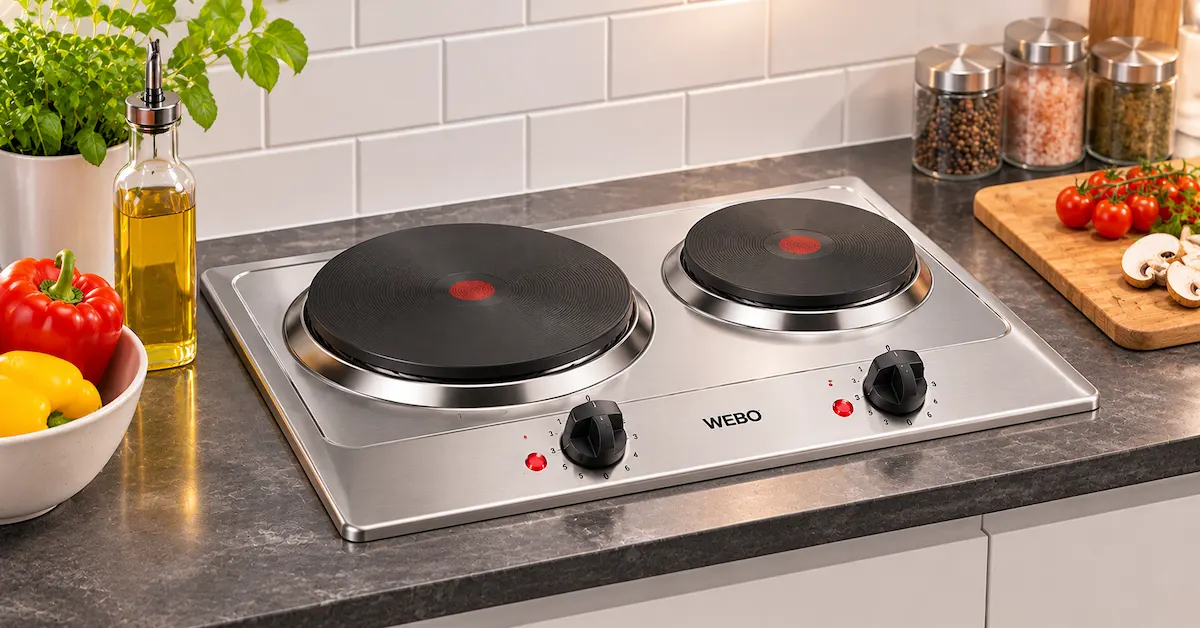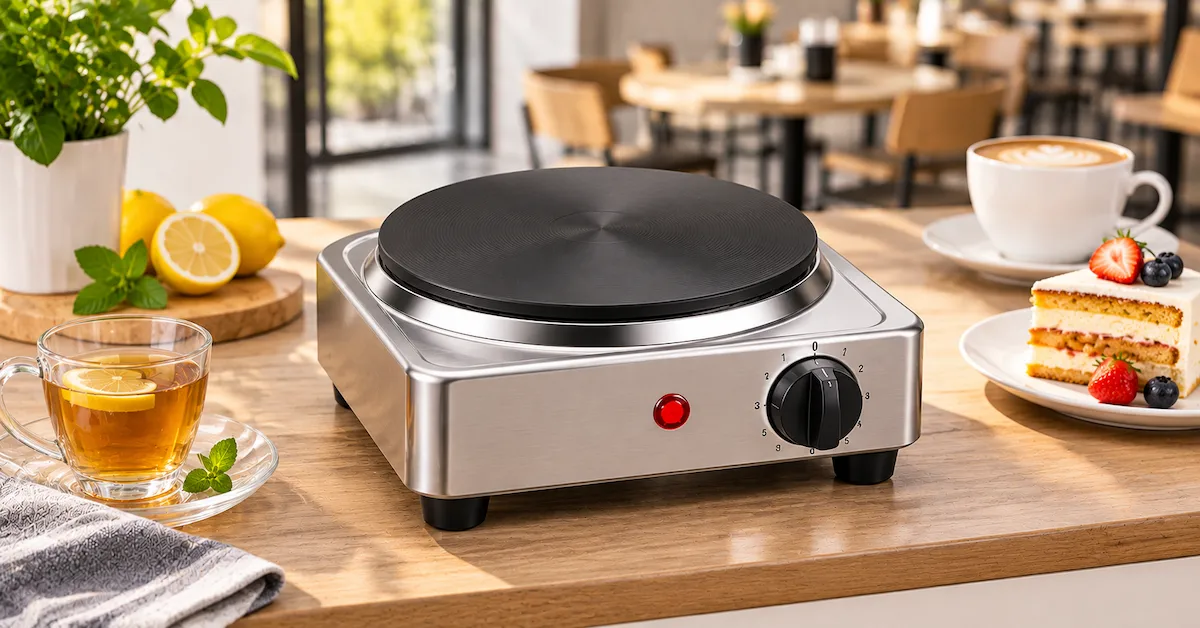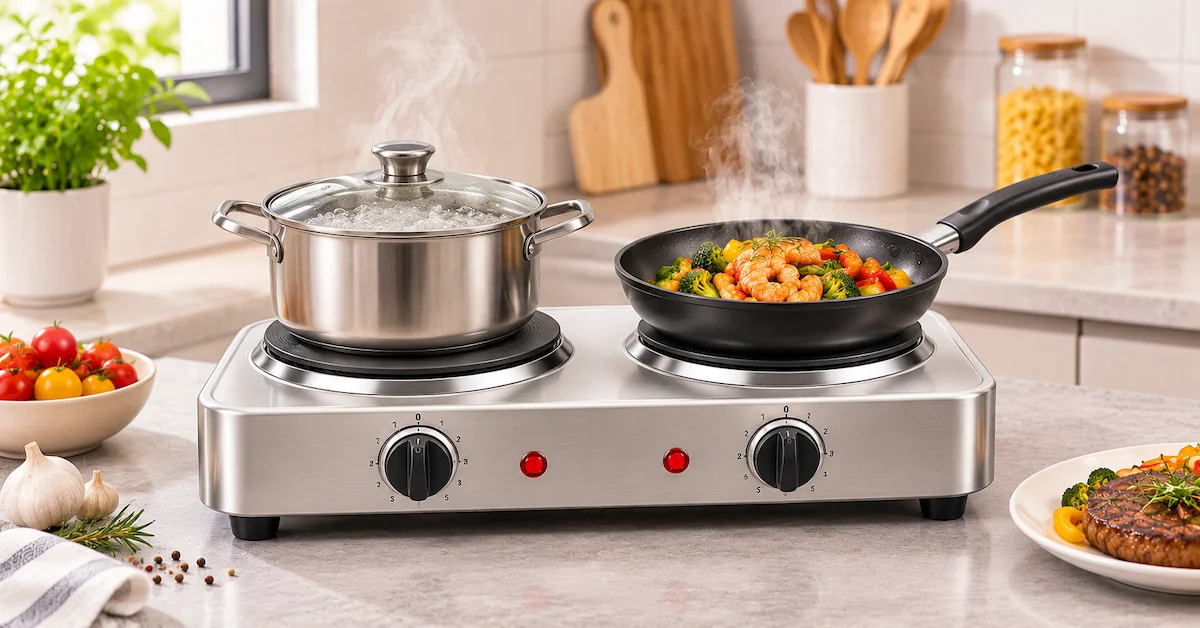



Quick Answer: A reliable cast iron hot plate manufacturer should provide evidence of the specified material and construction, controlled dimensions, stable electrical characteristics, acceptable heating performance, and repeatable quality after thermal cycling. Appliance OEMs should qualify a candidate heating plate using representative cookware, measurable acceptance criteria, and production-intent samples before approving bulk orders.
A cast iron hot plate may appear to be a simple circular heating component, but its performance affects the entire electric cooker.
The material and geometry influence how heat is stored and transferred. The mounting design affects assembly compatibility. Surface condition and electrical insulation influence durability and safety.
For appliance brands, the most expensive problem is not necessarily a component that fails immediately.
A heating plate may pass an initial functional check but develop unacceptable surface deterioration, mounting distortion, or electrical connection problems after repeated heating and cooling.
These risks make material verification and thermal-cycle testing important parts of OEM supplier qualification.
WEBO, officially GUANGDONG WEBO TECHNOLOGY CO., LTD, was established in 1998 in Yangjiang, Guangdong, China. The company supplies electric heating elements and related cooking appliance components.
Its published Hot Plate product range includes nominal 90mm, 110mm, and 145mm categories.
However, the public product information does not establish the exact cast iron grade, surface treatment, or electrical specification of every model. Buyers should obtain model-specific documentation before identifying a product as a confirmed cast iron configuration.
This guide explains how to evaluate a manufacturer, establish meaningful inspection criteria, and prepare a technically complete purchasing inquiry.
Explore WEBO's Hot Plate Product Range for available product references.
Key Takeaways
-
Verify the actual construction. "Cast iron hot plate" may describe a cast-iron heating surface or a finished electric cooker incorporating that surface.
-
Evaluate thermal behavior, not just rated wattage. Heat-up response, temperature distribution, and cooldown behavior all matter.
-
Inspect the material and surface. Casting condition, finish, cracks, corrosion risk, and dimensional stability can influence long-term performance.
-
Test repeated heating cycles. A single successful heat-up test does not establish service-life reliability.
-
Qualify the complete appliance. Component test results do not automatically establish finished-product conformity.
-
Approve controlled production samples. Specifications, inspection criteria, and change-control requirements should be agreed before volume purchasing.
1. What Is a Cast Iron Hot Plate?
A cast iron hot plate is commonly understood as an electric cooking or heating assembly with a cast-iron heating surface or body.
The cast iron acts as a thermally conductive mass that receives heat from the electric heating structure and transfers it toward the cookware.
Its performance depends on the complete assembly, not simply the casting material.
Cast Iron Hot Plate vs. Cast Iron Pan Support
These products should not be confused.
| Product | Primary function | Typical application |
|---|---|---|
| Cast iron electric hot plate | Transfers electrically generated heat to cookware | Electric cookers and portable electric stoves |
| Cast iron pan support | Supports cookware above a separate heat source | Gas cooktops and gas stoves |
| Cast iron cookware | Holds and transfers heat during cooking | Frying pans, griddles, pots |
| Ceramic radiant heater | Produces radiant heat beneath a compatible cooktop surface | Electric ceramic-glass cooktops |
WEBO lists Hot Plate and Cast Iron Pan Support as separate product categories.
For correct sourcing, buyers should specify whether they need an electric heating component, an assembled countertop cooker, or a gas stove grate.
Who Should Consider This Product?
A cast iron electric hot plate may be relevant to:
-
Electric stove and portable cooker OEM manufacturers
-
Appliance product development teams
-
Heating component purchasing managers
-
Replacement-parts distributors
-
Appliance quality and reliability engineers
It is not the appropriate product category for buyers seeking a standalone gas burner grate or a cast iron cooking pan.
2. Why Does Cast Iron Construction Matter for Electric Cookers?
Cast iron is often considered for solid heating surfaces because it combines mechanical rigidity with substantial thermal mass.
However, these characteristics create both benefits and design trade-offs.
Thermal Mass and Heat Retention
The amount of thermal energy stored by a material can be approximated using:
Q = m × c × ΔT
Where:
-
Q = stored thermal energy
-
m = material mass
-
c = specific heat capacity
-
ΔT = temperature change
For an illustrative calculation, assume:
-
Cast iron mass: 1 kg
-
Approximate specific heat: 0.46 kJ/(kg·K)
-
Temperature rise: 120 K
The approximate stored thermal energy is:
Q = 1 × 0.46 × 120 = 55.2 kJ
This is an engineering illustration, not a WEBO product measurement.
The specific heat of a real material varies with its composition and temperature.
What Does This Mean for Appliance Design?
A heating plate with greater thermal mass may store more energy at a given temperature rise.
That can influence temperature stability during changing cookware loads.
However, it can also increase warm-up or cooldown time, depending on the complete design.
Higher thermal mass does not automatically mean better energy efficiency or faster cooking.
The actual outcome depends on heating power, insulation, surface contact, control settings, cookware, and thermal losses.
For OEM buyers, these trade-offs should be measured under realistic operating conditions.
3. Which WEBO Hot Plate Models Should Buyers Compare?
WEBO publishes three useful size references for initial heating component selection.
| Model | Published nominal diameter | Potential design consideration | Information requiring confirmation |
|---|---|---|---|
| HP-F90 | 90mm | Compact heating-zone geometry | Material, voltage, power, mounting |
| HP-F110 | 110mm | Intermediate heating area | Surface construction, terminals, tolerances |
| HP-F145 | 145mm | Larger contact-heating zone | Heat distribution, electrical ratings, installation |
These model references should not be interpreted as verified cast iron specifications.
Before deciding which model to evaluate, request the current technical drawing and product datasheet.
Why Diameter Is Not Enough
Two heating plates with the same nominal diameter may differ in:
-
Overall installation height
-
Mounting structure
-
Terminal positioning
-
Rated voltage and power
-
Surface construction
-
Electrical insulation
-
Thermal response
A correct model selection must address the entire appliance interface.
For a replacement-component project, these differences may determine compatibility.
For new OEM development, they affect both mechanical design and electrical qualification.
4. What Material Specifications Should an OEM Request?
A manufacturer should be able to identify the specified material used in the proposed heating plate construction.
For a cast iron design, the buyer should not rely solely on product appearance.
Material Verification Checklist
| Specification | Why it matters | Documentation to request |
|---|---|---|
| Cast iron type | Defines the material family | Material designation |
| Material grade | Supports mechanical evaluation | Applicable material specification |
| Casting condition | Identifies visible and structural concerns | Inspection requirements |
| Surface finish | Affects contact and durability | Finish specification |
| Dimensional tolerances | Supports repeatable assembly | Controlled drawing |
| Coating, if applicable | Influences corrosion and surface behavior | Coating specification |
| Thermal compatibility | Supports application assessment | Relevant test results |
Gray Cast Iron and Material Standards
Gray cast iron is one material family used in engineering castings.
ASTM A48/A48M-22(2026) provides a specification for gray iron castings, including classification based on tensile strength.
However, an ASTM grade should not be assigned to a heating plate unless the actual product material and relevant records support it.
Other cast iron grades or constructions may require different specifications.
Why Material Traceability Matters
Material information can help a buyer investigate casting defects, repeat-order variation, or unexpected behavior during thermal cycling.
For OEM procurement, the relevant question is:
Can the supplier identify and consistently reproduce the approved material and construction?
This should be established before production approval.
5. The 9 Critical Checks Before Approving a Cast Iron Hot Plate Manufacturer
A practical supplier qualification program should focus on measurable properties that affect product performance and production repeatability.
OEM Qualification Matrix
| No. | Inspection or test | Main risk | Recommended verification |
|---|---|---|---|
| 1 | Material identification | Incorrect material or grade | Review approved material specification |
| 2 | Casting and surface integrity | Cracks, unacceptable casting defects | Visual inspection and applicable additional testing |
| 3 | Dimensional stability | Incorrect fit or distortion | Measure critical dimensions |
| 4 | Electrical characteristics | Incorrect power or resistance | Test under controlled conditions |
| 5 | Heat-up response | Unsuitable cooking performance | Measure temperature against time |
| 6 | Temperature distribution | Localized overheating | Compare defined measurement points |
| 7 | Cooldown behavior | Excessive residual heat risk | Record temperatures after power-off |
| 8 | Thermal-cycle durability | Cracking, surface deterioration, loss of fit | Repeated heating and cooling tests |
| 9 | Electrical and mechanical interfaces | Terminal or mounting problems | Inspect connections and assembly |
The buyer and supplier should agree on pass/fail criteria before testing.
Check 1: Material Identification
Verify that the proposed product matches the material and construction described in its technical documentation.
Check 2: Casting and Surface Integrity
Inspect the accessible surfaces for cracks, unacceptable casting defects, damage, or finish inconsistencies.
Acceptance limits should reflect the engineering function of the affected area.
Check 3: Dimensional Stability
Measure the critical dimensions in accordance with the approved drawing.
Where thermal distortion is a concern, compare relevant dimensions before and after representative cycling.
Check 4: Electrical Characteristics
Verify the rated electrical configuration using agreed methods.
Resistance and power measurements should be recorded under defined conditions.
Check 5: Heat-Up Response
Measure the time-temperature behavior under a representative operating condition.
A faster heat-up is not always preferable if it creates unacceptable temperatures elsewhere in the appliance.
Check 6: Temperature Distribution
Compare surface temperatures at predefined measurement locations.
Differences should be interpreted in relation to the heater design, cookware contact, and intended operation.
Check 7: Cooldown Behavior
Record residual surface temperatures after switching off power.
This can support enclosure design, thermal protection, and user safety assessments.
Check 8: Thermal-Cycle Durability
Repeat heating and cooling under an agreed duty cycle.
Inspect for cracking, surface deterioration, dimensional changes, and electrical performance drift.
Check 9: Electrical and Mechanical Interfaces
Confirm that terminals, mounting features, and associated structures remain acceptable after the relevant tests.
A heating plate that performs well thermally but fails to assemble consistently should not be approved for production.
6. How Should Thermal Cycling Be Tested?
Thermal cycling evaluates how a component behaves after repeated exposure to changing temperatures.
It is particularly relevant when a heating surface is expected to experience frequent start-stop operation.
Recommended Test Sequence
-
Record the initial condition. Measure resistance, dimensions, mounting condition, and surface appearance.
-
Install the component in a representative assembly. Use the intended control and mounting arrangement.
-
Apply defined operating conditions. Specify voltage, cookware, load, duty cycle, and ambient conditions.
-
Repeat heating and cooling. Use the cycle count established by the qualification plan.
-
Monitor relevant parameters. Record temperatures and electrical behavior.
-
Inspect after cycling. Check for deterioration, distortion, cracks, terminal changes, and functional failures.
-
Compare against acceptance limits. Release the component only if the agreed criteria are satisfied.
Why Test Conditions Must Be Controlled
Thermal results can vary with cookware mass, contact area, material, and operating conditions.
A test performed with an empty surface may produce different results from one performed with a loaded cooking vessel.
For repeatable comparisons, use a defined test setup.
Temperature measurements should also use suitable sensors and methods. Infrared measurements require attention to surface emissivity and measurement conditions.
Important: Avoid inventing universal thermal-cycle limits. The appropriate cycle count, temperature profile, and acceptance criteria depend on the product specification and relevant safety requirements.
7. Cast Iron Hot Plate vs. Ceramic Radiant Heater vs. Induction Heating
An OEM may consider different heating technologies before selecting a product architecture.
Each involves different operating principles and integration requirements.
| Technology | Heating principle | Key engineering consideration |
|---|---|---|
| Solid cast iron electric hot plate | Electrically heated solid surface transfers heat to cookware | Thermal mass, surface contact, residual heat |
| Ceramic radiant heater | Radiant heating beneath a compatible surface | Heater-glass compatibility and thermal protection |
| Induction heating | Electromagnetic energy heats suitable cookware | Electronics, coil design, cookware compatibility |
When Does a Solid Cast Iron Design Make Sense?
A solid heating plate may be appropriate for an appliance that requires a relatively simple contact-heating arrangement.
However, the complete product design must be evaluated.
When Might Radiant Heating Be Better?
A ceramic-glass cooktop design may require a suitable radiant heating element.
WEBO also lists Ceramic Heaters.
When Might Induction Be Considered?
Induction systems require appropriate power electronics, an induction coil, thermal management, and compatible cookware.
They should not be treated as interchangeable with a solid electric heating plate.
The correct solution depends on the OEM's product architecture, market requirements, and cost objectives.
8. What Manufacturing and Quality Controls Matter Most?
The manufacturing route influences product consistency.
Depending on the approved design, relevant operations may include casting procurement, surface preparation, machining, heating element integration, assembly, and final inspection.
The exact processes performed by WEBO for any particular hot plate model should be confirmed directly.
Recommended Quality Control Stages
| Manufacturing stage | Quality control concern |
|---|---|
| Material sourcing | Approved material and supplier records |
| Casting evaluation, where applicable | Surface integrity and required material properties |
| Dimensional processing | Critical measurements and geometry |
| Surface finishing | Finish condition and coating consistency |
| Heating assembly | Electrical characteristics and component positioning |
| Final inspection | Product configuration and acceptance criteria |
| Packaging | Surface and terminal protection |
| Shipment release | Correct model, quantity, and revision |
Why Batch Consistency Matters
The buyer should be able to connect production shipments to the approved specification.
That includes consistent material requirements, electrical ratings, critical dimensions, and applicable inspection criteria.
An engineering change should not enter production without appropriate review.
9. What Safety and Certification Evidence Should Buyers Request?
Electrical heating components must be evaluated within their intended application.
A standalone hot plate component and a complete portable electric cooker are not necessarily subject to identical conformity assessment requirements.
For relevant household and similar portable cooking appliances, IEC 60335-2-9 provides safety requirements used alongside the applicable general requirements of IEC 60335-1.
The appropriate edition and national or regional adoption must be determined for the target market.
Recommended Documentation
Request the current product datasheet, approved mechanical drawing, electrical ratings, relevant test reports, and any applicable certification or conformity documents.
For a cast iron configuration, also request appropriate material and surface specifications.
WEBO's company information references ISO 9001 and ISO 14001 management standards and mentions VDE, TÜV, UL, CE, and RoHS.
These company-level statements do not establish that every hot plate model carries all the listed approvals.
Buyers should verify the documentation associated with the exact model and intended market.
A component's material conformity and a finished appliance's electrical safety compliance are separate matters.
10. What Affects Cast Iron Hot Plate Pricing and Lead Time?
Purchasing cost depends on more than the nominal size of the heating plate.
Relevant factors may include:
-
Specified material and construction
-
Diameter and geometry
-
Electrical configuration
-
Surface finish
-
Production volume
-
Inspection requirements
-
Custom engineering or tooling
-
Packaging and shipping arrangements
Standard vs. Custom Purchasing
| Cost factor | Existing approved configuration | Customized configuration |
|---|---|---|
| Engineering effort | Application verification | Additional design review |
| Tooling | Existing tooling may be applicable | New or modified tooling may be required |
| Samples | Standard model qualification | Custom prototype qualification |
| Testing | Application-specific verification | Additional affected-characteristic tests |
| Unit cost | Based on current configuration | Depends on modified specification |
| Production schedule | Subject to availability and order terms | Includes possible development stages |
A customized cast iron hot plate may offer value when it solves a specific technical or assembly problem.
However, the improvement should justify development and qualification expenses.
WEBO's actual MOQ, tooling charges, production capacity, and lead times require a current project-specific quotation.
11. Practical OEM Scenario: Replacing a 145mm Heating Plate
Consider an electric cooker manufacturer evaluating a nominal 145mm heating plate for an existing appliance.
This is an illustrative engineering scenario, not a documented WEBO customer project.
The Challenge
The replacement component fits the intended opening and reaches an acceptable temperature during an initial demonstration.
However, the engineering team has not verified the material, electrical configuration, or repeated heating performance.
The Qualification Approach
The buyer should first confirm the proposed component's dimensions and electrical characteristics.
Next, the team should test heating behavior using representative cookware and the intended control arrangement.
The prototype should then undergo an agreed thermal-cycle assessment.
Following testing, engineers should inspect the component for dimensional changes, surface deterioration, and connection problems.
The Purchasing Decision
The component should proceed to production-intent evaluation only after it satisfies the agreed requirements.
The objective is to prevent an apparently compatible sample from creating costly repeat-order problems.
12. How to Prepare an RFQ for a Cast Iron Hot Plate Manufacturer
A complete request for quotation helps the manufacturer evaluate the actual engineering and purchasing requirements.
| RFQ field | Information to provide |
|---|---|
| Application | Portable cooker, electric stove, or heating assembly |
| Product type | Loose heating component or complete appliance |
| Material | Required cast iron type or material specification |
| Diameter | Nominal size and critical tolerances |
| Electrical configuration | Voltage, wattage, and relevant requirements |
| Mechanical interface | Mounting dimensions and terminal layout |
| Surface requirements | Finish, coating, and appearance criteria |
| Operating conditions | Duty cycle and representative load |
| Thermal qualification | Required tests and acceptance limits |
| Market requirements | Destination countries and applicable standards |
| Purchase quantity | Sample, pilot, and projected bulk order |
| Commercial information | MOQ, tooling, pricing, lead time, shipping |
Request a Technical Review from WEBO
Looking for a cast iron hot plate manufacturer for electric cooker production or replacement heating component sourcing?
WEBO offers a published range of solid electric hot plate references.
Submit your required material, electrical specifications, mechanical drawings, sample quantity, and target application.
Ask WEBO to confirm whether an existing model satisfies your construction requirements or whether a custom engineering review is needed.
Contact WEBO for Technical Specifications and an OEM Quotation
13. Frequently Asked Questions
1. What does a cast iron hot plate manufacturer produce?
A cast iron hot plate manufacturer produces or supplies electrically heated plate assemblies incorporating cast iron construction. Buyers should confirm whether the supplier offers the heating component itself or a complete cooker.
2. Does WEBO manufacture cast iron hot plates?
WEBO manufactures electric heating components and lists solid hot plate products. Its public product pages do not establish the exact cast iron material specification of every listed model. Buyers should request model-specific confirmation.
3. What sizes of electric hot plates does WEBO offer?
WEBO publishes nominal 90mm, 110mm, and 145mm categories, including HP-F90, HP-F110, and HP-F145.
4. Why is cast iron used in electric heating plates?
Cast iron can provide a rigid heating surface with appreciable thermal mass. The actual performance depends on the heating structure, design, control method, and cookware contact.
5. Does a cast iron hot plate heat more evenly than other technologies?
Not necessarily. Temperature distribution depends on the complete design, heat source geometry, material properties, and cookware. Comparative testing is required.
6. What tests matter most for cast iron hot plates?
Important evaluations include material verification, dimensional inspection, electrical testing, heat-up behavior, temperature distribution, cooldown performance, thermal cycling, and interface reliability.
7. Can a cast iron heating plate be customized?
Customization may be possible depending on the existing design and manufacturing capabilities. Buyers should confirm the feasibility of changing dimensions, electrical characteristics, terminals, or surface requirements.
8. How do buyers prevent surface cracking after repeated heating?
Specify appropriate materials and construction, control critical manufacturing characteristics, and qualify the component under representative thermal cycles. No inspection program can guarantee that every possible failure is eliminated.
9. What affects MOQ and lead time for cast iron hot plates?
MOQ and lead time can depend on the selected model, material requirements, customization, tooling, order quantity, production scheduling, and inspection needs. These conditions must be confirmed with the manufacturer.
10. How can I request a cast iron hot plate quotation from WEBO?
Provide your intended application, required material, size, voltage, power, mounting requirements, test criteria, and order forecast. Submit the details through the WEBO Contact Page.
Conclusion
Choosing a reliable cast iron hot plate manufacturer requires a practical understanding of material properties, electrical performance, temperature behavior, manufacturing consistency, and application-specific safety requirements.
The most important purchasing decision is not simply whether a heating plate has a cast iron surface.
OEM buyers need to verify the actual construction, confirm electrical and mechanical compatibility, and establish whether the product can withstand its intended operating conditions.
Material identification, surface integrity, temperature distribution, cooldown behavior, and thermal-cycle durability should all be considered before production approval.
WEBO, established in 1998, manufactures electric heating elements and related cooking appliance components. Its published hot plate range includes HP-F90, HP-F110, and HP-F145, providing starting points for technical sourcing discussions.
The exact cast iron construction, material grade, electrical ratings, test documentation, customization capabilities, MOQ, and delivery conditions must be verified for the selected configuration.
Developing an electric cooker, evaluating a new heating plate, or qualifying an alternative component supplier?
Share your drawings, material requirements, operating conditions, qualification criteria, and purchasing forecast with WEBO.
Explore WEBO's Hot Plate Range or Request an OEM Heating Plate Quotation to begin your supplier evaluation.