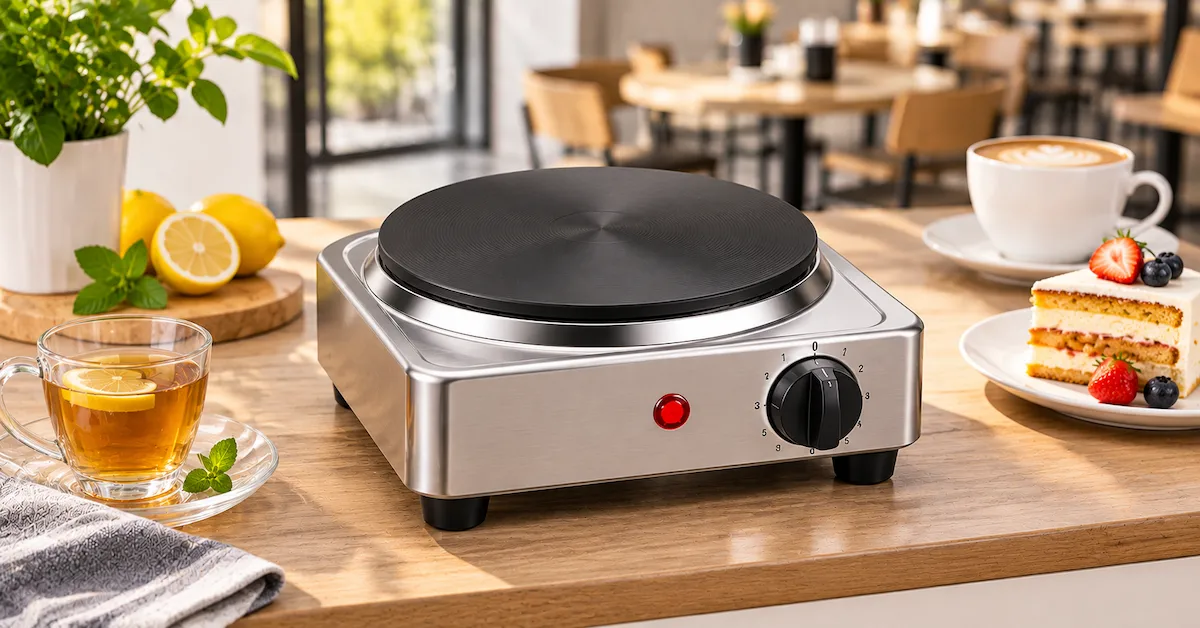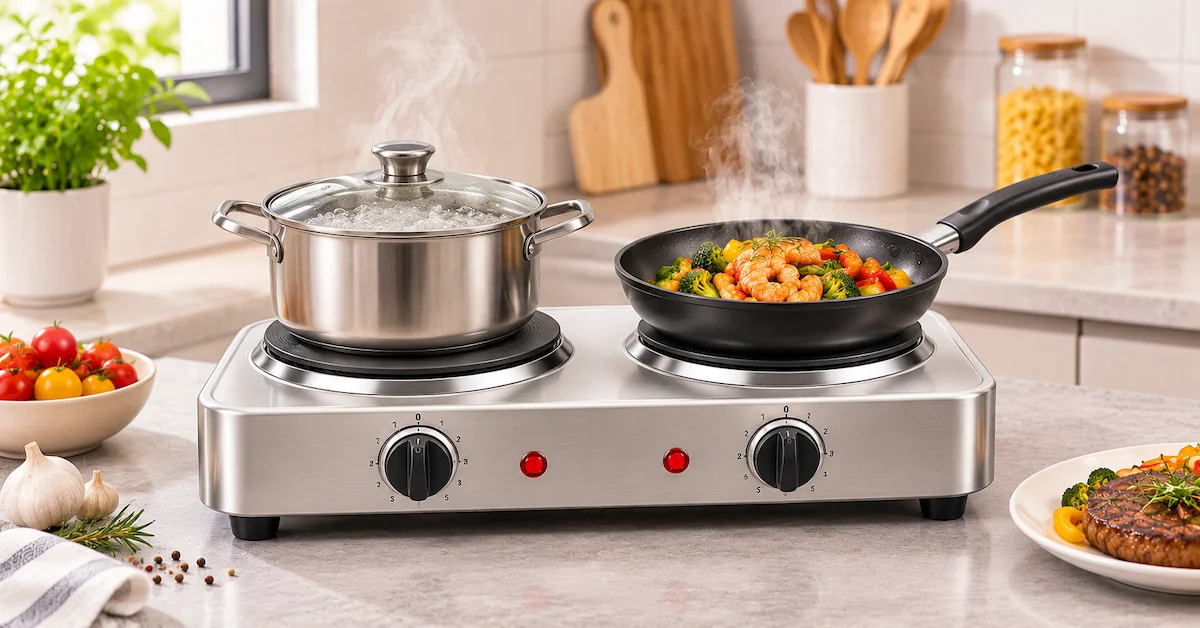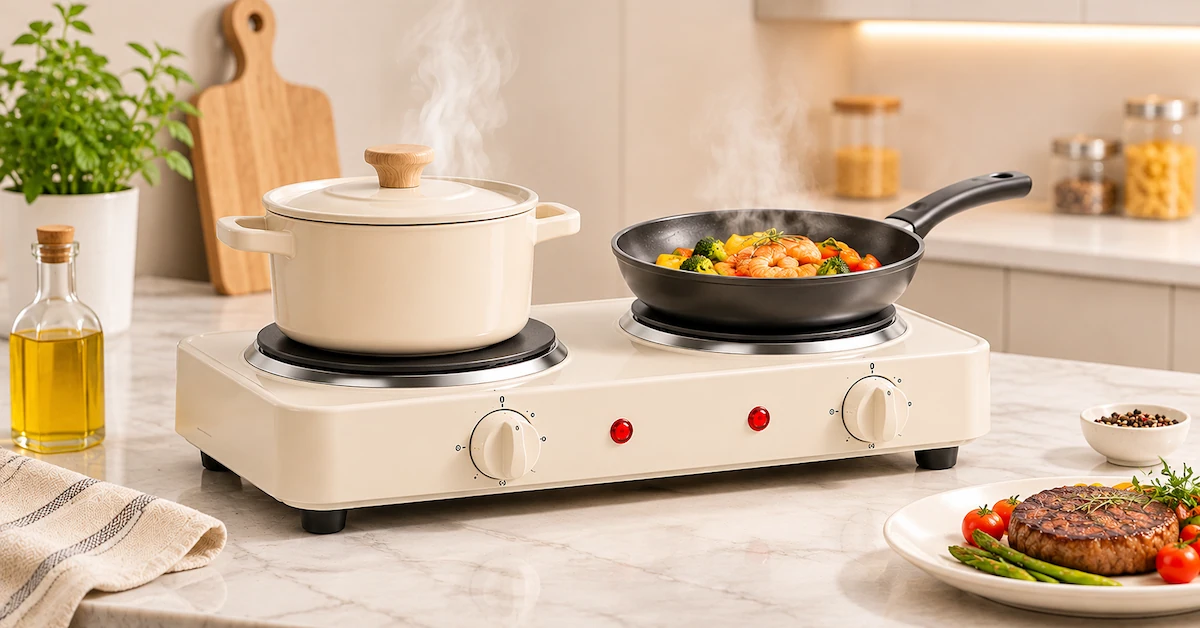



Selecting an electric hot plate custom manufacturer requires more than finding a supplier willing to modify diameter, wattage, or terminal configuration. For appliance manufacturers, every modification can influence electrical performance, thermal behavior, manufacturing feasibility, certification requirements, and total production cost.
A custom heating plate may solve a critical assembly problem, improve compatibility with an existing cooker design, or support a new appliance platform. However, unnecessary customization can increase tooling expenses, extend development schedules, and introduce additional qualification requirements.
The key purchasing question is not simply whether a manufacturer can customize a hot plate. It is which changes provide measurable value and whether the final configuration can be manufactured consistently.
Quick Answer: Before selecting an electric hot plate custom manufacturer, identify the exact technical problem, compare standard and modified components, and request a design feasibility review. Confirm the impact of proposed changes on heating performance, mounting, materials, tooling, electrical safety, and production quality. Approve production only after representative samples meet documented acceptance criteria.
WEBO, officially GUANGDONG WEBO TECHNOLOGY CO., LTD, is a China-based electric heating element manufacturer established in 1998.
Its product range includes solid hot plates, ceramic radiant heaters, tubular heating elements, and related appliance components.
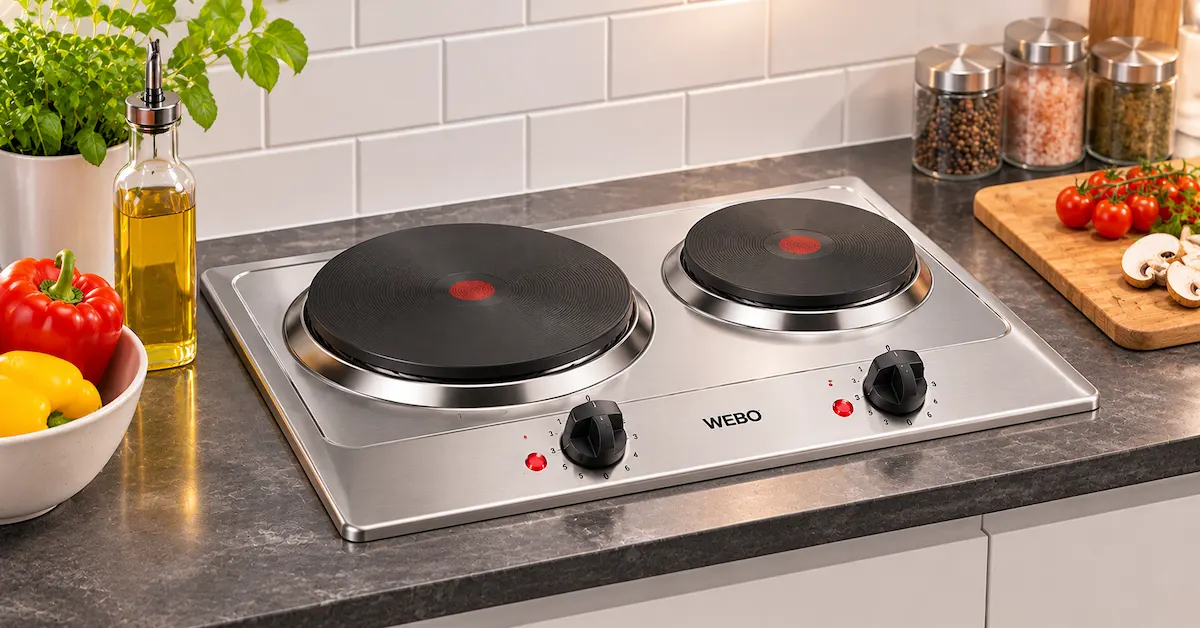
WEBO publishes hot plates in nominal 90mm, 110mm, and 145mm categories. These provide practical starting points for discussing existing designs and possible project-specific modifications.
This guide explains how appliance OEMs can assess customization feasibility, reduce engineering risks, control development expenses, and prepare an effective request for quotation.
Explore the WEBO Electric Hot Plate Product Range for available component references.
Key Takeaways
-
Customize only when necessary. An existing component may be more economical if it already satisfies the appliance requirements.
-
Evaluate each engineering change separately. Modifications to diameter, electrical ratings, terminals, and surface construction have different technical consequences.
-
Understand tooling implications. Not every modification requires new tooling, but changes affecting component geometry or construction may require additional investment.
-
Validate electrical and thermal performance. A modified heating component should not automatically inherit the qualification status of the original design.
-
Calculate development economics. Compare one-time engineering expenses with expected production savings or functional benefits.
-
Control the final design revision. Approved samples, drawings, inspection plans, and purchase orders must identify the same configuration.
1. What Does an Electric Hot Plate Custom Manufacturer Do?
A custom electric hot plate manufacturer evaluates and produces heating components according to specified appliance requirements.
Unlike purchasing a standard catalog product, custom manufacturing involves reviewing whether an existing component can be modified or whether a different design is necessary.
Customization may involve mechanical, electrical, material, or identification requirements.
Typical application areas include electric stoves, portable electric cookers, compact countertop appliances, and compatible replacement-component programs.
Who needs customized electric hot plates?
| Buyer type | Customization requirement | Primary concern |
|---|---|---|
| Electric cooker OEMs | Mounting and electrical compatibility | Production assembly |
| Portable stove manufacturers | Compact component geometry | Space and thermal management |
| Appliance product developers | New heating configurations | Engineering feasibility |
| Private label brands | Project-specific components | Product differentiation |
| Replacement-parts manufacturers | Matching existing interfaces | Correct fit and performance |
| Contract manufacturers | Controlled customer specifications | Repeatable production |
| Purchasing managers | Reliable custom component supply | Cost and delivery risk |
Customization is most useful when a standard component cannot meet one or more mandatory requirements.
For example, an existing heating plate might provide an acceptable heating area but have terminals that interfere with a cooker housing.
In that case, reviewing the terminal arrangement may be more economical than redesigning the complete heating assembly.
However, the feasibility of any specific modification must be confirmed with the manufacturer.
2. Standard Hot Plate vs. Modified Standard vs. Fully Custom Design
Before requesting a new component, buyers should compare three development approaches.
| Evaluation | Standard component | Modified standard component | New custom component |
|---|---|---|---|
| Starting design | Existing product | Existing product with approved changes | Project-specific design |
| Engineering work | Application verification | Modification review | Broader development |
| Tooling requirements | Existing tooling may be usable | Depends on modification | May require new tooling |
| Electrical qualification | Verify actual application | Reassess affected characteristics | Full relevant qualification |
| Sample development | Existing model samples | Modified samples | New engineering samples |
| Commercial risk | Product mismatch | Change complexity | Development cost |
| Best suited for | Compatible existing appliances | Targeted design improvements | Unique technical requirements |
When should buyers choose a standard model?
Choose an existing component when its electrical rating, dimensions, mounting, terminals, and operating characteristics satisfy the application.
Unnecessary modifications may create additional costs without improving the finished appliance.
When is a modified standard model better?
A modified standard design may be appropriate when only a limited number of characteristics require changes.
Examples include an incompatible terminal orientation or a specific mounting interface.
When is a new custom design justified?
A new design may be necessary when the required geometry, electrical construction, or performance cannot be achieved through acceptable modifications.
Such projects require careful assessment of tooling, qualification, manufacturing capability, and expected production volume.
The most economical design is usually the least complex configuration that meets every mandatory engineering requirement.
3. Which Electric Hot Plate Features Can Be Customized?
Different modifications have different consequences.
An important responsibility of a custom manufacturer is to identify which requirements can be supported through existing product options and which require engineering development.
Engineering Change Impact Matrix
| Customization request | Possible technical impact | Evaluation required |
|---|---|---|
| Diameter modification | Heating area, mounting, tooling | Drawing and thermal review |
| Overall height adjustment | Housing fit and assembly | Dimensional and assembly testing |
| Voltage modification | Electrical current and heating characteristics | Electrical design and qualification |
| Wattage modification | Heating output and temperature behavior | Electrical and thermal testing |
| Terminal repositioning | Wiring interface and clearances | Connection and assembly verification |
| Mounting modification | Mechanical support and expansion | Fit and reliability testing |
| Surface material or finish | Heat transfer and durability | Material and cycling evaluation |
| Identification or packaging | Inventory and distribution | Label and packaging approval |
This matrix is a general engineering assessment framework. It does not establish that every modification is available for every WEBO model.
Diameter customization
Changing diameter can affect both mechanical integration and heat-transfer behavior.
A different nominal size may require modifications to supporting structures or the heating assembly.
The buyer should evaluate the required cookware contact area before requesting a nonstandard diameter.
Voltage and wattage customization
Electrical modifications can influence the internal heating structure, control compatibility, and operating temperatures.
These changes must be reviewed against the complete electrical design.
Terminal customization
Terminal arrangement is especially important for compact appliances.
A different orientation may simplify wiring or avoid interference with nearby components.
However, connector compatibility, electrical clearances, temperature exposure, and mechanical retention still require verification.
Surface customization
Surface materials and treatments may affect appearance, corrosion behavior, thermal response, and repeated heating performance.
Changes should be evaluated according to actual operating conditions.
4. How Do WEBO Hot Plate Models Support Customization Discussions?
WEBO's published Hot Plate range includes three nominal diameter categories.
These products can serve as reference points when defining a custom heating component.
| Model | Published size | Initial engineering consideration | Information to request |
|---|---|---|---|
| HP-F90 | 90mm | Compact heating-zone design | Voltage, power, mounting dimensions |
| HP-F110 | 110mm | Intermediate contact-heating geometry | Terminals, overall height, materials |
| HP-F145 | 145mm | Larger localized heating surface | Electrical ratings, enclosure fit |
These are existing product references, not confirmed customized configurations.
WEBO's public product listings do not provide complete verified tolerances, electrical ratings, material specifications, or tooling requirements for each model.
Buyers should obtain current technical documents before determining which model is suitable for modification.
Example: Modifying an existing 145mm heating assembly
Suppose an appliance manufacturer has a cooker housing designed around a nominal 145mm heating zone.
A candidate heating plate matches the intended cooking area, but its terminal location interferes with the wiring layout.
The manufacturer has two potential options:
-
Modify the appliance's internal wiring arrangement.
-
Investigate a feasible terminal modification to the heating component.
The correct decision depends on engineering cost, connector compatibility, assembly time, qualification requirements, and long-term production volume.
A custom component should be developed only if its benefits justify these additional considerations.
5. How Do Electrical Changes Affect Heating Performance?
Electrical performance is a critical part of custom heating component development.
For a simplified resistive heating element:
P = V² / R
Where:
-
P represents electrical power.
-
V represents the applied voltage.
-
R represents electrical resistance.
This relationship explains why changing the operating voltage without modifying the heating design can significantly affect power consumption.
Illustrative electrical comparison
Assume a hypothetical resistive heating component has an operating resistance of 100Ω.
| Applied voltage | Calculated power |
|---|---|
| 120V | 144W |
| 180V | 324W |
| 230V | 529W |
These values are illustrative calculations for a fixed resistance. They are not WEBO product specifications.
Actual resistance may vary with operating temperature.
Why this matters for customization
A component intended for one electrical supply cannot automatically be reclassified for another.
If an appliance brand plans different electrical configurations, the heating component and related controls must be evaluated accordingly.
Changing the power requirement may also influence heating performance and enclosure temperatures.
A modified heater must therefore undergo suitable electrical and thermal verification.
Heating performance depends on more than wattage
Cookware geometry, contact conditions, surface construction, control strategy, and thermal losses influence actual performance.
The finished appliance should be tested with representative cookware and operating conditions.
Engineering recommendation: Electrical modifications should be evaluated at both component and finished-appliance levels.
6. How Should Mechanical Tolerances Be Controlled?
Dimensional compatibility is one of the most important considerations in custom hot plate manufacturing.
A component may meet its nominal diameter specification yet fail to assemble correctly because of differences in mounting height, terminal orientation, or other features.
Critical mechanical specifications
| Parameter | Engineering concern |
|---|---|
| External diameter | Compatibility with cooker opening |
| Overall height | Appliance enclosure clearance |
| Mounting position | Assembly alignment |
| Terminal location | Wiring interference |
| Supporting geometry | Mechanical stability |
| Surface characteristics | Cookware contact |
| Thermal expansion | Repeated heating behavior |
The supplier drawing should identify critical datums and tolerances.
The OEM should then evaluate the combined dimensional variation of the heating plate and surrounding appliance parts.
Design for manufacturability
Design for manufacturability (DFM) focuses on whether a proposed product can be manufactured and assembled consistently.
For custom heating components, DFM evaluation should consider:
-
Component installation access
-
Repeatable mounting
-
Electrical connection accessibility
-
Tooling feasibility
-
Dimensional inspection methods
-
Production fixture requirements
A design that performs correctly during a manually assembled prototype may still create production-line difficulties.
Representative assembly trials should be completed before production approval.
7. When Does Custom Hot Plate Manufacturing Require New Tooling?
Tooling requirements depend on the proposed modification and the manufacturing process.
A packaging change may require little or no modification to heating component tooling.
A change to mounting geometry or product construction may require additional fixtures or production equipment.
A completely new heating plate geometry may involve more extensive development.
Tooling Impact Comparison
| Modification | Possible tooling impact | Procurement consideration |
|---|---|---|
| Packaging adjustment | Packaging tooling or artwork changes | Confirm setup charges |
| Product identification | Marking or labeling changes | Verify identification method |
| Terminal adjustment | Possible fixtures or process changes | Confirm feasibility |
| Mounting modification | Possible tooling or fixture changes | Review assembly requirements |
| Diameter modification | Potentially significant tooling changes | Evaluate expected demand |
| Heating structure redesign | Possible new manufacturing tooling | Review development investment |
The actual tooling requirements must be confirmed by WEBO for the proposed design.
Tooling ownership
Buyers should clarify who owns newly developed tooling and who is responsible for maintenance.
Other considerations include storage, modification approval, replacement, and potential production transfer.
These terms should be addressed before committing to significant development expenses.
8. How Can Buyers Calculate Whether Customization Is Worth the Cost?
Customization should deliver a measurable benefit.
Potential benefits include lower assembly costs, improved component compatibility, reduced rework, or support for a product that cannot use an existing standard design.
However, custom development may introduce engineering, tooling, and qualification expenses.
Customization break-even calculation
A simplified calculation is:
Break-even Quantity = One-Time Customization Cost ÷ Net Savings per Unit
Consider a hypothetical project with:
-
Additional development and tooling cost: $12,000
-
Expected net savings per assembled appliance: $0.30
The break-even volume would be:
$12,000 ÷ $0.30 = 40,000 units
This example assumes the $0.30 saving is realized after accounting for relevant recurring cost differences.
The figures are illustrative and do not represent WEBO pricing or actual customer savings.
When customization may be justified
A custom design becomes more attractive when it resolves a persistent problem affecting a large production volume.
For example, reducing a repeated assembly operation may create meaningful cumulative savings.
When customization may not be justified
If the forecast order quantity is small or the proposed modification offers limited improvement, adapting the appliance around an existing component may be more economical.
Purchasing recommendation: Evaluate engineering benefits and expected purchasing volume before approving nonstandard tooling.
9. What Is the Recommended Custom Hot Plate Development Process?
A structured development process helps prevent unresolved engineering decisions from entering mass production.
Step 1: Application and requirement review
The buyer submits the finished appliance application, technical drawing, electrical requirements, and desired modifications.
The supplier evaluates the information and identifies potential feasibility issues.
Step 2: Design feasibility assessment
The manufacturer reviews whether existing products can satisfy the requirements.
Potential technical, tooling, material, and qualification consequences are identified.
Step 3: Engineering proposal
The parties agree on the proposed component specification, development responsibilities, and sample requirements.
Step 4: Prototype production and testing
Representative samples are evaluated against the agreed specifications.
Testing may include dimensions, electrical characteristics, heating performance, and assembly compatibility.
Step 5: Pilot production
Production-intent components are manufactured and evaluated under representative conditions.
This helps identify manufacturing or assembly problems that may not appear during prototype development.
Step 6: Production release
The buyer and supplier approve the final configuration, inspection criteria, identification, packaging, and commercial conditions.
This six-stage process is a recommended OEM development framework, not a claim about WEBO's exact internal operating procedures.
10. What Quality Tests Should Customized Heating Plates Pass?
Custom components may require new qualification activities because modifications can affect previously evaluated characteristics.
The appropriate test plan depends on the modification and finished-appliance application.
Recommended Test Matrix
| Test category | Main objective |
|---|---|
| Dimensional inspection | Verify modified geometry |
| Electrical resistance | Confirm specified electrical behavior |
| Rated power testing | Evaluate electrical characteristics |
| Insulation assessment | Support electrical safety |
| Terminal inspection | Verify connections and positioning |
| Heating response | Evaluate thermal performance |
| Thermal cycling | Assess repeated operating effects |
| Assembly testing | Verify installation compatibility |
| Surface inspection | Confirm workmanship requirements |
| Packaging inspection | Protect approved components during shipment |
Certification considerations
WEBO's company website references ISO 9001, ISO 14001, VDE, TÜV, UL, CE, and RoHS.
However, these statements do not establish that every custom configuration has the same approval status.
Management-system certification is also different from model-specific product certification.
For applicable household and similar electric cooking appliances, IEC 60335-1 and relevant requirements of IEC 60335-2-9 are important safety references.
The finished-appliance manufacturer must confirm the applicable market requirements and determine whether proposed modifications require additional testing or conformity assessment.
Critical rule: A custom component should not automatically inherit all qualification claims associated with its starting design.
11. How Does a Custom Manufacturer Maintain Batch Consistency?
Engineering qualification establishes whether the proposed design is technically acceptable.
Production quality control determines whether the approved design can be manufactured repeatedly.
Controlled specifications
Each custom product should have an agreed part number, drawing, and revision.
Incoming material verification
Relevant materials and purchased components should conform to the approved requirements.
In-process inspection
Critical dimensions and electrical characteristics may require monitoring during production.
Final inspection
Finished components should be compared against approved criteria.
Engineering change control
Changes involving materials, heating structures, terminals, mounting features, or electrical characteristics should undergo appropriate review.
Batch traceability
Identification records should connect delivered components to the applicable specifications and production information.
These practices help reduce unintended variation between repeat orders.
Buyers should confirm which specific inspection and traceability arrangements are available for their project.
12. Why Consider WEBO for Custom Electric Hot Plate Projects?
WEBO was established in 1998 and specializes in electric heating elements and related appliance components.
Its publicly listed categories include:
-
Hot Plate
-
Ceramic Heater
-
Tube Heating Element
-
Cast Iron Pan Support
-
Induction Coil
-
Ceramic Glass
-
Rotary Switch
-
Energy Regulator
This product range provides several relevant component categories for appliance manufacturers.
For example, a custom electric cooker project may require both a heating plate and a compatible electrical control component.
WEBO also lists Energy Regulators and Rotary Switches.
Their actual compatibility must be confirmed through engineering review.
According to WEBO's published company information, the company operates in Yangjiang, Guangdong Province, and serves international customers.
Its manufacturing background provides a basis for initial supplier evaluation, but specific customization capabilities, technical specifications, production capacity, and delivery conditions require project-level confirmation.
Learn more about WEBO's Manufacturing Background.
13. How to Prepare a Custom Electric Hot Plate RFQ
A complete request for quotation should describe the technical problem and proposed solution, not only the requested size and quantity.
| RFQ item | Information to provide |
|---|---|
| Appliance application | Electric stove, portable cooker, or other equipment |
| Existing component | Current model, sample, or drawing |
| Required modification | Diameter, voltage, terminals, mounting, or other change |
| Technical problem | Explain why the existing component is unsuitable |
| Electrical specifications | Voltage, wattage, and relevant requirements |
| Mechanical requirements | Controlled drawings and tolerances |
| Target market | Destination countries |
| Qualification requirements | Required tests and documents |
| Sample quantity | Prototype evaluation needs |
| Production forecast | Initial and annual order quantities |
| Tooling requirements | Development and ownership expectations |
| Packaging | Identification and shipment requirements |
| Commercial request | Quotation, MOQ, lead time, and delivery terms |
Request a Custom Hot Plate Feasibility Review
Developing a new electric cooker or modifying an existing heating component?
WEBO's published hot plate range provides a starting point for evaluating suitable components.
Share your drawings, electrical requirements, proposed modifications, target market, and purchasing forecast.
The manufacturer can then review potential product options and discuss project-specific development feasibility.
Explore WEBO Electric Hot Plate Products
Contact WEBO for Custom Hot Plate Specifications and Quotation
14. Frequently Asked Questions
1. What does an electric hot plate custom manufacturer do?
An electric hot plate custom manufacturer evaluates and produces heating components according to specified customer requirements. Customization may involve dimensions, electrical ratings, terminals, mounting structures, materials, or packaging, subject to technical feasibility.
2. Can WEBO manufacture custom electric hot plates?
WEBO's published materials describe OEM and ODM-related heating component customization. The exact modification options for each model must be confirmed through a project-specific technical review.
3. What electric hot plate sizes does WEBO offer?
WEBO publishes nominal 90mm, 110mm, and 145mm hot plate categories, including HP-F90, HP-F110, and HP-F145.
4. Can electric hot plate voltage and wattage be customized?
Electrical customization may be possible depending on component construction. Changes require engineering review and appropriate verification because voltage and resistance influence electrical power and thermal behavior.
5. Does custom hot plate manufacturing always require new tooling?
No. Tooling requirements depend on the modification. Some changes may use existing production arrangements, while changes to geometry or construction may require new tooling or fixtures.
6. How long does custom hot plate development take?
Development time depends on technical complexity, tooling, sample revisions, qualification requirements, and production scheduling. WEBO's actual project lead time should be confirmed through a quotation.
7. What tests should custom electric hot plates undergo?
Relevant tests may include dimensional inspection, electrical verification, insulation assessment, thermal performance, repeated heating, terminal compatibility, and finished-appliance qualification.
8. How can buyers reduce custom heating plate development costs?
Start with an existing compatible product, minimize unnecessary modifications, define technical requirements clearly, and evaluate tooling expenses against expected production benefits.
9. What affects custom electric hot plate MOQ and pricing?
Pricing and MOQ may depend on design complexity, tooling, electrical specifications, material requirements, qualification, packaging, and production volume. Buyers should request project-specific terms.
10. How can I request a custom electric hot plate quotation from WEBO?
Prepare your application, existing drawings or samples, proposed modifications, voltage and power requirements, destination market, and estimated order quantity. Submit them through the WEBO Contact Page.
Conclusion
Selecting an electric hot plate custom manufacturer requires a structured approach to technical feasibility, engineering modifications, tooling investment, quality verification, and long-term production planning.
Customization can create value when standard heating components cannot satisfy an appliance's electrical, mechanical, or operational requirements.
However, every modification should have a clear engineering purpose.
Changes to diameter, voltage, wattage, terminals, mounting structures, or materials can affect performance and manufacturing requirements. These changes should be evaluated before tooling and mass-production commitments are approved.
For appliance manufacturers and procurement teams, the best strategy is to compare existing products with proposed modifications, verify technical compatibility, and calculate whether customization provides measurable benefits over the expected production volume.
WEBO, established in 1998, manufactures electric heating elements and related appliance components. Its published hot plate range includes HP-F90, HP-F110, and HP-F145, which may provide starting points for custom manufacturing discussions.
The feasibility of specific modifications, certification documentation, tooling, MOQ, and production schedules must be confirmed individually.
Planning a custom electric hot plate project for a new cooker, existing appliance redesign, or OEM product line?
Share your technical drawings, electrical requirements, proposed modifications, and purchasing forecast with WEBO to discuss suitable starting components and development feasibility.
View WEBO Hot Plate Products or Request a Custom Manufacturing Quotation to begin your next heating component development project.