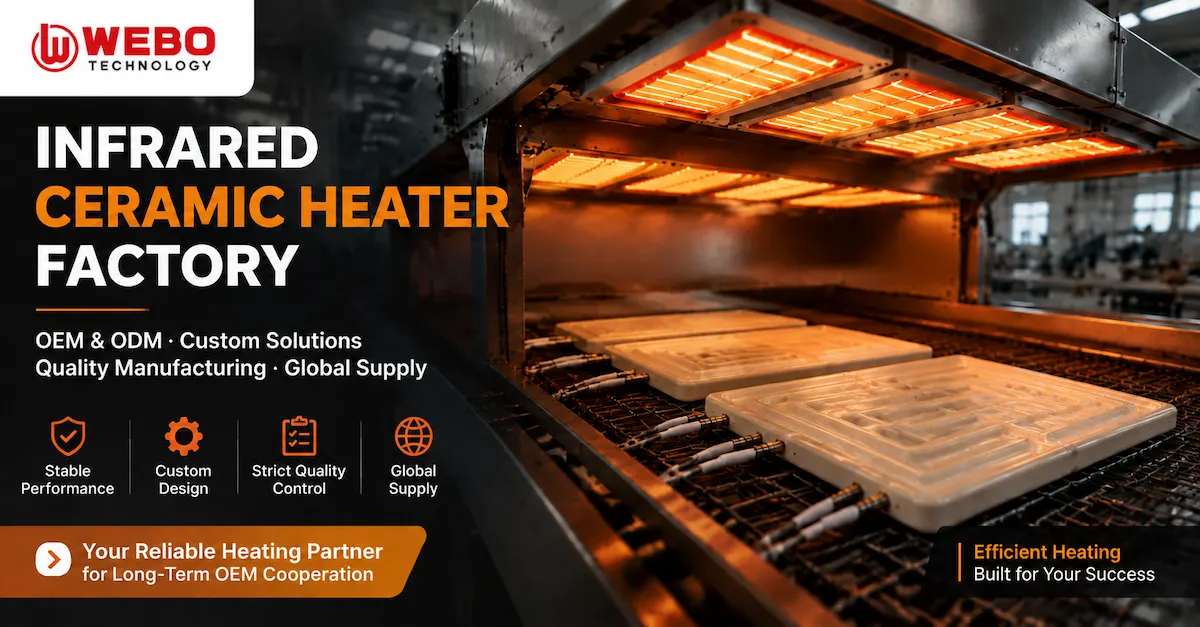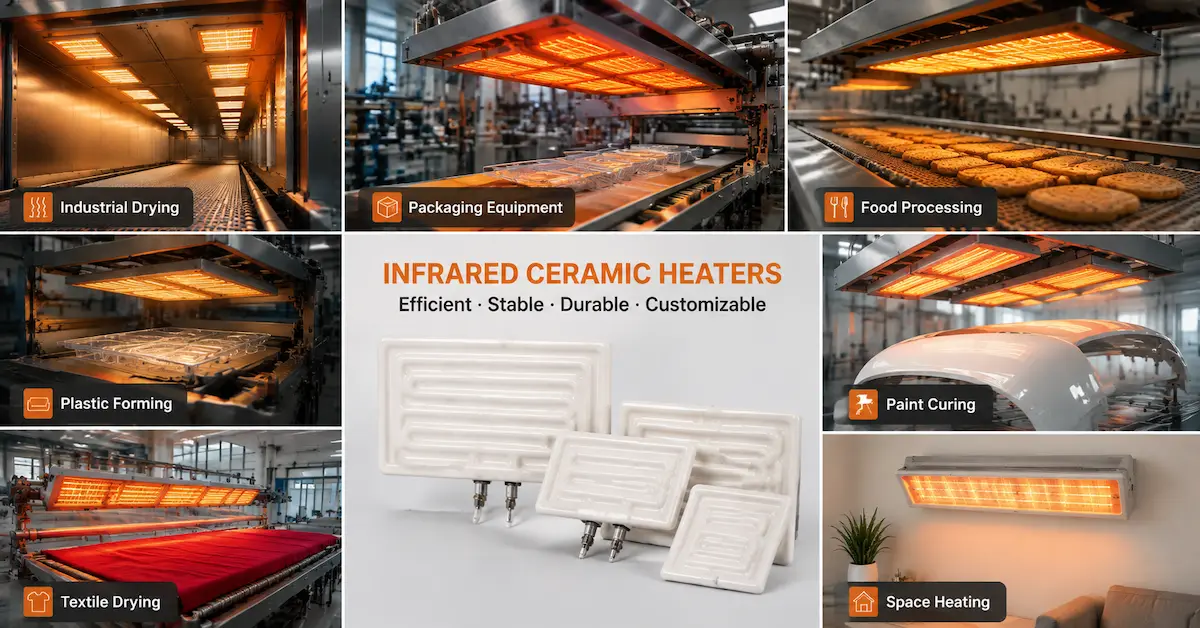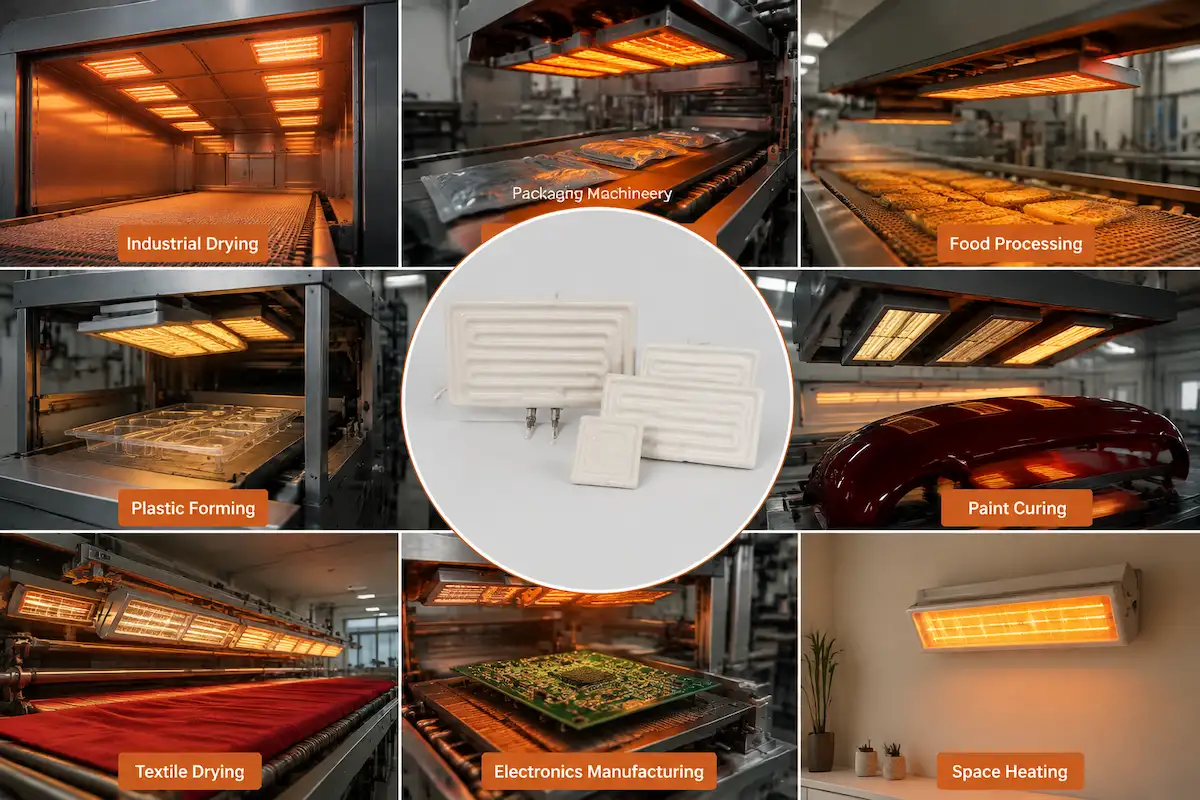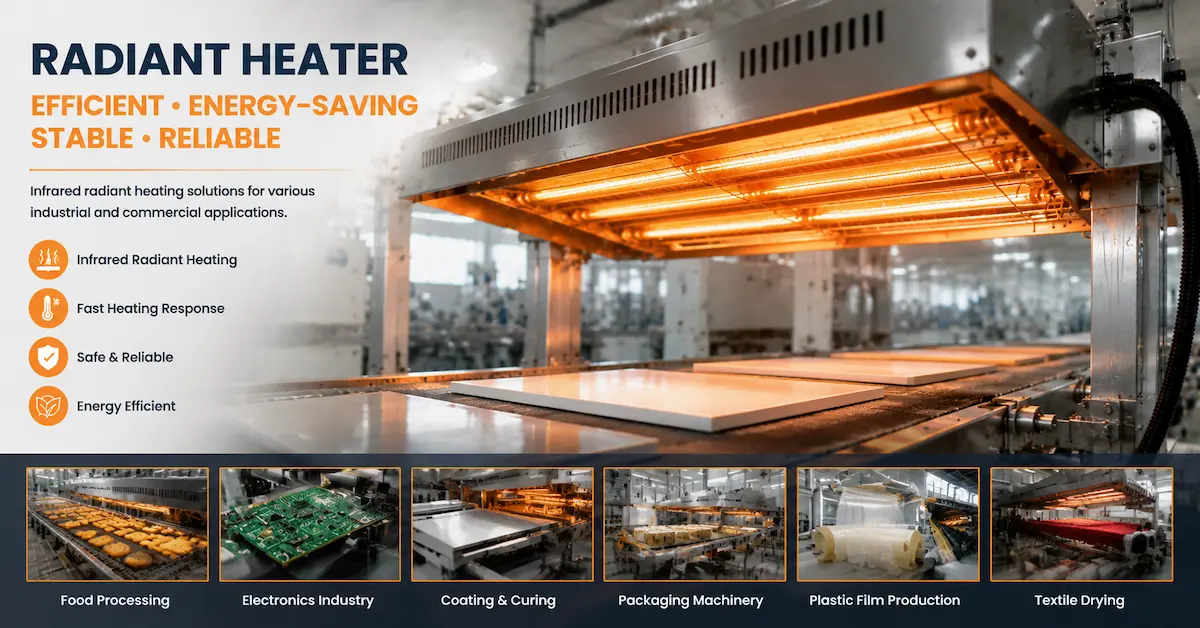



Choosing a reliable ceramic heater factory is an important decision for appliance brands, industrial equipment manufacturers, importers, distributors, and OEM buyers that need stable heating components.
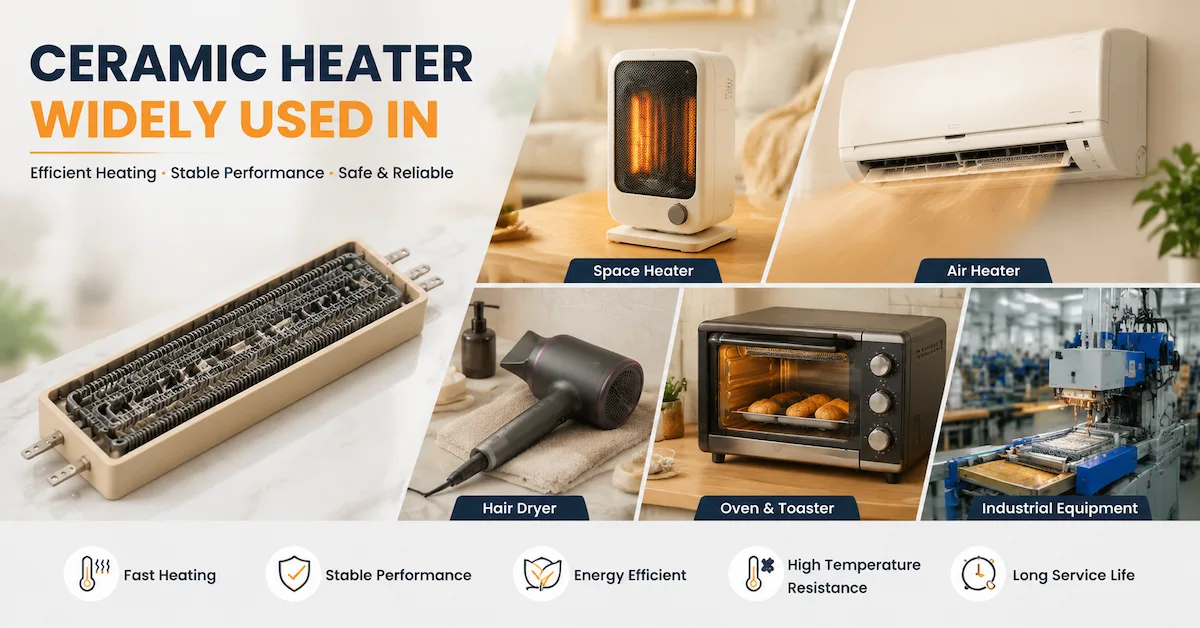
Ceramic heaters are widely used in household appliances, air heating equipment, personal-care devices, industrial systems, automotive applications, and customized heating products. Their compact structure, fast heat response, stable temperature performance, and efficient heat transfer make them suitable for many modern heating solutions.
For B2B buyers, selecting a factory is not only about finding a ceramic heating element. The supplier must understand material selection, electrical performance, thermal requirements, customization needs, production processes, testing standards, and long-term supply capability.
A professional ceramic heater factory can help customers reduce development risks, improve product compatibility, and build a stable heating-component supply chain.
What Does a Ceramic Heater Factory Produce?
A ceramic heater factory manufactures ceramic-based heating components used in electrical and industrial applications.
Products may include:
- PTC ceramic heaters
- Ceramic heating elements
- Ceramic heating plates
- Ceramic heating modules
- Customized ceramic heating components
A complete ceramic heater manufacturing process may involve:
- Ceramic material preparation
- Heating-element assembly
- Electrical connection design
- Structural processing
- Performance testing
- Quality inspection
- Packaging and delivery
WEBO supplies ceramic heaters and other heating components, including Hot Plate, Tube Heating Element, Induction Coil, Ceramic Glass, Rotary Switch, and Energy Regulator. Buyers can review available products on the WEBO products page.
Why Work Directly with a Ceramic Heater Factory?
Working directly with a factory provides buyers with better control over technical requirements, product quality, customization, and production planning.
A professional ceramic heater factory can support:
| Factory Capability | Buyer Benefit |
|---|---|
| Product engineering | Better heating-solution matching |
| Custom development | Supports special applications |
| Sample production | Allows testing before bulk orders |
| Quality control | Reduces production risks |
| Bulk manufacturing | Supports long-term supply |
| Export experience | Simplifies international purchasing |
For OEM projects, direct communication with the factory helps reduce misunderstanding between product requirements and final production.
Who Needs a Ceramic Heater Factory?
Different industries rely on ceramic heater factories for different applications.
Appliance Manufacturers
Household appliance companies need compact and efficient heating components for products requiring stable temperature control.
Industrial Equipment Manufacturers
Industrial customers may require customized ceramic heating solutions designed for specific operating environments.
Importers and Distributors
Importers need reliable factories that can provide consistent quality, documentation, packaging, and repeat supply.
OEM and Private Label Brands
OEM customers often require customized specifications, product labels, packaging, and stable production.
Equipment Maintenance Companies
Maintenance suppliers need replacement ceramic heating elements with reliable compatibility.
Key Specifications to Confirm Before Ordering
Before selecting a ceramic heater factory, buyers should confirm technical requirements.
| Specification | Why It Matters |
| Heating type | Determines application suitability |
| Voltage | Matches electrical system requirements |
| Power rating | Controls heating output |
| Operating temperature | Defines working performance |
| Size and shape | Ensures installation compatibility |
| Terminal structure | Supports electrical connection |
| Heating response | Influences product efficiency |
| Material quality | Affects durability |
| Safety requirements | Supports reliable operation |
| Packaging | Protects products during transportation |
The correct ceramic heater should be selected according to the final product design, operating environment, and heating requirements.
How Ceramic Heater Manufacturing Works
A professional factory follows controlled processes to ensure product consistency.
1. Material Preparation
Ceramic materials and electrical components are prepared according to the approved specifications.
2. Component Processing
The heating structure, ceramic body, terminals, and related components are processed according to product requirements.
3. Assembly
Components are assembled to create the final ceramic heating unit.
4. Electrical Testing
The product is tested for:
- Resistance
- Voltage
- Power output
- Electrical stability
- Insulation performance
5. Temperature Testing
The factory evaluates:
- Heating speed
- Temperature stability
- Thermal response
- Operating performance
6. Final Inspection
Finished products are checked for:
- Dimensions
- Appearance
- Electrical performance
- Packaging condition
A reliable ceramic heater factory should be able to explain each stage of production and quality control.
Quality Control in Ceramic Heater Production
Ceramic heaters operate under repeated heating conditions. Manufacturing quality directly affects product reliability.
Important quality-control areas include:
Material Inspection
Ceramic materials, electrical components, and insulation materials should meet approved requirements.
Dimensional Inspection
The factory should verify:
- Product size
- Shape accuracy
- Terminal position
- Mounting structure
Electrical Testing
Testing should confirm:
- Resistance value
- Power output
- Voltage performance
- Electrical safety
Temperature Testing
The heating element should provide stable thermal performance.
Appearance Inspection
Products should be checked for:
- Cracks
- Surface defects
- Structural damage
- Manufacturing inconsistencies
Packaging Inspection
Products should be properly protected before shipment.
For B2B buyers, consistent production quality is more important than a single successful sample.
OEM and ODM Ceramic Heater Manufacturing
Many buyers require customized heating solutions instead of standard products.
OEM Ceramic Heater Factory Support
OEM is suitable when buyers provide:
- Product drawings
- Technical specifications
- Existing samples
- Fixed requirements
The factory manufactures according to the approved design.
ODM Ceramic Heater Development
ODM is suitable when buyers need assistance selecting and adapting a heating solution.
ODM support may include:
- Product recommendation
- Structure adjustment
- Sample development
- Performance testing
- Packaging solutions
This allows companies to shorten development cycles and reduce product-launch risks.
Applications of Ceramic Heater Products
Household Appliances
Ceramic heaters are used in appliances where compact heating and stable temperature control are required.
Air Heating Equipment
Ceramic heating elements provide efficient heat sources for air-heating products.
Personal Care Devices
Products such as hair dryers and beauty equipment often require compact and fast-response heating components.
Industrial Equipment
Industrial systems may require customized ceramic heaters for specific operating conditions.
Automotive Applications
Some automotive systems use ceramic heating technology where efficient heat generation is required.
How to Evaluate a Reliable Ceramic Heater Factory
1. Check Manufacturing Experience
A reliable factory should understand:
- Ceramic materials
- Electrical heating principles
- Thermal performance
- Insulation requirements
- Application conditions
A factory with heating-component experience can provide better technical support.
WEBO has experience in heating component manufacturing and supports customers with different appliance and equipment requirements. Buyers can learn more through the WEBO About Us page.
2. Confirm Customization Capability
Different projects may require different ceramic heater designs.
Buyers should confirm whether the factory can support:
- Custom size
- Custom voltage
- Custom power
- Terminal adjustment
- Structural modification
- Packaging customization
3. Review Testing Capability
A professional factory should provide testing support before bulk production.
Important tests may include:
- Electrical testing
- Resistance testing
- Temperature testing
- Reliability evaluation
- Appearance inspection
4. Evaluate Production Stability
For importers and OEM brands, long-term supply stability is essential.
The factory should maintain:
- Stable materials
- Controlled production processes
- Consistent product specifications
- Reliable delivery schedules
- Repeat-order quality
Common Mistakes When Choosing a Ceramic Heater Factory
Choosing Only by Price
Lower prices may create higher costs if quality problems occur.
Ignoring Application Requirements
A ceramic heater designed for one product may not work effectively in another.
Skipping Sample Approval
Testing samples helps confirm compatibility before mass production.
Not Checking Production Capability
A supplier should have sufficient manufacturing ability for future demand.
Ignoring Packaging Requirements
Poor packaging may damage products during transportation.
What Buyers Should Prepare Before Contacting a Factory
To receive an accurate quotation, buyers should provide:
| Information | Example |
| Application | Appliance, industrial equipment, heating device |
| Heating requirement | Temperature and operating conditions |
| Voltage | Electrical system requirement |
| Power | Required heating output |
| Size | Installation space |
| Terminal design | Connection requirement |
| Quantity | Sample or bulk order |
| Certification | Target market requirement |
| Packaging | Export or private label needs |
Complete information helps the factory recommend the right ceramic heating solution.
Why Choose WEBO as Your Ceramic Heater Factory?
WEBO supports global B2B customers with heating components for appliances, industrial equipment, and OEM projects.
Its heating product range includes:
- Hot Plate
- Ceramic Heater
- Tube Heating Element
- Cast Iron Pan Support
- Induction Coil
- Ceramic Glass
- Rotary Switch
- Energy Regulator
As a ceramic heater factory, WEBO can support:
- Standard ceramic heating products
- Customized heating solutions
- OEM and ODM projects
- Sample development
- Quality testing
- Bulk production
- Export packaging
- Long-term supply cooperation
Buyers can review available heating solutions on the WEBO products page.
For ceramic heater samples, drawings, technical requirements, customization projects, or bulk purchasing plans, contact WEBO through the WEBO contact page.
More heating-component information is available on the WEBO Blog.
FAQ
1. What does a ceramic heater factory produce?
A ceramic heater factory produces ceramic heating elements used in appliances, industrial equipment, heating devices, and OEM projects.
2. Can a ceramic heater factory provide customization?
Yes. Ceramic heaters can be customized by size, voltage, power, structure, terminals, and packaging.
3. What industries use ceramic heating elements?
They are used in household appliances, industrial equipment, personal-care products, automotive systems, and air-heating applications.
4. Why choose a factory instead of a trading company?
A factory can provide better technical communication, production control, customization support, and long-term supply stability.
5. What tests should ceramic heaters pass?
Testing may include electrical performance, resistance, temperature response, insulation, dimensions, and appearance inspection.
6. Can WEBO support OEM ceramic heater projects?
Yes. WEBO supports OEM development, sample confirmation, customization, and bulk production.
7. What information is needed for a ceramic heater quotation?
Buyers should provide application, voltage, power, size, quantity, certification needs, and packaging requirements.
8. How can buyers contact WEBO?
Buyers can submit specifications, drawings, samples, and project requirements through the WEBO contact page.
Conclusion
Choosing the right ceramic heater factory helps companies secure reliable heating components with stable performance, customization capability, and long-term production support.
A professional factory should provide technical knowledge, quality control, OEM solutions, sample development, and consistent bulk manufacturing.
WEBO supplies ceramic heaters and related heating components for appliance manufacturers, industrial companies, importers, and OEM brands worldwide. Buyers can share their application requirements and project details to receive customized heating solutions.