


Choosing a reliable hot plate manufacturer is an important decision for electric stove brands, portable cooker factories, appliance importers, replacement-parts distributors, and OEM buyers.
A hot plate may appear to be a simple circular heating component. In practice, its diameter, voltage, power, terminal structure, mounting method, surface finish, insulation performance, and heating stability can directly affect the finished appliance.
A product with the wrong dimensions may delay assembly. Incorrect power may cause slow heating or excessive surface temperature. Weak terminals can increase wiring and after-sales risks. Inconsistent production batches may also create problems for wholesalers and repair-parts distributors.
For this reason, buyers should not choose a hot plate manufacturer based only on catalog photos or the lowest quotation. A reliable partner should help confirm product specifications, prepare samples, perform quality testing, support customization, and maintain stable repeat production.
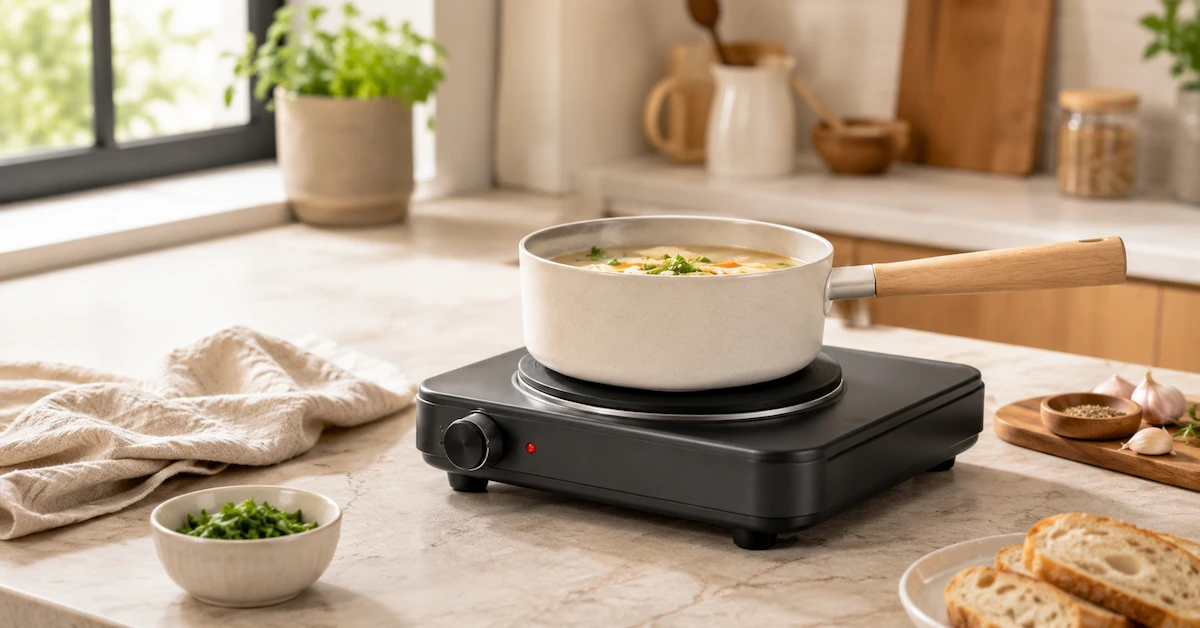
Start with the Final Appliance Application
Before comparing manufacturers, buyers should clearly define how the hot plate will be used.
Common applications include:
- Single-burner electric stoves
- Double-burner cooking appliances
- Portable electric cookers
- Compact kitchen appliances
- Tabletop cooking equipment
- Replacement heating components
- OEM and private label appliance projects
- Selected commercial heating equipment
The same hot plate is not suitable for every application. A replacement-parts distributor may prioritize compatibility with existing models, while an appliance factory may need a customized structure that fits a new housing and wiring system.
A professional hot plate manufacturer should ask about the final appliance before recommending a model.
Confirm the Required Power and Heating Performance
Power is one of the first specifications buyers should confirm. However, higher wattage is not automatically better.
The correct power depends on:
- Heating surface diameter
- Cookware size
- Appliance housing
- Target heating speed
- Voltage
- Control system
- Intended operating cycle
- Market safety requirements
A higher-power model may heat faster, but it can also increase electrical load and surface temperature. A lower-power model may reduce energy demand but fail to meet the expected cooking performance.
Buyers should therefore evaluate power inside the complete appliance rather than comparing wattage alone.
During sample testing, check:
- Time required to reach operating temperature
- Heating consistency across repeated cycles
- Response to the selected regulator or switch
- Stability under normal cookware loads
- Temperature around the appliance housing
- Performance after extended operation
A capable hot plate manufacturer should help buyers select a suitable balance between heating speed, appliance safety, and energy consumption.
Match the Hot Plate Diameter to the Appliance
Diameter affects both heating performance and mechanical compatibility.
Common solid hot plate categories may include sizes such as:
| Diameter | Typical Application |
|---|---|
| 90mm | Compact appliances and small cookware |
| 110mm | Portable cookers and small stove designs |
| 145mm | Standard electric stove and cooking applications |
| Custom size | OEM appliances and special housings |
Diameter should be confirmed together with:
- Housing opening
- Mounting points
- Metal support structure
- Cookware contact area
- Terminal clearance
- Control-component location
- Ventilation space
Two products with the same nominal diameter may still have different terminal positions, mounting structures, or overall heights.
Before placing a bulk order, buyers should test the hot plate inside the actual appliance housing.
Evaluate Temperature and Power Control Compatibility
The heating plate must work correctly with the appliance control system.
Depending on the product design, the appliance may use:
- A rotary switch
- An energy regulator
- A thermostat
- A multi-level mechanical control
- An electronic control system
The hot plate manufacturer should understand how the heating component interacts with the selected control device.
Buyers should confirm:
- Rated voltage and current
- Power levels
- Terminal layout
- Wiring method
- Regulator compatibility
- Switching cycle
- Over-temperature protection strategy
- Appliance operating conditions
Poor matching between the heating element and control system can lead to unstable temperature, frequent switching, slow heating, or shortened component life.
WEBO’s broader product range includes hot plates, rotary switches, energy regulators, and other appliance heating components, helping buyers discuss component compatibility as part of a complete project.
Check Materials and Construction Quality
Material quality affects heating stability, corrosion resistance, structural strength, and service life.
When evaluating a hot plate manufacturer, buyers should ask about:
- Heating surface material
- Metal housing
- Internal resistance structure
- Insulation materials
- Terminal materials
- Surface coating or treatment
- Mounting components
- High-temperature durability
The heating surface should remain structurally stable during repeated heating and cooling. The housing should resist deformation, while terminals should remain secure during assembly and operation.
A product may look acceptable during an initial visual inspection but still perform poorly after repeated thermal cycles. Material selection and process control are therefore more important than appearance alone.
Review the Manufacturer’s Quality-Control Process
A professional manufacturer should control quality throughout production rather than relying only on final inspection.
Incoming Material Inspection
Raw materials and purchased components should be checked before entering production.
Dimensional Inspection
Important dimensions may include:
- Heating plate diameter
- Overall height
- Mounting locations
- Terminal positions
- Housing dimensions
- Connection clearances
Electrical Performance Testing
Testing should verify agreed parameters such as:
- Rated power
- Electrical continuity
- Insulation resistance
- Dielectric strength
- Leakage performance where applicable
Heating Performance Testing
The factory should evaluate whether the product heats consistently and performs according to the approved specification.
Terminal Inspection
Terminals should be checked for:
- Correct location
- Secure installation
- Suitable contact structure
- Resistance to deformation
- Compatibility with the buyer’s wiring
Surface and Appearance Inspection
The heating surface and metal housing should be free from unacceptable scratches, deformation, cracks, and coating defects.
Packaging Inspection
Before shipment, the factory should verify product quantities, labels, inner protection, carton strength, and model separation.
For B2B buyers, the most important issue is batch consistency. One good sample does not guarantee that mass production will meet the same standard.
Verify Safety Testing and Certification Support
Safety requirements depend on the final appliance and destination market.
Buyers may need to discuss:
- Insulation testing
- Dielectric-strength testing
- Leakage-current requirements
- Temperature-rise evaluation
- Thermal-cycle testing
- Terminal reliability
- Material compliance
- Product certification documents
- Factory management systems
Relevant requirements may include CE, RoHS, UL, VDE, TUV, or other market-specific standards.
Certification should never be treated as a general marketing statement. Buyers should confirm whether the required documents apply to the exact product model, specification, and destination market.
A reliable hot plate manufacturer should communicate clearly about available certificates and testing support.
Assess OEM and ODM Customization Capability
Standard hot plates may work for common applications, but OEM appliance projects often require product adjustments.
Potential customization options include:
- Diameter
- Voltage
- Rated power
- Terminal type
- Terminal position
- Mounting structure
- Surface treatment
- Product identification
- Packaging
- Labels and carton marks
OEM Manufacturing
OEM is suitable when the buyer already has:
- A complete drawing
- An approved sample
- Fixed technical specifications
- Confirmed packaging
- A mature appliance design
ODM Development
ODM is suitable when the buyer has an appliance concept but needs the supplier to recommend and adapt an existing model.
An experienced manufacturer may help select a suitable platform and modify the necessary specifications.
Buyers should confirm whether the manufacturer can move from sample development to stable mass production without changing the approved structure.
Review the Sample Development Process
Sample approval is one of the most important steps when selecting a hot plate manufacturer.
A clear process should include:
- Application and requirement review
- Existing-model selection or custom evaluation
- Technical specification confirmation
- Sample production
- Electrical and dimensional testing
- Buyer appliance testing
- Sample adjustment if required
- Final approval
- Mass-production reference confirmation
The buyer should test the sample inside the final appliance.
Sample evaluation should cover:
- Mechanical fit
- Terminal access
- Wiring compatibility
- Heating speed
- Temperature control
- Housing temperature
- Cookware stability
- Repeated operating cycles
- Packaging protection
The approved sample, drawing, and specification should become the reference for bulk production and future repeat orders.
Consider Cleaning and Maintenance at the Appliance Level
Ease of cleaning is often discussed as a consumer feature, but component buyers should evaluate it at the appliance-design level.
Important considerations include:
- Whether the heating surface is exposed
- Gap design around the hot plate
- Risk of food or liquid entering the housing
- Surface resistance to stains
- Accessibility for maintenance
- Compatibility with appliance cleaning instructions
The hot plate itself should have a durable and practical surface, but the finished appliance design also determines how easy the product is to clean.
Manufacturers and appliance designers should therefore consider cleaning during structural development rather than after production.
Evaluate Packaging for Bulk and Export Orders
Hot plates are relatively heavy metal components and often include exposed electrical terminals.
Poor packaging can result in:
- Scratched heating surfaces
- Bent terminals
- Deformed housings
- Mixed models
- Broken cartons
- Moisture exposure
- Difficult warehouse identification
Buyers should confirm:
- Individual protection
- Internal separators
- Quantity per carton
- Carton strength
- Product labels
- SKU identification
- Barcode requirements
- Pallet options
- Private label packaging
- Export carton marks
Packaging quality affects the real purchasing cost. A lower product price offers little value if goods arrive damaged.
Compare Total Cost Instead of Unit Price Alone
Price is important, but buyers should compare the total sourcing cost.
This may include:
- Product price
- Sample development
- Tooling
- Testing
- Inspection
- Packaging
- Freight
- Duties
- Incoming inspection
- Assembly rework
- Replacement claims
- Warranty costs
- Inventory losses
A low-cost hot plate may become expensive if it creates production delays or after-sales problems.
A reliable manufacturer can provide better long-term value through stable quality, accurate specifications, suitable packaging, and predictable repeat supply.
Questions to Ask a Hot Plate Manufacturer
Before selecting a supplier, ask:
- What hot plate sizes are available?
- Can voltage and power be customized?
- Can terminal positions be adjusted?
- Can the product match our switch or regulator?
- What testing is performed during production?
- Can we receive samples before bulk ordering?
- Will mass production follow the approved sample?
- What certifications are available for the selected model?
- Can the supplier support private label packaging?
- How are specification changes controlled?
- What export packaging is recommended?
- Can the supplier support annual repeat orders?
- What information is needed for an accurate quotation?
Clear and technical answers indicate that the supplier understands appliance-component sourcing rather than only product sales.
Why Choose WEBO as Your Hot Plate Manufacturer?
WEBO supports appliance brands, importers, distributors, and OEM factories with hot plates and related heating components.
Its product portfolio includes:
- Hot Plate
- Ceramic Heater
- Tube Heating Element
- Cast Iron Pan Support
- Induction Coil
- Ceramic Glass
- Rotary Switch
- Energy Regulator
As a hot plate manufacturer, WEBO can support:
- Standard hot plate models
- 90mm, 110mm, and 145mm product categories
- Custom voltage and power
- Terminal and mounting adjustments
- OEM and ODM development
- Sample confirmation
- Bulk production
- Private label packaging
- Export-oriented supply
- Related cooktop component sourcing
Explore the available heating components on the WEBO Products page.
Buyers with drawings, existing samples, technical requirements, packaging needs, or annual purchasing forecasts can contact WEBO for product evaluation and a customized quotation.
FAQ
1. What should buyers check when choosing a hot plate manufacturer?
Buyers should evaluate product specifications, materials, heating performance, electrical testing, terminal quality, certification support, customization, packaging, and batch consistency.
2. Is higher hot plate power always better?
No. The correct power depends on the heating surface, cookware, appliance design, voltage, control system, and target heating performance.
3. Can hot plates be customized?
Yes. Diameter, voltage, power, terminals, mounting structure, surface treatment, labels, and packaging may be customized according to the project.
4. Why is sample testing important?
Sample testing confirms mechanical fit, electrical compatibility, heating performance, control response, housing temperature, and packaging before mass production.
5. What is the difference between OEM and ODM hot plates?
OEM follows buyer-provided specifications, while ODM helps the buyer select and adapt an existing product design.
6. What information is needed for a quotation?
Provide the appliance application, diameter, voltage, power, terminal requirements, order quantity, target market, certification needs, and packaging requirements.
7. What packaging is suitable for hot plate exports?
Suitable packaging may include individual protection, internal separators, strong cartons, model labels, barcodes, and pallets where required.
8. Can WEBO supply related appliance components?
WEBO’s range includes ceramic heaters, heating tubes, induction coils, ceramic glass, rotary switches, energy regulators, and other heating-related products.
9. How can buyers begin a custom project with WEBO?
Buyers can submit appliance drawings, existing samples, technical specifications, target quantities, and packaging requirements for evaluation.
Conclusion
Choosing the right hot plate manufacturer requires more than comparing wattage, appearance, and price.
Appliance brands and B2B buyers should evaluate application compatibility, electrical specifications, materials, temperature control, safety testing, sample development, quality control, packaging, customization, and repeat-order stability.
A dependable manufacturing partner can help reduce assembly problems, after-sales claims, shipping damage, and long-term sourcing risk.
WEBO provides standard and customized hot plates for electric, quality control, packaging, customization, and repeat-order stability.
A dependable manufacturing stoves, portable cookers, compact appliances, replacement markets, and OEM projects. Buyers can submit their specifications, samples, drawings, target market, and estimated demand to receive product-matching support and a tailored quotation.