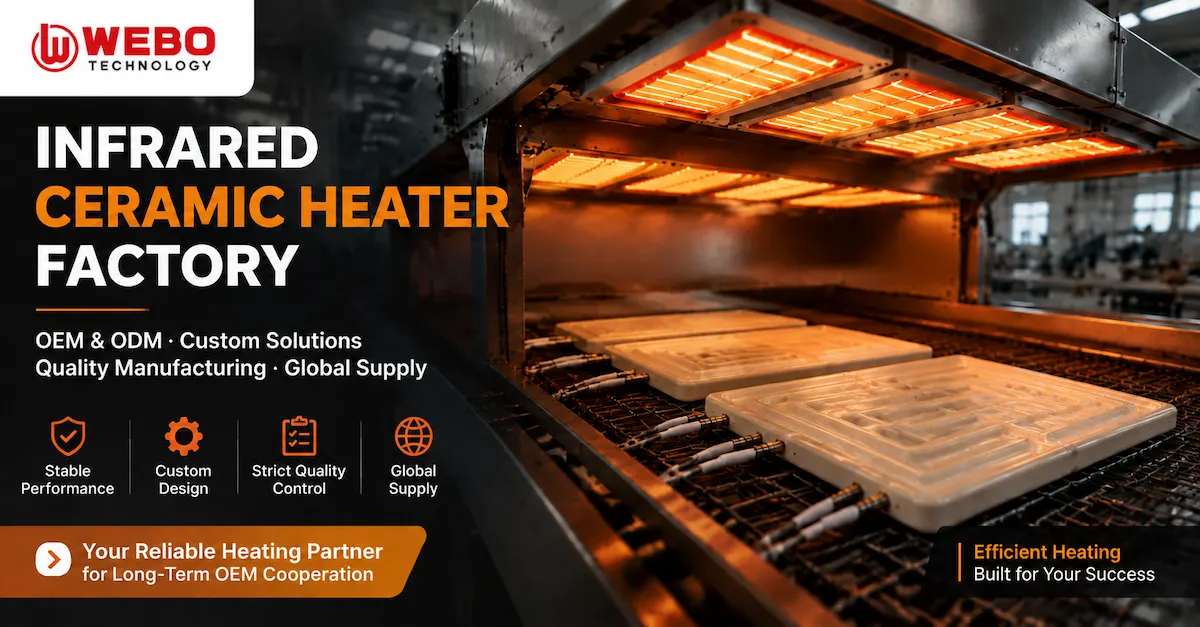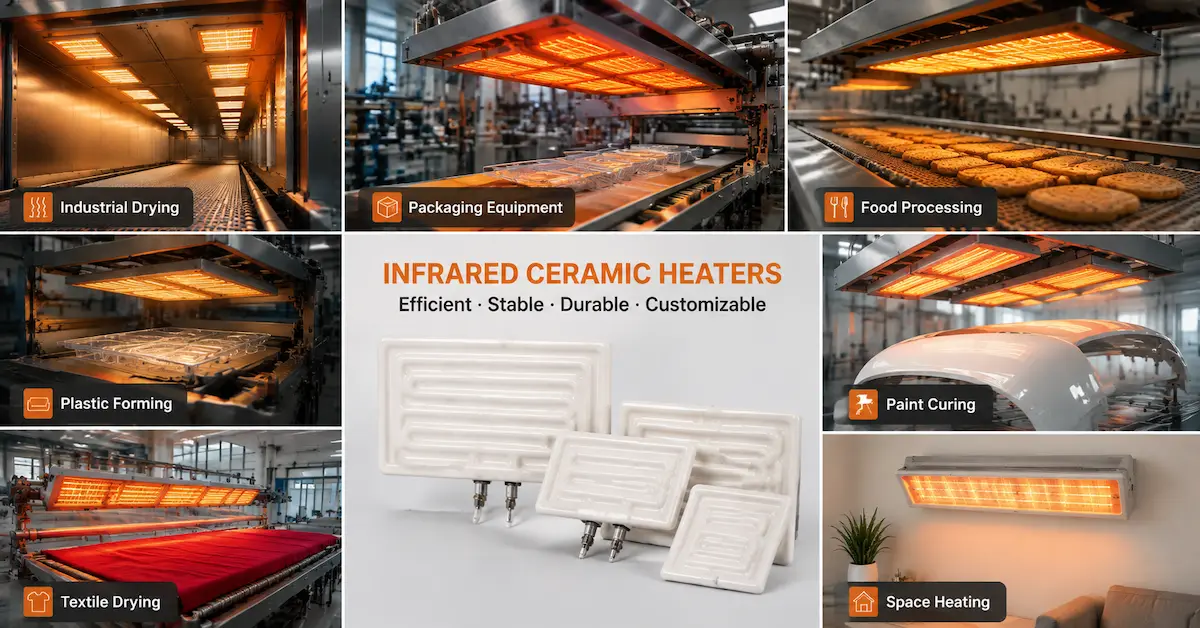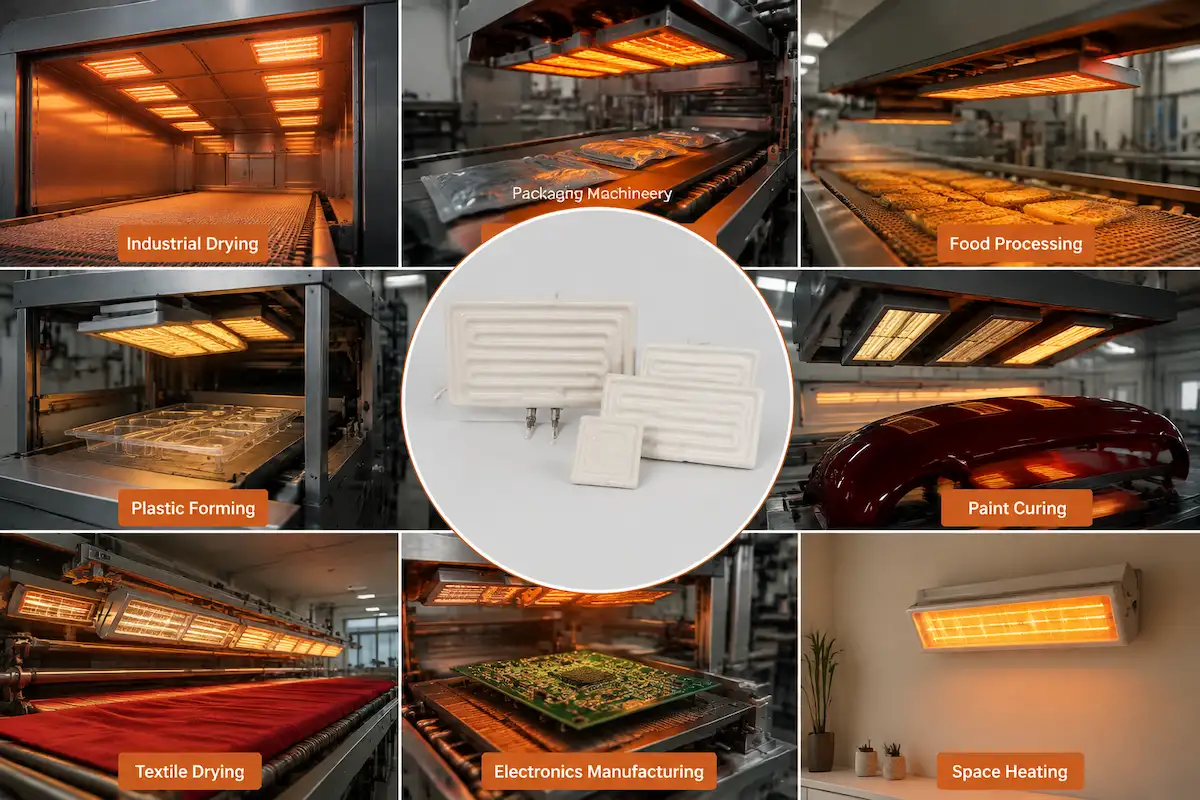



Choosing a reliable radiant heater manufacturer is important for appliance brands, industrial equipment manufacturers, importers, distributors, and OEM buyers that require efficient heat-transfer solutions.
Radiant heaters are widely used in appliances, industrial equipment, food-processing systems, heating devices, and customized thermal applications. Unlike traditional contact heating methods, radiant heating transfers heat through infrared radiation, making it suitable for applications requiring fast response, direct heat transfer, and controlled temperature performance.
For B2B buyers, selecting a supplier requires more than comparing product specifications and prices. Buyers need to evaluate heating efficiency, material quality, operating temperature, customization capability, testing procedures, and long-term manufacturing reliability.
A professional radiant heater manufacturer can help customers develop suitable heating solutions, optimize product performance, and maintain stable supply for ongoing projects.
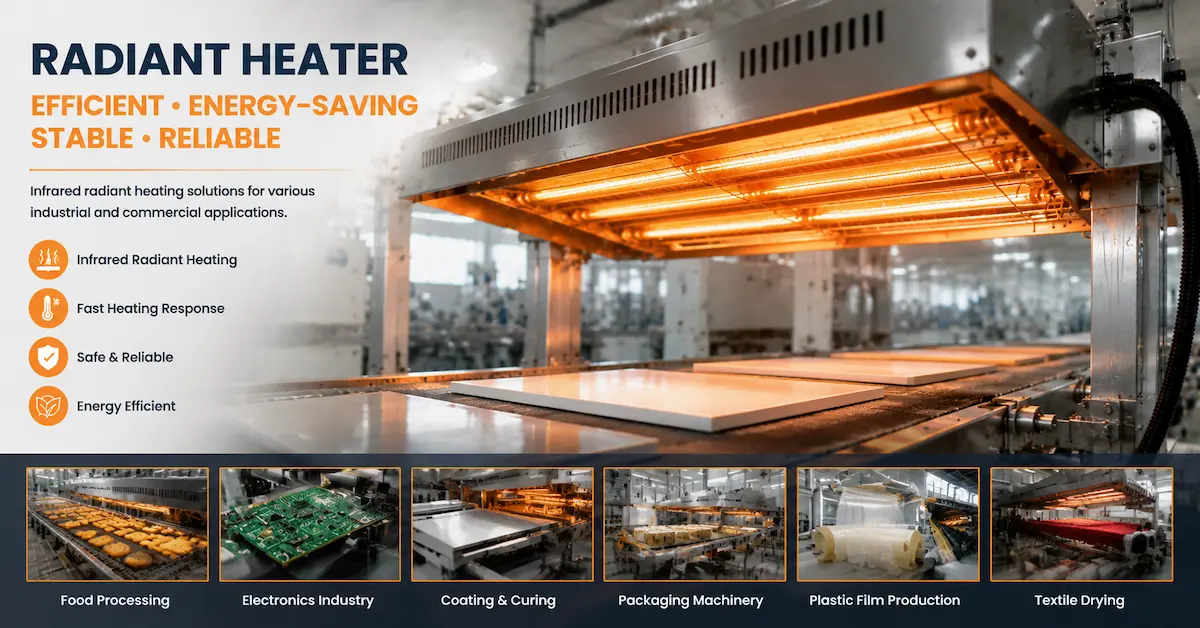
What Is a Radiant Heater?
A radiant heater is an electrical heating component that generates infrared radiation to transfer heat directly to objects, surfaces, or materials.
Depending on the application, radiant heaters may include:
- Infrared heating elements
- Ceramic radiant heaters
- Quartz radiant heaters
- Customized radiant heating modules
- Industrial radiant heating components
Radiant heaters are commonly used in:
- Industrial heating equipment
- Food processing machinery
- Household appliances
- Drying systems
- Plastic processing equipment
- Packaging machinery
- Laboratory equipment
- Customized thermal systems
WEBO supplies heating components including Hot Plate, Ceramic Heater, Tube Heating Element, Induction Coil, Ceramic Glass, Rotary Switch, and Energy Regulator. Buyers can explore available heating solutions on the WEBO products page.
Why Choose a Professional Radiant Heater Manufacturer?
A reliable radiant heater manufacturer provides more than heating elements. It provides engineering support, product customization, quality control, and long-term production capability.
Working with an experienced manufacturer helps buyers achieve:
| Manufacturer Capability | Buyer Benefit |
|---|---|
| Heating technology experience | Better product selection |
| Custom development | Matches special applications |
| Testing capability | Reduces performance risks |
| Stable production | Supports repeat orders |
| Quality control | Improves product reliability |
| Export experience | Simplifies international purchasing |
For OEM projects, the supplier’s technical ability is often as important as the product itself.
Who Needs a Radiant Heater Manufacturer?
Different industries require radiant heating solutions for different purposes.
Industrial Equipment Manufacturers
Industrial companies use radiant heaters for processes requiring controlled and efficient heat transfer.
Applications may include:
- Drying equipment
- Heating ovens
- Processing machinery
- Thermal systems
Appliance Manufacturers
Household appliance companies may require compact radiant heating components for specific products.
Food Equipment Manufacturers
Radiant heaters can provide direct heating solutions for cooking, warming, and food-processing applications.
Packaging Equipment Companies
Some packaging systems use radiant heating for sealing, drying, and material processing.
OEM and Private Label Brands
OEM buyers require customized specifications, packaging, and stable production support.
Key Specifications to Confirm Before Purchasing
Before selecting a radiant heater manufacturer, buyers should confirm technical requirements.
| Specification | Why It Matters |
| Heating type | Determines application suitability |
| Voltage | Matches electrical system |
| Power rating | Controls heat output |
| Operating temperature | Defines working range |
| Heating wavelength | Influences heat-transfer efficiency |
| Size and shape | Ensures installation compatibility |
| Terminal design | Supports electrical connection |
| Response time | Affects heating speed |
| Material selection | Influences service life |
| Safety requirements | Supports reliable operation |
The correct radiant heater should be selected according to the complete heating environment rather than a single parameter.
Advantages of Radiant Heating Technology
Fast Heat Transfer
Radiant heating transfers energy directly, reducing unnecessary heat loss in suitable applications.
Efficient Heating Performance
Direct radiation can improve heating efficiency in systems designed for targeted heating.
Flexible Installation
Radiant heaters can be designed in different shapes and structures to fit various equipment.
Precise Temperature Control
Properly designed radiant systems can provide controlled and consistent heating.
Suitable for Automation
Radiant heating components can be integrated into automated industrial systems.
How to Choose a Reliable Radiant Heater Manufacturer
1. Evaluate Manufacturing Experience
A professional supplier should understand:
- Infrared heating principles
- Thermal materials
- Electrical performance
- Temperature control
- Application requirements
- Safety considerations
A manufacturer with heating-component experience can provide better technical recommendations.
WEBO has experience in heating component manufacturing and provides solutions for different appliance and equipment applications. Buyers can learn more through the WEBO About Us page.
2. Check Customization Capability
Different applications may require different radiant heater structures.
Customization may include:
- Size
- Voltage
- Power
- Heating surface
- Terminal structure
- Mounting method
- Material selection
- Packaging
For OEM projects, customization helps the heating component match the final equipment design.
3. Review Testing Capability
A reliable radiant heater supplier should support performance verification.
Testing may include:
- Electrical testing
- Resistance measurement
- Temperature testing
- Heating-speed evaluation
- Thermal-cycle testing
- Appearance inspection
Testing helps ensure that products meet the approved requirements.
4. Confirm Production Stability
Long-term buyers need suppliers that can maintain consistent quality.
Important factors include:
- Stable materials
- Controlled manufacturing processes
- Repeatable specifications
- Reliable delivery schedules
- Production records
OEM and ODM Radiant Heater Manufacturing
Many buyers require customized heating solutions instead of standard products.
OEM Radiant Heater Solutions
OEM is suitable when buyers provide:
- Product drawings
- Technical specifications
- Existing samples
- Fixed requirements
The manufacturer produces according to the approved design.
ODM Radiant Heater Development
ODM is suitable when buyers need support selecting and optimizing a heating solution.
ODM support may include:
- Product recommendation
- Structure adjustment
- Sample development
- Performance testing
- Packaging solutions
ODM cooperation helps companies shorten development cycles and reduce technical risks.
Quality Control for Radiant Heating Components
A professional radiant heater manufacturer should control quality throughout production.
Important QC areas include:
Material Inspection
Checking:
- Heating materials
- Ceramic components
- Metal parts
- Insulation materials
Dimensional Inspection
Verifying:
- Product size
- Mounting structure
- Terminal position
- Housing dimensions
Electrical Testing
Confirming:
- Voltage performance
- Resistance value
- Power output
- Electrical stability
Thermal Testing
Evaluating:
- Heating response
- Temperature stability
- Operating performance
Appearance Inspection
Checking:
- Surface condition
- Structural integrity
- Manufacturing defects
Packaging Inspection
Ensuring safe transportation and product protection.
Common Mistakes When Choosing a Radiant Heater Supplier
Choosing Only by Price
Low-cost products may create higher costs through failures and replacements.
Ignoring Application Conditions
A heater designed for one environment may not perform properly in another.
Skipping Sample Testing
Samples help confirm heating performance before bulk production.
Not Confirming Customization Ability
Many industrial applications require specific structures and specifications.
Ignoring Long-Term Supply Capability
Industrial customers need stable production over extended periods.
What Buyers Should Prepare Before Requesting a Quote
A complete inquiry helps manufacturers provide accurate recommendations.
| Information | Example |
| Application | Industrial equipment, appliance, heating system |
| Heating requirement | Temperature and operating environment |
| Voltage | Electrical requirement |
| Power | Required heat output |
| Size | Installation space |
| Terminal design | Connection method |
| Quantity | Sample or bulk order |
| Certification | Market requirement |
| Packaging | Export requirement |
Providing detailed information improves quotation accuracy and development efficiency.
Why Choose WEBO as Your Radiant Heater Manufacturer?
WEBO supports global B2B customers with heating components for appliances, industrial equipment, and OEM projects.
Its heating product range includes:
- Hot Plate
- Ceramic Heater
- Tube Heating Element
- Cast Iron Pan Support
- Induction Coil
- Ceramic Glass
- Rotary Switch
- Energy Regulator
As a radiant heater manufacturer, WEBO can support:
- Customized heating solutions
- OEM and ODM projects
- Sample development
- Quality testing
- Bulk production
- Export packaging
- Long-term supply cooperation
Buyers can review available heating solutions on the WEBO products page.
For radiant heater samples, specifications, drawings, customization requirements, or bulk purchasing plans, contact WEBO through the WEBO contact page.
More heating-component information is available on the WEBO Blog.
FAQ
1. What does a radiant heater manufacturer produce?
A radiant heater manufacturer produces infrared and electric heating components used in industrial equipment, appliances, and customized thermal systems.
2. What industries use radiant heaters?
Radiant heaters are used in industrial heating, food equipment, packaging machinery, appliances, drying systems, and customized applications.
3. Can radiant heaters be customized?
Yes. Size, voltage, power, terminals, materials, mounting structures, and packaging can be customized.
4. What information is needed for a radiant heater quotation?
Buyers should provide application, temperature requirements, voltage, power, size, quantity, and installation requirements.
5. Why should buyers test radiant heater samples?
Sample testing confirms heating performance, compatibility, temperature response, and reliability before mass production.
6. Can WEBO support OEM radiant heater projects?
Yes. WEBO supports customized heating solutions, sample development, OEM cooperation, and bulk production.
7. What factors affect radiant heater performance?
Performance depends on materials, power, wavelength, operating environment, structure, and control system.
8. How can buyers contact WEBO?
Buyers can submit technical requirements, drawings, samples, and project details through the WEBO contact page.
Conclusion
Choosing the right radiant heater manufacturer helps companies develop efficient heating systems with stable performance, reliable quality, and long-term supply support.
A professional supplier should provide technical expertise, customization capability, testing support, OEM solutions, and consistent manufacturing capacity.
WEBO supplies radiant heaters and related heating components for appliance manufacturers, industrial companies, importers, and OEM brands worldwide. Buyers can share their application requirements and project details to receive customized heating solutions.