


Choosing a reliable radiant heater supplier is important for industrial equipment manufacturers, appliance companies, importers, distributors, and OEM buyers that need efficient and stable heating components.
Radiant heaters provide heat through infrared radiation, allowing direct energy transfer to objects, materials, or surfaces. They are widely used in industrial heating systems, drying equipment, food-processing machinery, packaging systems, plastics processing, textile equipment, and customized thermal applications.
For B2B buyers, selecting the right supplier requires more than comparing product price. Buyers need to evaluate heating performance, material quality, temperature stability, customization capability, testing procedures, production capacity, and long-term cooperation potential.
A professional radiant heater supplier can help customers choose suitable heating components, develop customized solutions, and maintain stable supply for continuous production.

What Does a Radiant Heater Supplier Provide?
A radiant heater supplier provides infrared and electric heating components for different industrial and commercial applications.
A complete supplier service may include:
- Standard radiant heating products
- Customized heating solutions
- Technical consultation
- Application analysis
- Sample development
- Performance testing
- OEM and ODM support
- Bulk production
- Export packaging
- Long-term supply cooperation
Radiant heating products may include:
- Infrared heating elements
- Ceramic radiant heaters
- Quartz radiant heaters
- Customized radiant heating modules
- Industrial heating assemblies
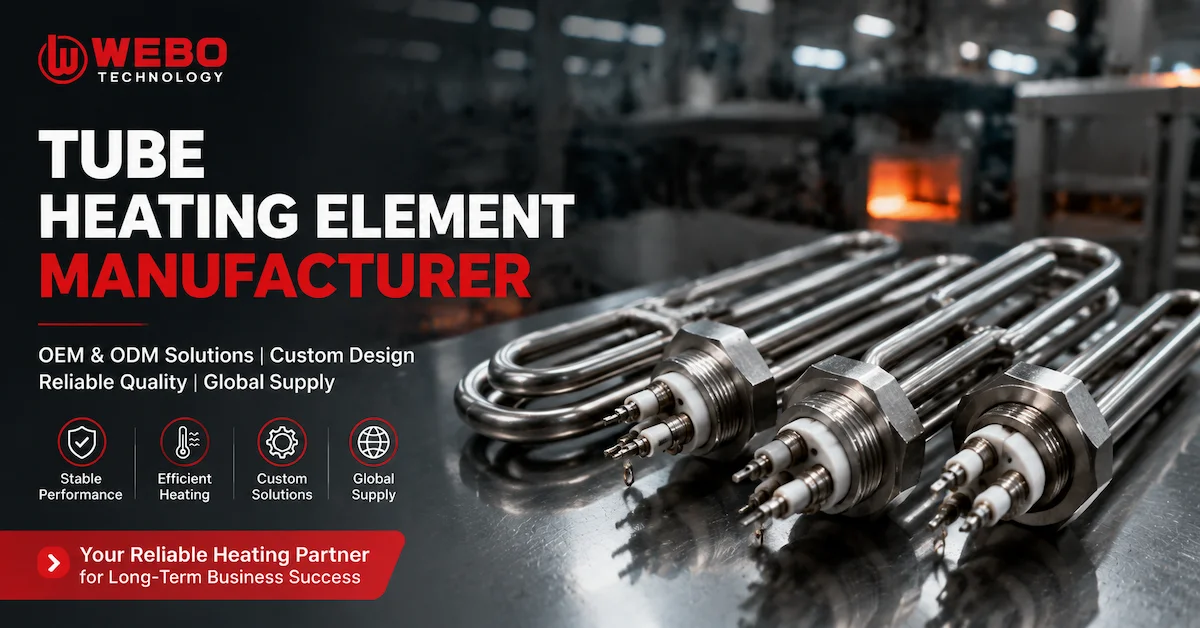
WEBO supplies heating components including Hot Plate, Ceramic Heater, Tube Heating Element, Induction Coil, Ceramic Glass, Rotary Switch, and Energy Regulator. Buyers can explore available heating solutions on the WEBO products page.
Who Needs a Radiant Heater Supplier?
Different industries use radiant heaters for different heating requirements.
| Buyer Type | Main Requirement |
|---|---|
| Industrial equipment manufacturers | Stable heating performance |
| Drying-system manufacturers | Efficient heat transfer |
| Food-processing equipment companies | Controlled heating output |
| Packaging machinery companies | Reliable thermal performance |
| Appliance brands | Compact heating solutions |
| Importers and distributors | Stable supply and documentation |
| OEM customers | Customized specifications |
A suitable supplier should understand the final application before recommending a radiant heater solution.
Why Use Radiant Heating Technology?
Radiant heating offers several advantages for industrial and commercial applications.
Direct Heat Transfer
Radiant heaters transfer energy directly to the target surface or material, reducing unnecessary heat loss in suitable applications.
Fast Heating Response
Infrared heating technology can provide rapid temperature response for processes requiring quick heat cycles.
Efficient Energy Utilization
Direct heating can improve energy efficiency when properly matched with the application.
Flexible Installation
Radiant heaters can be designed in different shapes and structures to fit different equipment layouts.
Precise Thermal Control
Proper system design allows manufacturers to achieve controlled and consistent heating performance.
Common Applications of Radiant Heaters
Food Processing Equipment
Radiant heaters are used in food-processing applications requiring controlled surface heating, drying, warming, or cooking processes.
Important considerations include:
- Temperature uniformity
- Heating speed
- Continuous operation
- Cleaning requirements
- Equipment integration
Drying and Curing Systems
Many industrial processes require controlled heat for drying coatings, materials, or products.
Radiant heating can provide:
- Fast response
- Targeted heating
- Stable temperature control
- Efficient production cycles
Packaging Machinery
Packaging equipment may use radiant heaters for:
- Film processing
- Sealing applications
- Shrink processes
- Material forming
Plastic Processing
Plastic processing applications often require precise and stable thermal performance.
Textile Equipment
Radiant heaters can be used for textile drying and heat-treatment processes.
Electronics Manufacturing
Electronics applications may require controlled heating environments for specific production processes.
Key Specifications to Confirm Before Purchasing
Before selecting a radiant heater supplier, buyers should confirm the technical requirements.
| Specification | Why It Matters |
| Heating type | Determines application suitability |
| Voltage | Matches electrical system |
| Power rating | Controls heating output |
| Operating temperature | Defines working range |
| Heating wavelength | Influences heat-transfer performance |
| Size and shape | Ensures equipment compatibility |
| Terminal structure | Supports electrical connection |
| Response time | Affects production efficiency |
| Material selection | Influences service life |
| Safety requirements | Supports reliable operation |
A professional supplier should recommend products according to the complete application instead of offering a standard model without evaluation.
How to Choose a Reliable Radiant Heater Supplier
1. Evaluate Technical Experience
Radiant heating involves electrical, thermal, and material considerations.
A reliable supplier should understand:
- Infrared heating principles
- Thermal transfer
- Material characteristics
- Temperature control
- Electrical safety
- Equipment integration
Technical experience helps prevent selecting unsuitable products.
WEBO has experience in heating component manufacturing and supports different appliance and equipment applications. Buyers can learn more through the WEBO About Us page.
2. Check Customization Capability
Industrial applications often require customized heating solutions.
Customization may include:
- Heater size
- Voltage
- Power
- Heating area
- Terminal structure
- Mounting method
- Material selection
- Packaging
A capable supplier should support both standard products and customized projects.
3. Review Sample and Testing Support
Before bulk production, buyers should evaluate samples.
Important testing items include:
- Heating response
- Temperature stability
- Power performance
- Electrical safety
- Installation compatibility
- Continuous operation capability
Sample testing helps identify potential problems before large-scale production.
4. Confirm Manufacturing Stability
For industrial buyers, supply reliability is essential.
A dependable supplier should maintain:
- Stable raw materials
- Controlled production processes
- Consistent specifications
- Reliable delivery schedules
- Repeat-order quality
OEM and ODM Radiant Heater Solutions
Many customers require customized heating components.
OEM Radiant Heater Supply
OEM is suitable when buyers provide:
- Technical drawings
- Existing samples
- Fixed specifications
- Equipment requirements
The supplier produces according to approved requirements.
ODM Radiant Heater Development
ODM is suitable when buyers need technical assistance developing a heating solution.
ODM support may include:
- Product selection
- Structure adjustment
- Sample production
- Performance testing
- Packaging solutions
ODM cooperation helps reduce development time and technical risks.
Quality Control for Radiant Heater Production
A professional radiant heater supplier should maintain strict quality control.
Important QC procedures include:
Material Inspection
Checking:
- Heating materials
- Ceramic components
- Metal parts
- Insulation materials
Electrical Testing
Confirming:
- Voltage performance
- Resistance value
- Power output
- Electrical stability
Thermal Testing
Evaluating:
- Heating speed
- Temperature consistency
- Operating stability
- Thermal response
Structural Inspection
Checking:
- Dimensions
- Mounting structure
- Terminal position
- Product integrity
Final Inspection
Reviewing:
- Appearance
- Performance
- Packaging
- Product identification
Consistent quality control helps industrial customers reduce downtime and replacement costs.
Common Mistakes When Choosing a Radiant Heater Supplier
Choosing Only by Price
Low-cost products may create higher costs through failures, downtime, and replacement.
Ignoring Application Conditions
Heating requirements vary significantly between industries.
Skipping Sample Testing
Samples help confirm performance before bulk purchasing.
Not Checking Customization Ability
Many industrial applications require special specifications.
Ignoring Long-Term Supply Capability
Production stability is important for ongoing industrial projects.
What Buyers Should Prepare Before Requesting a Quote
A detailed inquiry helps suppliers provide accurate solutions.
| Information | Example |
| Application | Drying equipment, food machinery, industrial system |
| Heating requirement | Temperature and operating environment |
| Voltage | Electrical requirement |
| Power | Required heating output |
| Size | Installation space |
| Terminal design | Connection method |
| Quantity | Sample or bulk order |
| Certification | Market requirements |
| Packaging | Export requirements |
The more complete the technical information, the more accurate the supplier recommendation will be.
Why Choose WEBO as Your Radiant Heater Supplier?
WEBO provides heating component solutions for global B2B customers, including industrial companies, appliance manufacturers, importers, distributors, and OEM brands.
Its heating product portfolio includes:
- Hot Plate
- Ceramic Heater
- Tube Heating Element
- Cast Iron Pan Support
- Induction Coil
- Ceramic Glass
- Rotary Switch
- Energy Regulator
As a radiant heater supplier, WEBO can support:
- Customized heating solutions
- OEM and ODM projects
- Sample development
- Quality testing
- Bulk production
- Export packaging
- Long-term supply cooperation
Buyers can review available heating products on the WEBO products page.
For radiant heater samples, technical specifications, drawings, customization requirements, or bulk purchasing plans, contact WEBO through the WEBO contact page.
More heating-component information is available on the WEBO Blog.
FAQ
1. What does a radiant heater supplier provide?
A radiant heater supplier provides infrared and electric heating components for industrial equipment, appliances, drying systems, and customized applications.
2. What industries use radiant heaters?
Radiant heaters are used in food processing, drying, packaging, plastics, textiles, electronics, and industrial heating systems.
3. Can radiant heaters be customized?
Yes. Size, voltage, power, structure, terminals, mounting methods, and packaging can be customized.
4. What information is needed for a radiant heater quotation?
Buyers should provide application, temperature requirements, voltage, power, size, quantity, and installation details.
5. Why should buyers test radiant heater samples?
Sample testing confirms heating performance, installation compatibility, thermal response, and reliability before bulk production.
6. Can WEBO support OEM radiant heater projects?
Yes. WEBO supports customized heating solutions, sample development, OEM cooperation, and bulk production.
7. What affects radiant heater performance?
Performance depends on materials, power, heating wavelength, application environment, structure, and control system.
8. How can buyers contact WEBO?
Buyers can submit technical requirements, drawings, samples, and project information through the WEBO contact page.
Conclusion
Choosing the right radiant heater supplier helps companies develop efficient heating systems with reliable performance, stable quality, and long-term supply support.
A professional supplier should provide technical knowledge, customization capability, testing support, OEM solutions, and consistent production capacity.
WEBO supplies radiant heaters and related heating components for industrial companies, appliance manufacturers, importers, and OEM customers worldwide. Buyers can share their application requirements and project details to receive customized heating solutions.