


Choosing a reliable solid hot plate China manufacturer is an important sourcing decision for electric stove brands, portable cooker manufacturers, appliance importers, replacement-parts distributors, and OEM factories.
A solid hot plate may appear to be a simple heating component, but its diameter, voltage, rated power, terminal structure, mounting design, surface treatment, and production consistency can directly affect the finished appliance.
A product that does not match the appliance housing can delay assembly. Unstable power performance may create inconsistent heating. Weak export packaging can damage terminals or heating surfaces during transportation. For bulk buyers, these risks can lead to warranty claims, inventory losses, and damaged customer relationships.
The right manufacturing partner should therefore provide more than a competitive quotation. It should help confirm specifications, develop samples, control production quality, support market requirements, and maintain consistent repeat orders.
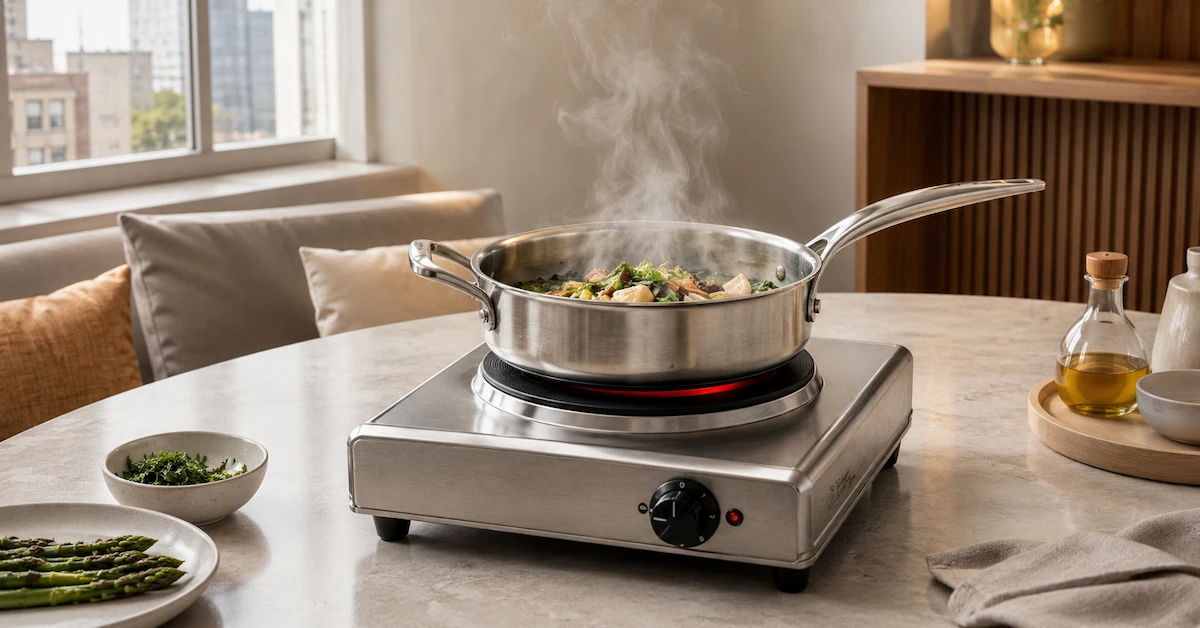
Why Source Solid Hot Plates from China?
China has an established supply chain for electric appliances, metal components, electrical controls, packaging, and export logistics. This gives international buyers access to standard heating plates as well as customized OEM solutions.
Working with an experienced China manufacturer may offer several practical advantages:
- A broad choice of existing hot plate sizes
- Custom voltage and power configurations
- Terminal and mounting adjustments
- OEM and ODM development support
- Competitive bulk production
- Private label and export packaging
- Related appliance component sourcing
- Experience serving international markets
However, buyers should not assume that every supplier provides the same manufacturing capability. Some companies act mainly as traders, while others control product development, testing, production, and final inspection directly.
For appliance projects, confirming the supplier's real manufacturing and quality-control capabilities is essential.
What Is a Solid Hot Plate?
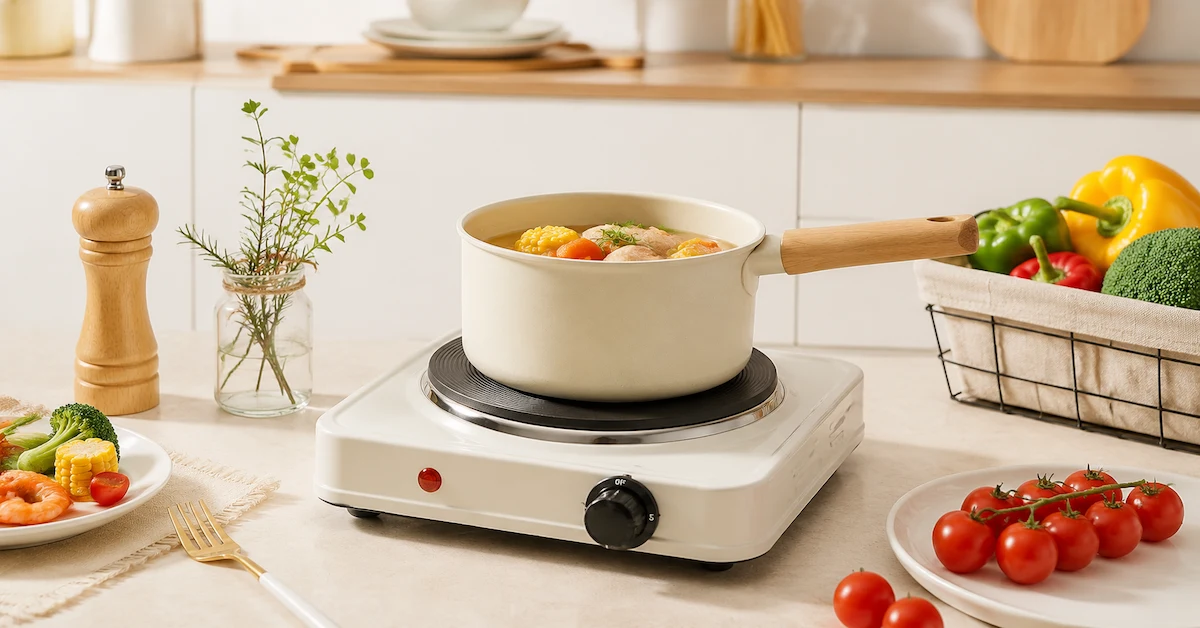
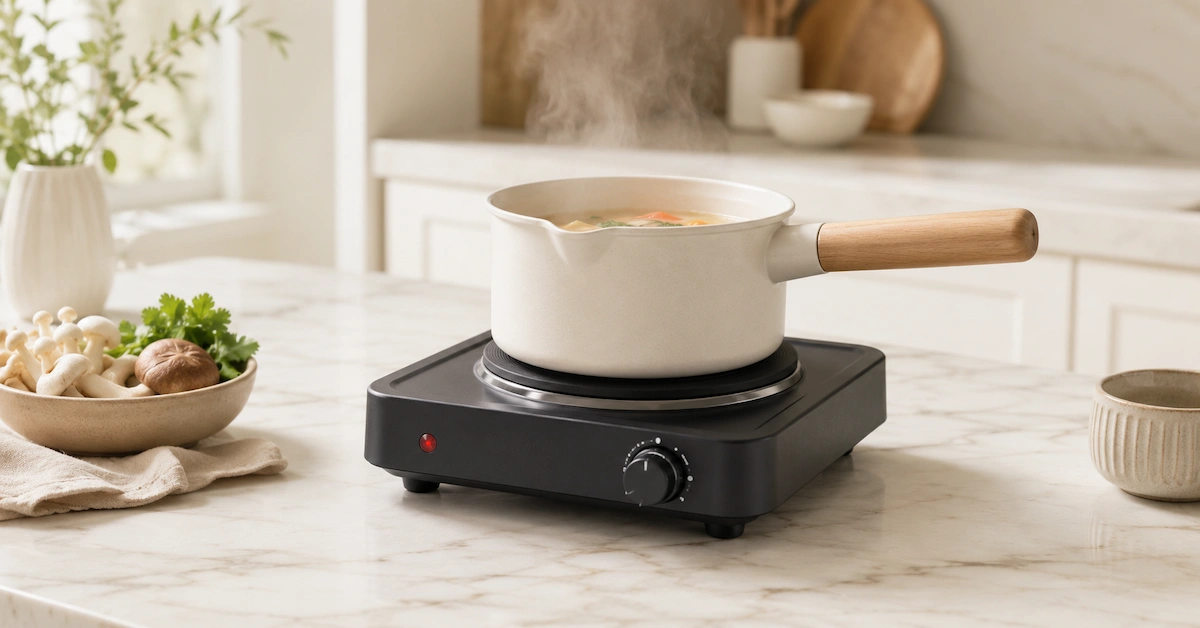
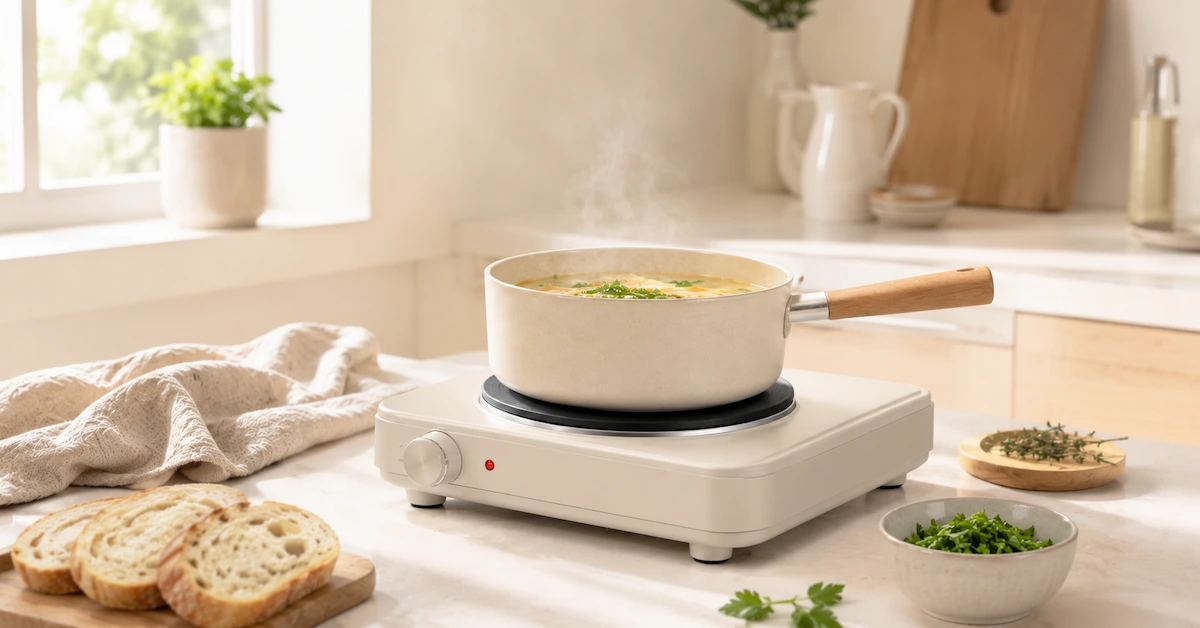
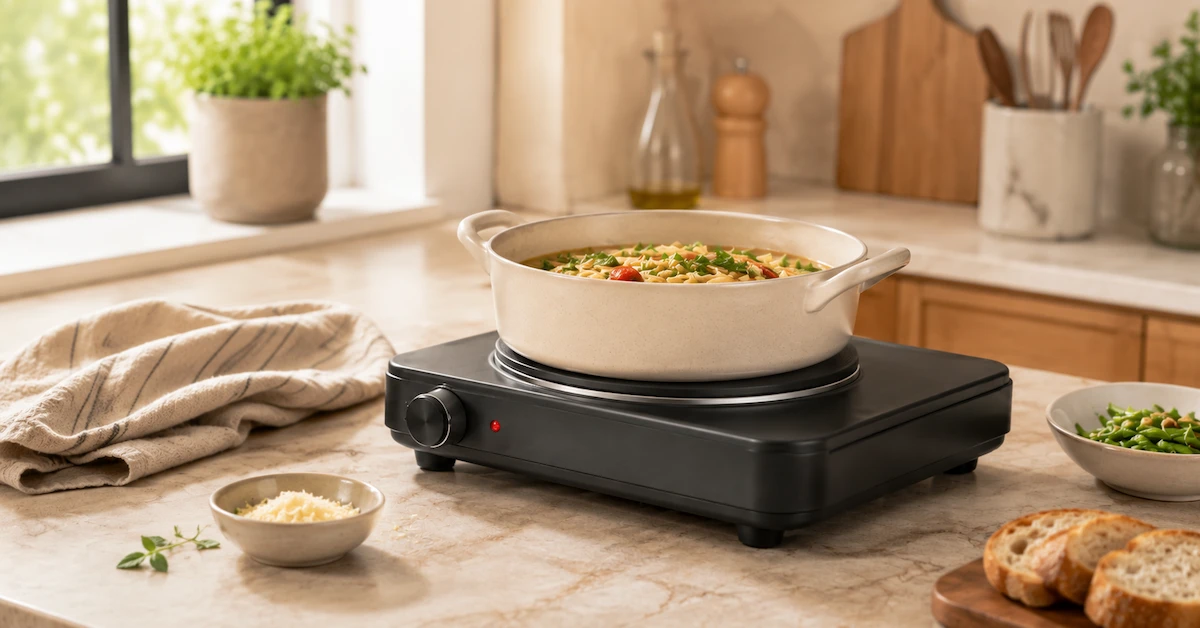
A solid hot plate is an electric resistance-heating component designed to transfer heat directly to cookware or an appliance heating surface.
It typically includes:
- A durable circular heating surface
- An internal resistance heating system
- A metal housing
- Electrical terminals
- An insulation structure
- Mounting points or brackets
Solid hot plates are widely used in:
- Single-burner electric stoves
- Double-burner electric cookers
- Portable cooking appliances
- Compact kitchen equipment
- OEM appliance projects
- Replacement-parts markets
- Selected commercial heating equipment
WEBO offers Hot Plate models alongside ceramic heaters, tube heating elements, induction coils, ceramic glass, rotary switches, energy regulators, and other appliance components. Buyers can review the current range on the WEBO Hot Plate product page.
Who Should Work with a Solid Hot Plate China Manufacturer?
Different buyers have different sourcing priorities. A capable manufacturer should understand the commercial and technical needs of each customer group.
| Buyer Type | Main Purchasing Need | Important Supplier Capability |
|---|---|---|
| Electric stove brands | Heating plates for branded appliances | OEM specifications and batch stability |
| Appliance factories | Components that fit production lines | Accurate dimensions and reliable delivery |
| Importers | Products suitable for local markets | Documentation, packaging, and compliance |
| Wholesalers | Stable products for resale | Consistent SKUs and bulk pricing |
| Repair-parts distributors | Compatible replacement products | Repeatable dimensions and terminals |
| Private label buyers | Market-ready product programs | Packaging, labels, and product customization |
A suitable supplier should be able to explain whether an existing model meets the project requirements or whether customization is necessary.
Key Solid Hot Plate Specifications to Confirm
Before requesting samples or prices, buyers should prepare a clear specification sheet.
| Specification | Why It Matters |
| Diameter | Determines compatibility with the appliance housing |
| Voltage | Must match the intended destination market |
| Rated power | Influences heating speed and appliance performance |
| Terminal type | Must fit the wiring and connection method |
| Terminal position | Affects assembly efficiency |
| Mounting structure | Ensures secure installation |
| Surface treatment | Influences durability and appearance |
| Control compatibility | Must work with the selected regulator or switch |
| Certification requirement | Supports the buyer's market-entry plan |
| Packaging method | Protects the products during international shipping |
WEBO currently organizes Hot Plate products into size categories including 90mm, 110mm, and 145mm. The final model should still be confirmed according to voltage, power, terminals, application, and appliance structure.
Manufacturer or Trader: How Can Buyers Tell the Difference?
Working with a trading company is not always a problem, but buyers should know who controls production and quality.
When evaluating a solid hot plate China manufacturer, ask these questions:
Can the supplier explain the product structure?
A manufacturer should be able to discuss voltage, wattage, terminal layouts, mounting structures, heating performance, and possible customization.
Can it develop or modify samples?
A real manufacturing partner should be able to evaluate drawings, existing samples, and appliance requirements before recommending a solution.
Does it have documented quality-control steps?
Buyers should understand how materials, dimensions, electrical performance, appearance, terminals, and packaging are inspected.
Can it keep repeat orders consistent?
The supplier should use the approved sample and specification as the production reference for future batches.
Can it supply related appliance components?
A broad product range can indicate stronger knowledge of complete cooktop and electric appliance systems.
WEBO was established in 1998 and operates a heating-element manufacturing business in Guangdong. Buyers can review its factory background, international markets, management systems, and product certifications on the WEBO About Us page.
Quality-Control Points for Solid Hot Plates
Solid hot plates experience repeated heating and cooling cycles. Quality problems may not always be visible during a basic appearance inspection.
A professional production and inspection process should address:
Raw Material Inspection
Metal components, insulation materials, resistance elements, terminals, and surface materials should meet the confirmed specification.
Dimensional Inspection
Diameter, thickness, terminal location, mounting points, and structural dimensions must match the drawing or approved sample.
Electrical Performance Testing
The factory should verify rated power, electrical continuity, insulation performance, and other agreed electrical parameters.
Heating Performance Evaluation
Testing should confirm that the hot plate heats according to the intended design and performs consistently.
Terminal Inspection
Loose, misaligned, or weak terminals may create installation difficulties or electrical reliability problems.
Surface Inspection
The heating surface and metal housing should be checked for scratches, deformation, coating defects, or inconsistent finishing.
Packaging Inspection
Products should be properly separated and protected so surfaces and terminals are not damaged during transportation.
For bulk buyers, the objective is not merely to receive one good sample. The supplier must maintain the approved standard throughout mass production.
OEM and ODM Options for Appliance Buyers
A capable solid hot plate China manufacturer should support different levels of customization.
OEM Manufacturing
OEM is suitable when the buyer already has a drawing, existing sample, confirmed specification, or mature appliance design.
OEM requests may include:
- Custom diameter
- Specified voltage and wattage
- Terminal layout matching
- Mounting structure adjustments
- Surface requirements
- Buyer-specified packaging
- Labels and carton marks
ODM Support
ODM is useful when the buyer has an application concept but needs assistance selecting and adapting an existing hot plate model.
The supplier may recommend an available structure and adjust its size, electrical specifications, terminals, or packaging.
For new projects, ODM support can reduce development time. After sample approval, the confirmed model can move into stable OEM-style production.
Sample-to-Mass-Production Process
A clear development process reduces sourcing risk.
Step 1: Submit Project Requirements
The buyer provides the application, destination market, diameter, voltage, power, terminals, expected quantity, and packaging needs.
Step 2: Select or Develop a Model
The manufacturer recommends an existing product or evaluates the required customization.
Step 3: Confirm Technical Details
Both parties confirm specifications, drawings, sample costs, testing requirements, and estimated production conditions.
Step 4: Produce and Test Samples
Samples are prepared for installation and appliance testing.
Step 5: Conduct Buyer Validation
The buyer checks fit, heating performance, wiring, control compatibility, and overall appliance operation.
Step 6: Approve the Final Sample
The approved sample, drawing, and specification become the production reference.
Step 7: Start Bulk Production
The manufacturer follows the approved requirements and completes in-process and final inspections.
Step 8: Complete Packaging and Export
Products are packed, labeled, and prepared according to the confirmed shipping requirements.
Export Packaging for Solid Hot Plate Orders
Solid hot plates contain metal surfaces and exposed terminal structures. Inadequate packaging may cause:
- Scratched heating surfaces
- Bent or damaged terminals
- Housing deformation
- Mixed product models
- Broken cartons
- Difficult warehouse identification
Buyers should discuss:
- Individual product protection
- Inner separators
- Carton strength
- Product labels
- SKU identification
- Barcode requirements
- Pallet options
- Private label packaging
- Mixed-model packing rules
Packaging should be evaluated as part of the total product cost rather than treated as an afterthought.
Cost Factors Beyond the Unit Price
Comparing only the quoted unit price may hide important purchasing costs.
The total sourcing cost can include:
- Sample and development charges
- Custom tooling or structure changes
- Product inspection
- Private label packaging
- Export cartons and pallets
- Freight and insurance
- Import duties
- Replacement claims
- Rework caused by incompatible specifications
- Inventory losses from inconsistent repeat batches
A slightly higher product price may create better commercial value if it reduces defects, shipping damage, assembly problems, and after-sales claims.
Buyer Checklist Before Placing an Order
Use this checklist when comparing manufacturers:
- Does the supplier understand the appliance application?
- Can it provide suitable sizes and electrical specifications?
- Does it support OEM or ODM development?
- Can it explain its quality-control process?
- Are relevant certifications available for confirmation?
- Can the buyer test samples before bulk production?
- Will mass production follow the approved sample?
- Can the supplier support private label packaging?
- Is export packaging suitable for the product?
- Can the supplier maintain repeat-order consistency?
- Does it provide realistic lead-time information?
- Can it support long-term bulk supply?
A supplier that answers these questions clearly is more likely to become a dependable long-term partner.
Why Choose WEBO as Your Solid Hot Plate China Manufacturer?
WEBO manufactures heating elements and appliance components for customers in Europe, Asia, Africa, and the Americas.
Its manufacturing profile includes:
- Established heating-element production experience
- A factory area of approximately 50,000 square meters
- More than 500 workers
- ISO 9001 and ISO 14001 management systems
- Product certifications listed as VDE, TUV, UL, CE, and RoHS
- Standard and customized heating components
- OEM and ODM cooperation
- Export-oriented service and global shipping
The product portfolio includes Hot Plate, Ceramic Heater, Tube Heating Element, Cast Iron Pan Support, Induction Coil, Ceramic Glass, Rotary Switch, and Energy Regulator.
This broader product range can help appliance buyers consolidate selected heating and control components through one manufacturing partner.
Explore the available WEBO heating-element products, or review more technical and sourcing information in the WEBO Blog.
For samples, drawings, custom specifications, bulk prices, or private label requirements, send your project details through the WEBO contact page.
FAQ
1. What does a solid hot plate China manufacturer produce?
A solid hot plate China manufacturer produces electric heating plates for stoves, portable cookers, compact appliances, OEM projects, and replacement-parts markets.
2. Can solid hot plates be customized?
Yes. Buyers can request changes to diameter, voltage, power, terminals, mounting structure, surface finish, labeling, and packaging.
3. What information is needed for a quotation?
Provide the application, target market, size, voltage, power, terminal requirements, quantity, certifications, packaging, and any available sample or drawing.
4. Should buyers test samples before placing bulk orders?
Yes. Appliance testing helps verify installation, electrical compatibility, heating performance, controls, and packaging before mass production.
5. What is the difference between OEM and ODM supply?
OEM follows buyer-provided specifications, while ODM helps buyers select and modify an existing product platform for a new application.
6. What certifications can buyers request from WEBO?
WEBO lists ISO 9001, ISO 14001, VDE, TUV, UL, CE, and RoHS among its management standards and product certification credentials. Buyers should confirm the exact documents relevant to their selected model and market.
7. Can WEBO support private label and bulk orders?
WEBO supports OEM and ODM requirements, customized specifications, export packaging, private label projects, and bulk production discussions.
8. How can buyers obtain a quotation?
Send the appliance application, technical specifications, annual demand, sample or drawing, and packaging requirements through the WEBO contact page.
Conclusion
Choosing the right solid hot plate China manufacturer requires more than comparing prices. Buyers should evaluate manufacturing capability, technical communication, sample development, quality control, certification support, export packaging, and repeat-order stability.
For appliance brands, OEM factories, importers, wholesalers, and replacement-parts distributors, a reliable manufacturing partner can reduce development risk and protect long-term product quality.
WEBO provides standard and customized solid hot plates for electric stoves, portable cookers, appliance projects, and bulk distribution. Buyers can submit specifications, samples, drawings, and estimated quantities to receive product-matching support and a customized quotation.