


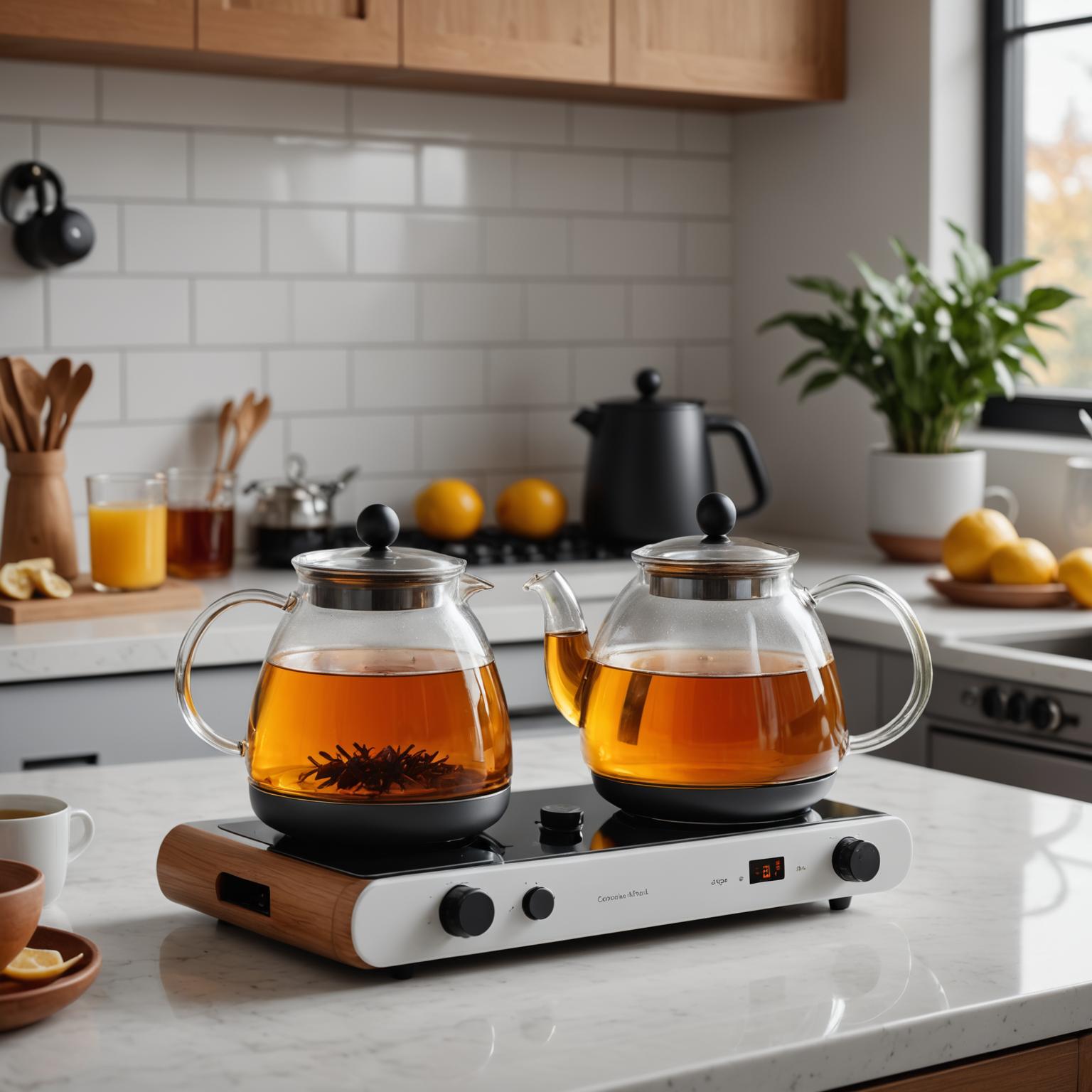
In an era where rising energy prices and household sustainability are making daily headlines, the search for more efficient and safer home appliances has never been more relevant. This global trend extends directly to the heart of the home: the kitchen. For enthusiasts of vibrant Asian cuisine, this has sparked a renewed interest in the technology behind their favorite dishes, bringing the modern Wok Induction Cooktop into the spotlight as a powerful, precise, and forward-thinking alternative to traditional cooking methods.
The Great Debate: Induction vs Gas Wok Cooking
For decades, the gold standard for achieving the coveted 'wok hei'—the smoky, seared flavor essential to authentic stir-fry—was a roaring gas flame. This tradition has led many to question the viability of induction for this specific style of cooking. The debate of induction vs gas wok cooking often centers on the raw power needed for rapid searing. However, today’s advanced induction technology has not only closed that gap but in many ways, has surpassed its predecessor. A dedicated induction wok burner is specifically engineered to deliver instantaneous and incredibly high heat directly to the pan's surface. This electromagnetic process offers a level of immediate temperature control that gas simply cannot match, allowing for split-second adjustments from a roaring sear to a gentle simmer. This precision ensures ingredients are cooked quickly and evenly, preserving their crisp texture and vital nutrients without the energy waste associated with open flames.
Prioritizing Wok Induction Safety and Efficiency
Beyond pure performance, the contemporary conversation around kitchen upgrades is increasingly dominated by safety and long-term running costs. This is where wok induction safety becomes a major talking point and a significant advantage. Unlike gas stoves, an induction cooktop has no open flame, drastically reducing the risk of kitchen fires, gas leaks, and accidental burns from contact with hot grates. The cooking surface itself stays much cooler, heating only the pan. Many units, such as those we develop at GUANGDONG WEBO TECHNOLOGY Co., LTD, incorporate advanced safety features like automatic pan detection, overheat protection, and child locks, meeting stringent international standards like VDE, TUV, and UL. From an efficiency standpoint, a wok induction stove is unparalleled. It transfers up to 90% of its energy directly into the cookware, compared to roughly 40-50% for gas. In the current economic climate, this superior efficiency translates to tangible savings on utility bills and a smaller carbon footprint, aligning perfectly with the global push for greener living and reducing waste heat in the kitchen.
Unlocking Culinary Potential: Induction Cooking with Wok
Making the switch to wok cooking on induction is a seamless transition with the right knowledge and equipment. The key to success lies in using an induction-compatible wok, typically one made of a ferrous metal like cast iron or carbon steel. While flat-bottomed woks work perfectly on standard induction hobs, specialized cooktops feature a concave bowl shape to cradle a traditional round-bottom wok, ensuring maximum contact and heat transfer. Mastering induction cooking with wok opens up a world of culinary possibilities that were once challenging for the home chef. The precise, consistent heat eliminates hot spots, allowing you to achieve a perfect, uniform sear on meats and vegetables every time. This unparalleled control makes it far easier to manage complex recipes, from flash-frying aromatics without burning them to maintaining a perfect simmer for a delicate sauce. This technology empowers home cooks to replicate restaurant-quality dishes, a trend that has exploded in popularity as more people embrace creative cooking at home.
The Future is Now for Your Kitchen
As news cycles continue to focus on environmental responsibility and economic efficiency, the choice of kitchen appliances becomes more than a matter of simple preference; it becomes a statement. The modern Wok Induction Cooktop stands as a testament to culinary and technological advancement, offering a solution that is superior in performance, safety, and sustainability. It empowers home chefs to create authentic, delicious meals while making a responsible choice for their households and the planet. For companies like ours, with a deep commitment to quality and innovation certified by ISO 9001 and ISO 14001 standards, seeing this technology embraced in kitchens worldwide is not just a business goal, but a meaningful step toward a smarter, safer, and more efficient future.