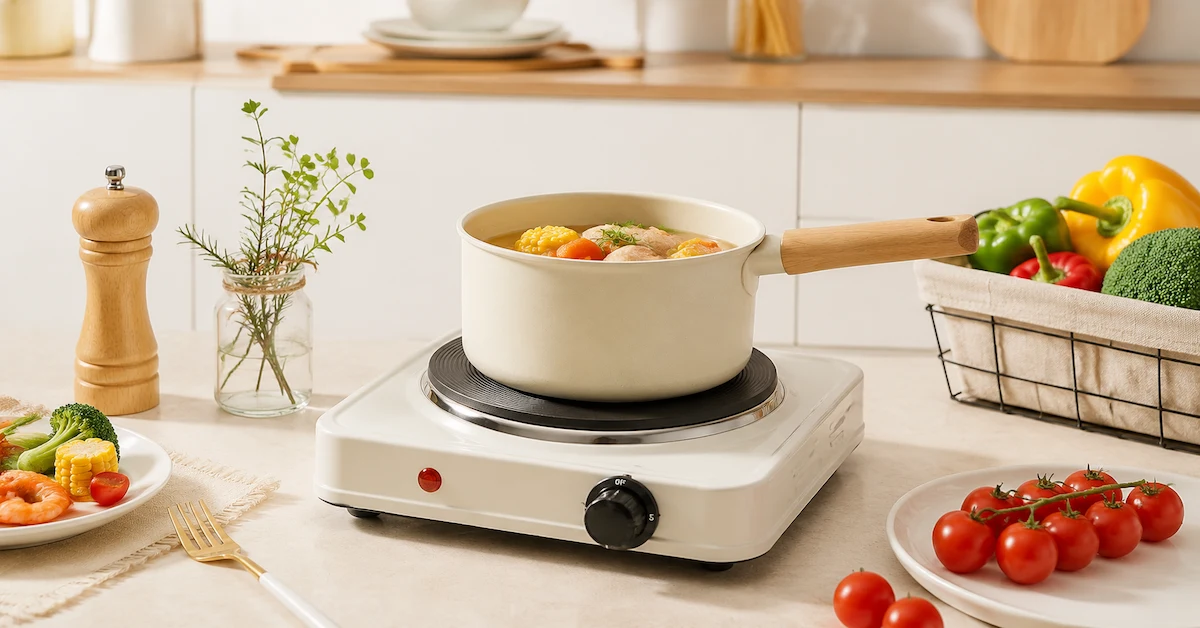



Choosing a reliable solid hot plate exporter is important for appliance importers, electric stove brands, wholesalers, repair-parts distributors, and OEM buyers serving international markets.
A solid hot plate must do more than produce heat. It must match the appliance structure, operate at the required voltage and power, maintain stable performance across repeated heating cycles, and arrive without surface or terminal damage.
For overseas buyers, sourcing risks also include incorrect documentation, weak export packaging, inconsistent repeat batches, and products that do not match local market requirements.
A professional exporter should therefore combine technical product knowledge, manufacturing coordination, quality control, packaging capability, and international order support.

What Does a Solid Hot Plate Exporter Provide?
A solid hot plate exporter supplies electric heating plates to buyers outside the manufacturing country and manages the requirements associated with international orders.
The service should include more than shipping products overseas. A capable exporter should help buyers confirm:
- Product diameter
- Voltage and rated power
- Terminal type and position
- Mounting structure
- Surface treatment
- Target-market requirements
- Certification documentation
- Export packaging
- Product labels and carton marks
- Bulk production schedules
- Shipping and delivery information
WEBO supplies solid hot plates as part of a broader heating-component portfolio. Buyers can review the available product categories on the WEBO products page.
Who Needs a Solid Hot Plate Exporter?
Different international buyers require different levels of product and service support.
| Buyer Type | Main Requirement | Key Export Concern |
|---|---|---|
| Appliance importers | Market-ready heating components | Compliance, packaging, documentation |
| Electric stove brands | Products matched to appliance designs | Size, voltage, power, terminals |
| Wholesalers | Stable inventory and repeat supply | Batch consistency and delivery |
| Repair-parts distributors | Compatible replacement models | Stable specifications and SKU control |
| OEM appliance factories | Custom heating components | Samples, drawings, and technical matching |
| Private label buyers | Branded product programs | Labels, cartons, barcodes, and packaging |
A suitable solid hot plate exporter should understand whether the buyer is purchasing components for manufacturing, replacement distribution, or a private label product line.
Key Specifications for Export Solid Hot Plates
Before requesting a price, buyers should prepare a clear specification sheet.
| Specification | Why It Matters |
| Diameter | Determines whether the hot plate fits the appliance |
| Voltage | Must match the destination market |
| Rated power | Influences heating speed and performance |
| Terminal type | Must suit the internal wiring system |
| Terminal location | Affects assembly and installation |
| Mounting structure | Keeps the component securely installed |
| Surface finish | Influences durability and appearance |
| Control compatibility | Must match switches or energy regulators |
| Certification requirement | Supports market access and customer approval |
| Packaging method | Protects the product during transportation |
Solid hot plates may be available in common size categories such as 90mm, 110mm, and 145mm. However, size alone is not enough to select the right model. Voltage, power, terminals, mounting method, and application must also be confirmed.
Why Destination-Market Requirements Matter
An export product may need different specifications depending on where it will be sold or installed.
Buyers should inform the exporter about:
- Destination country or region
- Local voltage and frequency
- Appliance application
- Customer testing requirements
- Required certification documents
- Product labeling rules
- Packaging language
- Import documentation
- Barcode or carton-mark requirements
Certification needs can vary by product model and market. Buyers should confirm the exact certificates and test documents available for the selected solid hot plate before placing an order.
A reliable exporter should explain what documentation can be provided instead of making general compliance claims that do not apply to the chosen model.
Export Packaging for Solid Hot Plates
Solid hot plates are relatively heavy metal components with exposed electrical terminals. Inadequate packaging can cause damage during handling, consolidation, container loading, and long-distance transportation.
Common packaging risks include:
- Scratched heating surfaces
- Bent electrical terminals
- Deformed metal housings
- Mixed product models
- Broken inner boxes
- Weak export cartons
- Moisture exposure
- Difficult warehouse identification
A professional solid hot plate exporter should discuss packaging before production is completed.
Possible packaging options include:
- Individual product protection
- Internal cardboard separators
- Strong export cartons
- Moisture-resistant protection
- Product labels
- SKU identification
- Barcode labels
- Custom carton marks
- Private label packaging
- Pallet packaging
Good packaging protects product quality and also improves receiving, inventory management, and resale efficiency.
Why Batch Consistency Is Essential for Importers
Importers and distributors often place repeat orders over several months or years. Their customers expect the same product to maintain the same size, terminal arrangement, heating performance, and packaging.
Inconsistent batches can create:
- Appliance assembly problems
- Replacement incompatibility
- Higher incoming inspection costs
- Customer complaints
- Product returns
- Inventory confusion
- Delayed production
- Lost distributor confidence
A dependable exporter should use the approved sample, specification sheet, drawing, and packaging instructions as the reference for future production.
Buyers should ask how technical changes are controlled and whether any material or structural modification will be communicated before production.
Quality Control for Export Solid Hot Plates
Products intended for international shipment should be inspected before packing and dispatch.
Important quality-control points include:
Material Inspection
Metal components, terminals, insulation materials, and heating structures should match the confirmed product requirements.
Dimensional Inspection
Diameter, thickness, terminal position, and mounting dimensions should be checked against the approved sample or drawing.
Electrical Testing
Testing should verify agreed electrical parameters such as power, continuity, and insulation performance.
Heating Performance Testing
The hot plate should provide stable heating according to the intended application.
Terminal Inspection
Terminals should be properly aligned and securely installed to reduce assembly and reliability problems.
Surface Inspection
Heating surfaces and metal housings should be checked for scratches, deformation, and inconsistent finishing.
Packaging Inspection
Product protection, model labels, quantities, cartons, and shipping marks should be verified before dispatch.
For B2B buyers, quality control should protect the full order rather than focus only on the original sample.
OEM and ODM Support for Export Buyers
Many international customers require specifications that differ from standard catalog products.
A capable solid hot plate exporter can support OEM requirements such as:
- Custom diameter
- Market-specific voltage
- Custom power rating
- Terminal structure adjustment
- Mounting modification
- Surface treatment requirements
- Buyer labels
- Private label packaging
- Custom export cartons
- Bulk order planning
ODM support is useful when the buyer has an appliance concept but needs help selecting and adapting an existing hot plate model.
The supplier can recommend a suitable product platform, prepare samples, adjust selected specifications, and move into bulk production after approval.
Common Export Applications
Electric Stoves
Solid hot plates are used in single-burner and multi-burner electric stoves. Correct size, power, terminal position, and control compatibility are essential.
Portable Electric Cookers
Portable products require compact, durable heating components that are easy to install and suitable for the destination market.
Small Kitchen Appliances
Solid hot plates can serve as core heating components in compact cooking and heating equipment.
Replacement-Parts Distribution
Distributors need stable dimensions, terminal layouts, and repeat supply so replacement products continue to fit existing appliances.
Private Label Product Programs
Importers and wholesalers may combine selected hot plate specifications with branded labels, packaging, and regional product information.
Common Risks When Importing Solid Hot Plates
Selecting a Supplier Only by Price
A low unit price may be offset by inconsistent quality, damaged shipments, rework, returns, or lost customers.
Confirming Only the Diameter
Two hot plates with the same diameter may have different voltage, power, terminals, and mounting structures.
Skipping Sample Testing
Samples should be installed and tested in the actual appliance before bulk production.
Ignoring Export Packaging
Standard domestic packaging may not be strong enough for international transportation.
Failing to Confirm Documentation
Required certificates, product documents, labels, and carton information should be confirmed before production.
Not Planning Repeat Orders
Importers should check whether the exporter can maintain the same specifications across future batches.
What Buyers Should Provide for a Quotation
Providing complete information allows a solid hot plate exporter to recommend a more accurate solution.
| Required Information | Example |
| Application | Electric stove, portable cooker, replacement part |
| Destination market | Europe, North America, Asia, Africa |
| Diameter | 90mm, 110mm, 145mm, or custom |
| Voltage and power | Based on the appliance and market |
| Terminal requirement | Existing wiring or selected structure |
| Quantity | Sample, trial order, or bulk order |
| Certification needs | Based on the destination market |
| Packaging | Export carton, private label, barcode, pallet |
| Reference material | Sample, drawing, photo, or specification sheet |
| Annual demand | Expected repeat-order quantity |
Buyers should also state whether the project is a new appliance development, an existing model replacement, or a wholesale distribution program.
Why Choose WEBO as Your Solid Hot Plate Exporter?
WEBO supports appliance manufacturers, importers, wholesalers, distributors, and OEM buyers with solid hot plates and related heating components.
Its broader product portfolio includes:
- Hot Plate
- Ceramic Heater
- Tube Heating Element
- Cast Iron Pan Support
- Induction Coil
- Ceramic Glass
- Rotary Switch
- Energy Regulator
As a solid hot plate exporter, WEBO can support:
- Standard and custom solid hot plates
- OEM and ODM project development
- Sample evaluation
- Bulk production
- Export-oriented packaging
- Private label requirements
- Related cooktop components
- Long-term international supply
Buyers can review the available categories on the WEBO products page.
To understand the company’s manufacturing background and international business experience, visit the WEBO About Us page.
For model selection, samples, custom specifications, packaging requirements, or bulk pricing, send the project details through the WEBO contact page.
FAQ
1. What does a solid hot plate exporter supply?
A solid hot plate exporter supplies electric heating plates to international appliance brands, importers, wholesalers, OEM factories, and replacement-parts distributors.
2. What information is needed for an export quotation?
Buyers should provide the application, destination market, diameter, voltage, power, terminals, quantity, certification needs, and packaging requirements.
3. Can export solid hot plates be customized?
Yes. Size, voltage, power, terminals, mounting structure, surface treatment, labels, and packaging can be discussed according to the project.
4. Why should buyers approve samples before bulk production?
Sample approval confirms appliance fit, heating performance, terminal compatibility, controls, appearance, and packaging before mass production.
5. What packaging is suitable for solid hot plate exports?
Suitable packaging may include individual protection, separators, strong export cartons, labels, barcodes, and pallets where required.
6. Can WEBO support private label export orders?
WEBO can discuss private label packaging, carton marks, barcodes, customized specifications, and bulk production requirements.
7. How should buyers confirm certification requirements?
Buyers should provide the destination market and appliance application, then verify the exact certificates and documents available for the selected model.
8. How can buyers request a quotation from WEBO?
Send specifications, drawings or samples, destination market, quantity, packaging requirements, and annual demand through the contact page.
Conclusion
Choosing a reliable solid hot plate exporter requires careful evaluation of product specifications, destination-market requirements, quality control, packaging, documentation, OEM support, and repeat-order stability.
For appliance brands, importers, wholesalers, distributors, and OEM factories, the right export partner can reduce technical errors, shipping damage, and long-term supply risks.
WEBO supplies standard and customized solid hot plates for electric stoves, portable cookers, small appliances, and replacement markets. Buyers can submit application details, target-market requirements, samples, drawings, and expected quantities to receive product-matching support and a customized quotation.