


튜브 발열체 도매 공급업체 선택은 기술 조달 결정입니다
튜브 발열체 도매 공급업체를 찾는 것은 단순히 단가가 가장 낮은 곳을 찾는 문제가 아닙니다. 가전제품 제조업체, 수입업체, 유통업체 및 산업용 장비 회사의 경우 실제 구매 과제는 발열체가 장비에 적합하고, 필요한 전기 출력을 제공하고, 의도된 작동 환경을 견디고, 반복적인 대량 주문에서 일관성을 유지하는지 확인하는 것입니다.
도매 구매자는 일반적으로 견적을 비교하기 전에 전압, 전력량, 튜브 모양, 설치 치수, 외장재, 단자 구성, 열매체, 인증 요구 사항, 포장 및 주문 수량을 확인해야 합니다.
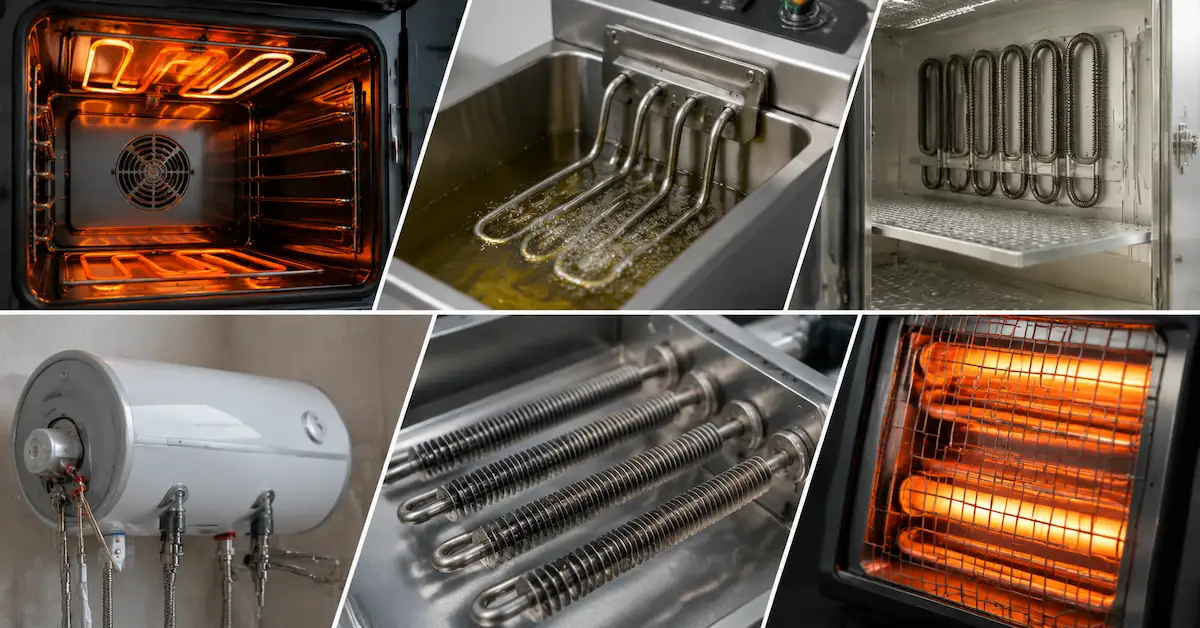
관형 가열 요소는 매우 다양한 용도에 사용되기 때문에 이는 특히 중요합니다. 금속 피복 관형 요소는 오븐, 그릴, 핫 플레이트, 침지 가열, 공기 히터, 오일 히터 및 기타 기기 또는 산업용 가열 시스템에 일반적으로 사용됩니다. Kanthal의 전기 기기 가열 요소 가이드와 같은 업계 참고 자료에서는 전기적으로 가열 코일로 사용되는 일반적인 금속 피복 설계를 설명합니다. MgO와 같은 입상 절연 재료로 주변 금속 튜브로부터 절연되어 있습니다.
따라서 B2B 구매자에게 신뢰할 수 있는 공급업체는 단순한 부품 판매자가 아닌 엔지니어링 및 공급망 파트너로 평가되어야 합니다.
튜브 발열체 도매업체로부터 누가 구매해야 합니까?
도매 소싱은 발열체를 반복적으로 구매하거나 이를 완제품 장비에 통합하는 기업에 가장 적합합니다.
일반적인 구매자는 다음과 같습니다.
- 전기 오븐 제조업체
- 전기 그릴 제조업체
- 온수기 및 보일러 제조업체
- 소형 가전 브랜드
- 산업용 난방 장비 회사
- 식품 가공 장비 제조업체
- 건조 장비 제조업체
- 난방 부품 수입업체
- 가전제품 부품 도매업체
- 교체 부품 유통업체
- OEM 및 자사 브랜드 구매자
- 조달 및 제품 개발 팀
WEBO의 현재 튜브 가열 요소 목록은 이러한 적용 범위를 보여줍니다. 회사의 튜브 가열 포트폴리오에는 오븐과 전기로, 온수기 및 보일러, 공기 가열 장비, 산업용 오븐, 건조기 및 기타 가열 응용 분야를 위한 구성이 포함됩니다.
도매 공급이 최선의 구매 경로가 아닐 수 있는 경우
소비자 교체 부품이 하나만 필요하고 이미 정확한 가전제품 부품 번호를 알고 있는 경우 도매 공급업체는 일반적으로 가장 효율적인 선택이 아닙니다.
도매 소싱은 다음이 필요할 때 더욱 가치가 있습니다.
- 반복 주문
- 여러 모델
- OEM 치수
- 맞춤 터미널
- 특정 전압 또는 전력
- 맞춤형 플랜지 또는 장착
- 포장 내보내기
- 개인 상표 포장
- 양산 전 샘플 승인
- 장기적인 공급 일관성
기술적으로 올바른 대량 구성 요소는 첫 번째 샘플뿐만 아니라 향후 생산 배치에서도 호환성을 유지해야 하기 때문에 차이점이 중요합니다.
튜브 발열체란 무엇인가요?
종종 관형 가열 요소라고도 불리는 튜브 가열 요소는 전기 에너지가 열로 변환되는 전기 저항 가열 구성요소입니다.
IEC Electropedia에서는 가열 저항기를 전기 에너지를 열로 변환하는 데 사용되는 가열 요소의 일부로 정의합니다. IEC Electropedia는 전기 산업 전반에 걸쳐 사용되는 표준화된 전기기술 용어를 제공합니다.
일반적인 금속 피복 관형 히터 구성에는 다음이 포함됩니다.
- 저항 열선 또는 코일
- 전기 절연재
- 금속 외피
- 터미널 핀 또는 리드 연결
- 필요한 경우 장착 또는 플랜지 구조
- 밀봉 또는 단자 절연 부품
금속 외장 기기 요소의 경우 전기 절연을 유지하면서 열을 전달하도록 설계해야 하기 때문에 MgO는 저항 코일과 금속 외장 사이에 일반적으로 사용됩니다. Kanthal은 금속 피복 관형 요소에 대한 기술 지침에서 이 구조를 식별합니다.
WEBO의 자체 기술 콘텐츠도 마찬가지로 금속 외피, 저항선 및 절연 분말을 사용하는 일반적인 튜브 가열 요소를 설명하며, 디자인에 따라 스테인레스 스틸 및 Incoloy와 같은 합금을 외피 재료로 사용할 수 있다고 언급합니다.
도매가를 요청하기 전에 애플리케이션부터 시작하세요
가장 흔한 소싱 실수 중 하나는 사진만 보내고 다음과 같이 묻는 것입니다.
"가장 좋은 가격은 얼마입니까?"
튜브 히터는 먼저 난방 환경에 맞춰야 합니다.
| 애플리케이션 | 일반적인 구성 방향 | 주요 구매 질문 |
|---|---|---|
| 전기 오븐 | 성형 또는 W자형 관형 요소 | 전압, 전력량, 크기, 장착, 단자 레이아웃 |
| 전기 그릴 | 구부러진 관형 발열체 | 히트존 적용 범위, 모양, 외장, 고정 방법 |
| 온수기 | 침수 또는 플랜지 장착 요소 | 물 호환성, 플랜지/스레드, 와트수, 밀봉 |
| 보일러 | U자형 또는 플랜지 발열체 | 전원, 피팅, 부식 환경, 설치 |
| 에어 히터 | 야외 관형 배열 | 공기 흐름, 표면 하중, 튜브 레이아웃, 온도 |
| 건조 장비 | 맞춤형 요소 | 챔버 크기, 공기 흐름, 작동 주기, 장착 |
| 산업 장비 | 애플리케이션별 기하학 | 프로세스 온도, 매체, 치수, 전기 부하 |
WEBO는 현재 전기로 및 오븐용 W자형 튜브 가열 요소, 온수기 및 보일러용 U자형 플랜지 스타일 요소, 공기 히터, 산업용 오븐 및 건조 장비용 이중 U 구성을 나열하고 있습니다.
이것이 바로 도매 구매자가 장비 및 열매체를 먼저 지정하고 물리적 요소를 두 번째로 지정해야 하는 이유입니다.
견적을 요청하기 전에 공급업체에 보내는 기술 사양
전문적인 RFQ에는 공급업체가 기존 모델을 사용할 수 있는지 또는 OEM 설계가 필요한지 여부를 결정할 수 있는 충분한 정보가 포함되어 있어야 합니다.
필수 튜브 발열체 RFQ 체크리스트
| 사양 | 중요한 이유 |
|---|---|
| 애플리케이션 | 난방 환경 정의 |
| 가열 매체 | 공기, 물, 금속 표면, 오븐실 등 |
| 정격 전압 | 장비 전기 시스템과 일치해야 함 |
| 필요 전력량 | 난방 출력 결정 |
| 전체 크기 | 장비에 맞아야 함 |
| 튜브 직경 | 기계 및 열 설계에 영향 |
| 요소 모양 | 가열 영역 범위 결정 |
| 장착 방법 | 장비 구조와 일치해야 함 |
| 플랜지/스레드 크기 | 침수 애플리케이션에 중요 |
| 단말기 구성 | 내부 배선과 일치해야 함 |
| 외피 재료 | 온도 및 환경에 따라 다름 |
| 작동 온도 | 재료 및 적재 평가에 도움 |
| 수량 | 도구 및 생산 계획 결정 |
| 목표 시장 | 규정 준수 요구 사항 식별에 도움 |
| 인증 요구사항 | 제작 전 확인 필요 |
| 포장 | 대량, 개별, 개인 상표, 수출 상자 |
| 그림/샘플 | 호환성 오류 감소 |
요소 크기와 독립적으로 전력량을 선택하지 마세요
올바른 히터는 단순히 '적합한 최고 전력량'이 아닙니다.
전력, 가열 길이, 튜브 표면적, 작동 온도, 가열 매체, 공기 흐름, 침수 조건 및 외장재가 서로 상호 작용합니다.
이것이 와트 밀도 또는 표면 부하가 중요한 엔지니어링 고려 사항인 이유입니다. Kanthal의 기술 가이드는 허용 가능한 표면 부하는 발열체 유형과 적용 분야에 따라 크게 다르다는 것을 보여줍니다.
OEM 프로젝트의 경우 공급업체가 가격만으로 전력량을 선택하기보다는 요소 설계를 검토할 수 있도록 필요한 시스템 성능과 운영 환경을 제공하는 것이 더 안전한 접근 방식입니다.
대형 튜브 발열체 주문 시 재료 선택의 중요성
애플리케이션에 따라 가열 튜브에 대한 요구도 다릅니다.
금속 외장
외피는 내부 난방 구조를 보호하고 열을 주변 환경으로 전달합니다.
애플리케이션에 따라 제조업체는 스테인리스강, 니켈 기반 합금 또는 기타 적합한 피복 재료를 고려할 수 있습니다. 올바른 선택은 작동 온도, 부식 노출, 열매체, 산화 조건 및 비용에 따라 달라집니다.
따라서 한 가지 재료가 항상 '더 좋다'는 일반적인 가정보다는 실제 서비스 환경을 바탕으로 재료를 선택해야 합니다.
저항열선
내부 저항 도체는 전기 에너지를 열로 변환합니다.
저항성 합금 선택은 전기 저항, 작동 온도 성능, 산화 거동 및 장기적인 치수 안정성에 영향을 미칩니다. 예를 들어 Kanthal은 금속 외장 관형 기기 요소에 사용되는 니켈-크롬 저항 합금을 문서화했습니다.
전기 절연
입상 MgO는 열 전달을 지원하면서 외부 튜브에서 저항 코일을 전기적으로 분리하기 위해 금속 외장 관형 요소에 널리 사용됩니다.
단자 및 장착 구성요소
터미널 레이아웃은 OEM 기기 프로젝트에 특히 중요합니다.
발열체는 올바른 전압과 전력량을 가질 수 있지만 다음과 같은 경우에는 여전히 사용할 수 없습니다.
- 터미널이 잘못된 방향을 가리키고 있습니다
- 단자 간격이 배선과 충돌함
- 장착 브래킷이 정렬되지 않음
- 플랜지가 탱크와 일치하지 않습니다
- 콜드 섹션의 위치가 잘못되었습니다
- 요소가 주변 구성요소를 방해합니다
샘플 승인 전에 이러한 기계적 세부정보를 확인해야 합니다.
공통 튜브 발열체 구성 비교
도매 공급업체는 모든 고객에게 하나의 표준 모델을 강요하기보다는 애플리케이션에 맞는 구조를 추천할 수 있어야 합니다.
| 구성 | 주요 장점 | 일반적인 애플리케이션 | 구매자 우선순위 |
|---|---|---|---|
| W자형 요소 | 더 넓은 난방 면적을 커버합니다 | 오븐, 전기로 | 크기 및 장착 |
| 원형/루프 요소 | 콤팩트한 가열 구역 적용 범위 | 오븐, 핫플레이트, 가전제품 | 직경 및 단자 위치 |
| U자형 요소 | 간단한 형태의 가열 경로 | 가전제품 또는 산업용 히터 | 길이 및 출력 |
| U자형 플랜지 요소 | 탱크/보일러 직접 설치 | 물 가열, 보일러 | 플랜지, 밀봉, 부식 |
| Double-U 요소 | 정의된 영역 내에서 더 넓은 가열 표면 | 공기 가열, 건조, 오븐 | 레이아웃, 공기 흐름, 와트 밀도 |
| 맞춤형 튜브 | 고유한 장비 형상에 적합 | OEM 기계 | 그리기 정확도 |
예를 들어 구매자는 WEBO의 튜브 가열 요소를 검토할 수 있습니다. 카테고리를 현재 가열 튜브 포트폴리오의 출발점으로 삼았습니다. 이 사이트에는 TL-002, TL-022 및 TL-023.
튜브 발열체 도매 공급업체를 평가하는 방법
도매 구매자는 견적을 한 줄씩 비교하기보다는 여러 측면에서 공급업체를 평가해야 합니다.
1. 기술 검토 기능
강력한 공급업체는 맞춤형 프로젝트를 견적하기 전에 질문을 해야 합니다.
유용한 질문은 다음과 같습니다.
- 요소는 어떤 장비에 사용되나요?
- 공기, 물, 아니면 금속 표면을 가열하나요?
- 어떤 전압을 사용할 수 있나요?
- 필요한 전력량은 얼마인가요?
- 설치 공간은 어떻게 되나요?
- 작동 온도는 어떻게 되나요?
- 장착 치수는 어떻게 되나요?
- 그림을 사용할 수 있나요?
- 기존 샘플을 사용할 수 있나요?
- 최종 제품은 어느 시장에 진출하게 되나요?
애플리케이션에 대한 이해 없이 OEM 히터 견적을 제시하는 공급업체는 피할 수 있는 엔지니어링 위험을 초래할 수 있습니다.
2. 샘플 대 벌크 일관성
도매 구매의 경우 성공적인 샘플만으로는 충분하지 않습니다.
구매자는 대량 생산 중에 다음과 같은 특성을 통제해야 하는지 설정해야 합니다.
- 전체 크기
- 굽힘 형상
- 전기 저항
- 정격 전력
- 단말기 크기
- 플랜지 위치
- 표면 상태
- 포장 방법
반복성은 가전제품 조립 라인과 교체 부품 유통업체에게 특히 중요합니다.
3. 품질 관리 문서
대량 생산 전에 어떤 검사를 수행하고 어떤 승인 기준을 사용할지 물어보세요.
제품 및 애플리케이션에 따라 품질 계획에는 다음이 포함될 수 있습니다.
- 반입 자재 검사
- 치수 검사
- 저항 또는 전기적 성능 검증
- 절연 저항 테스트
- 해당되는 경우 유전체/내구성 테스트
- 단말기 검사
- 표면 검사
- 가열 확인
- 최종 포장 검사
정확한 안전 테스트 및 제한은 일반적인 체크리스트에서 복사하는 대신 발열체 설계, 완성된 기기, 대상 시장 및 해당 표준에 따라 합의되어야 합니다.
4. 인증 및 시장 호환성
구성요소 인증서가 완성된 기기가 모든 대상 시장 요구 사항을 준수한다는 것을 자동으로 의미하지는 않습니다.
따라서 구매자는 다음 사항을 확인해야 합니다.
- 정확한 모델에 적용되는 인증서
- 인증서에 필요한 전압/전력이 포함되어 있는지 여부
- 문서가 최신인지 여부
- 최종 어플라이언스에 추가 인증이 필요한지 여부
- 자재 또는 생산 변경이 승인된 건설에 영향을 미치는지 여부
WEBO의 웹사이트에는 회사가 ISO 9001 및 ISO 14001 관리 시스템에 따라 운영되며 해당 제품이 VDE, TUV, UL, CE 및 RoHS를 포함한 인증을 획득했다고 명시되어 있습니다. 구매자는 정확한 모델 및 프로젝트와 관련된 문서를 요청해야 합니다.
5. 생산 능력 및 리드타임 투명성
공급업체의 공장 규모는 유용한 정보이지만 그 자체로 주문 리드 타임을 결정하지는 않습니다.
구매자는 다음에 대해 별도로 문의해야 합니다.
- 샘플 리드타임
- 공구 리드 타임
- 시험 주문 리드 타임
- 대량생산 리드타임
- Peak-season capacity
- Monthly capacity for the relevant product family
- Repeat-order planning
- Raw-material availability
WEBO states that its manufacturing operation was established in 1998, operates a plant of approximately 50,000 square meters, and employs more than 500 workers. Its site does not publish a specific monthly tube-heating-element capacity or universal lead time, so those figures should be confirmed per project rather than assumed.
What Affects Wholesale Tube Heating Element Pricing?
There is no useful universal wholesale price for every tubular heating element because the cost structure changes with specification.
Major cost drivers include:
- Sheath material
- Tube diameter
- Element length
- Number of bends
- Flange or threaded fitting
- Resistance wire specification
- Rated voltage
- Rated power
- Terminal structure
- Welding or brazing requirements
- Custom tooling
- Certification requirements
- Inspection requirements
- Order volume
- Packaging method
A standard existing design will generally have a different cost structure from a new OEM element requiring custom tooling, special materials, testing, and packaging.
For that reason, buyers should compare quotations based on an identical technical specification rather than comparing unit prices from different designs.
Common Risks When Buying Tube Heating Elements in Bulk
Specification Mismatch
A heater may physically resemble the original product but have different electrical characteristics.
Always confirm voltage, wattage, resistance, dimensions, terminal layout, and mounting.
Wrong Material for the Environment
A tube suitable for dry-air heating may not automatically be appropriate for water, corrosive liquids, food-processing environments, or high-temperature industrial service.
Sample and Production Differences
The approved sample should become the reference for mass production. Any material, terminal, dimension, or manufacturing change should be controlled.
Certification Assumptions
Never assume a supplier's general certification list automatically covers every element.
Confirm exact documents for the product and market.
Inadequate Export Packaging
Long heating tubes can be vulnerable to bending or terminal damage during transport.
Packaging design should account for product geometry, quantity, stacking, and export handling.
A Practical OEM and Wholesale Development Process
For custom projects, a structured development process reduces errors before mass production.
Step 1: Send Application Requirements
Provide:
- Equipment type
- Voltage
- Wattage
- Dimensions
- Quantity
- Market
- Operating environment
Step 2: Submit Drawing or Existing Sample
A technical drawing is preferred when dimensions and tolerances are critical.
Existing samples can also help the supplier understand shape, flange, terminal, and mounting requirements.
Step 3: Supplier Engineering Review
The supplier evaluates whether:
- A standard model is suitable
- An existing model can be modified
- A new design is required
Step 4: Confirm Commercial Terms
At this stage, confirm:
- Sample cost
- Tooling cost if applicable
- Estimated bulk price
- MOQ
- Packaging
- Development schedule
Step 5: Sample Development and Testing
The buyer should verify both electrical performance and mechanical compatibility in the actual equipment.
Step 6: Freeze the Approved Specification
Final drawings, dimensions, materials, electrical values, terminals, labels, and packaging should be documented.
Step 7: Trial or Mass Production
Production should follow the approved reference.
Step 8: Final Inspection and Export Packaging
Confirm inspection records and packaging requirements before shipment.
Why Consider WEBO for Wholesale Tube Heating Element Projects?
GUANGDONG WEBO TECHNOLOGY was established in 1998 in Yangjiang, Guangdong. Its current website states that the company operates approximately 50,000 square meters of manufacturing space, employs more than 500 workers, serves markets across Europe, Asia, Africa, and America, and manages its operations under ISO 9001 and ISO 14001.
Its broader heating-component portfolio currently includes Hot Plate, Ceramic Heater, Tube Heating Element, Cast Iron Pan Support, Induction Coil, Ceramic Glass, Rotary Switch, and Energy Regulator, which makes the company relevant to appliance buyers sourcing several related heating and control components.
For a tube heating element inquiry, buyers should send the application, voltage, power, dimensions, shape, quantity, terminal requirements, mounting details, certification requirements, and any available drawings or samples through the WEBO contact page.
FAQ
1. What should I send to a tube heating element wholesale supplier for a quotation?
Provide the application, voltage, wattage, dimensions, tube shape, mounting method, terminal type, quantity, destination market, certification needs, and packaging requirements. A technical drawing or existing sample is especially useful for OEM projects.
2. Can tube heating elements be customized for OEM equipment?
Yes, tubular elements can be produced in different shapes, dimensions, electrical ratings, terminal configurations, and mounting arrangements when the manufacturer's production capabilities support the design. WEBO's current product information also references multi-specification customization for certain tube-heating products.
3. What applications use tubular heating elements?
Common applications include ovens, grills, hot plates, immersion heaters, water-heating equipment, air heaters, dryers, and industrial heating equipment.
4. How do I choose between a standard and custom heating element?
Choose a standard model when its voltage, wattage, dimensions, mounting, terminals, and operating environment already match your equipment. Use an OEM design when one or more critical parameters require modification.
5. Which material is best for a tube heating element?
There is no single material that is best for every application. Sheath selection depends on temperature, corrosion environment, heating medium, oxidation conditions, mechanical requirements, and cost.
6. Why is watt density important when selecting a tubular heater?
Watt density describes the heat load applied over the element surface. Excessive loading for a particular application can increase element temperature and reduce design margin, so it should be evaluated together with airflow, immersion conditions, surface area, materials, and operating temperature. Industry guidance shows that appropriate surface loads vary by heating-element design and application.
7. What quality tests should I ask a wholesale supplier about?
Ask the supplier to define dimensional inspection, electrical-performance checks, insulation testing, terminal inspection, surface inspection, heating verification, and any safety tests required by the applicable specification or finished-appliance standard.
8. Does a CE, UL, VDE, or TUV certification apply to every heating element from the same supplier?
Not necessarily. Certification scope can depend on the exact construction, model, electrical rating, and application. Buyers should request documents for the actual component being purchased rather than relying only on a general supplier certification list.
9. What factors affect bulk tube heating element prices?
Material, dimensions, power, tube shape, number of bends, fittings, terminals, tooling, certification, inspection requirements, order quantity, and packaging can all affect quotation structure.
10. How can I request a wholesale tube heating element quote from WEBO?
Review the WEBO Tube Heating Element range, then send your application, drawings, voltage, wattage, dimensions, quantity, certification requirements, and packaging needs through the contact page.
Conclusion
Choosing the right tube heating element wholesale supplier requires more than comparing catalogs and unit prices. The most reliable sourcing process starts with the application and then verifies voltage, wattage, dimensions, materials, terminal design, mounting, quality testing, certification scope, sample approval, production consistency, packaging, and long-term supply capability.
For appliance manufacturers, industrial equipment companies, importers, distributors, and OEM buyers, a technically qualified supplier can help reduce compatibility errors and simplify repeat purchasing.
WEBO provides tube heating elements alongside a broader range of appliance heating and control components. Buyers developing a new project or sourcing a bulk replacement program can contact WEBO with drawings, samples, application requirements, and target order quantities for technical review and quotation.