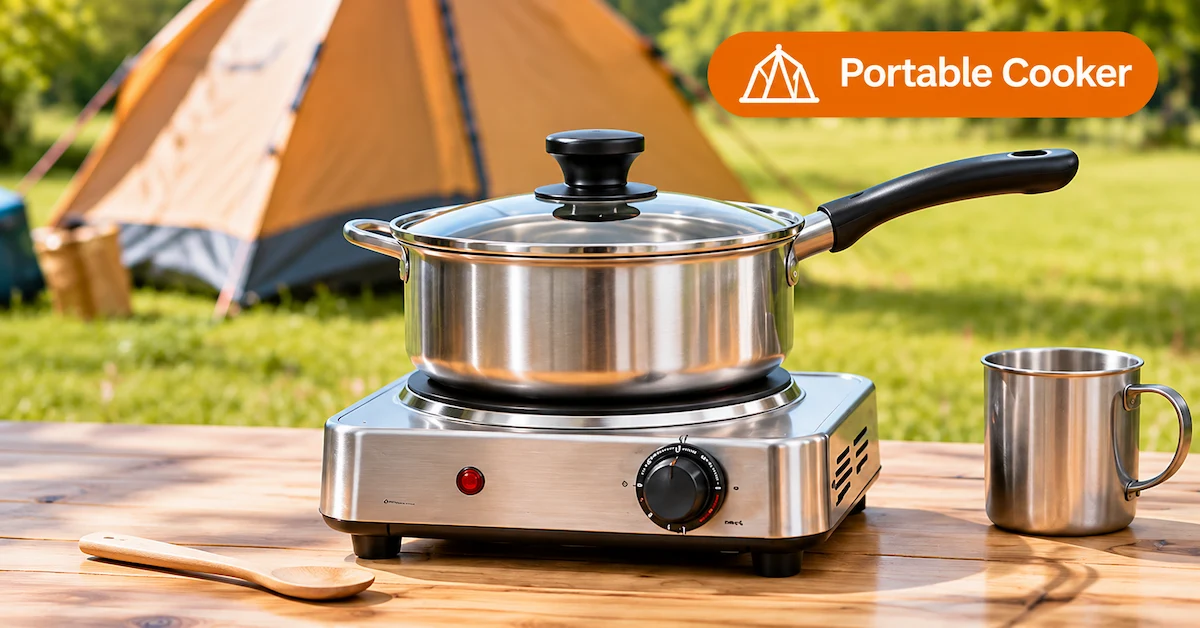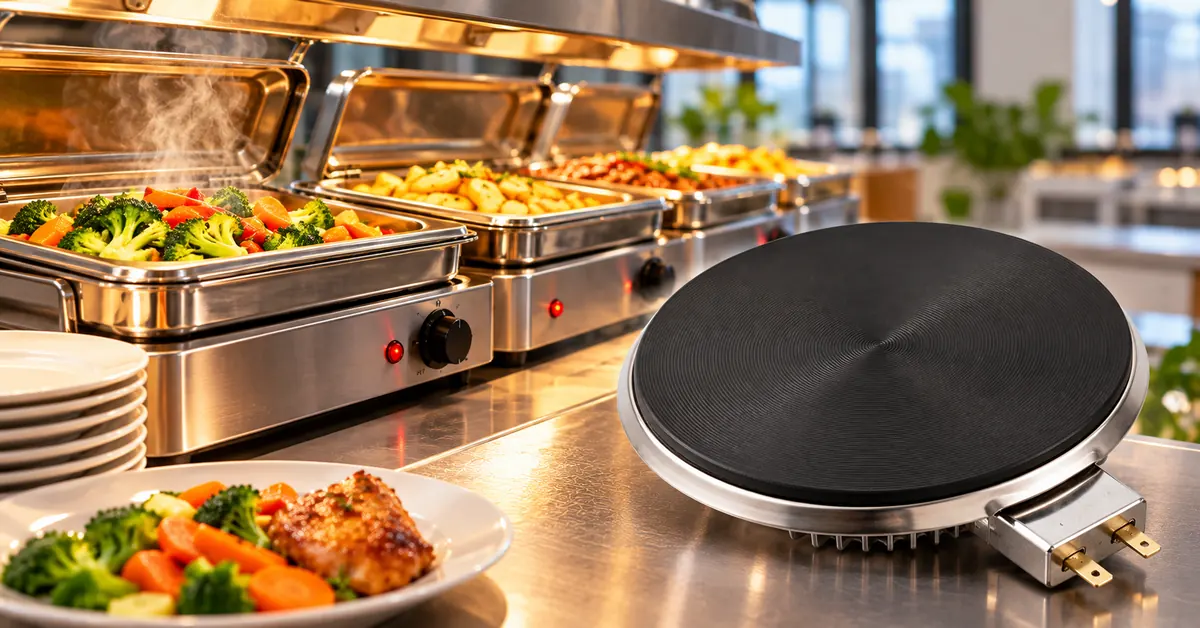



TL;DR: An electric hot plate ODM supplier supports appliance development by adapting available heating component designs to specific electrical, mechanical, and production requirements. The main value is not customization alone, but controlling voltage compatibility, mounting geometry, heating performance, design ownership, and manufacturing variation. Successful ODM projects require approved drawings, representative testing, clearly assigned engineering responsibilities, and documented production specifications before bulk purchasing.
Appliance brands entering international markets often face a common problem: a heating component suitable for one cooker design may not work correctly in another.
Differences in electrical supply, installation dimensions, terminal arrangements, and control systems can create compatibility problems even when the heating plates appear nearly identical.
Many purchasing teams assume that using an established component design automatically reduces every development risk. In reality, the outcome depends on whether the original design can be adapted without compromising its electrical, thermal, or mechanical performance.
An ODM project succeeds when every modification is justified, documented, and validated—not simply when a supplier can offer a customized product.
WEBO, officially GUANGDONG WEBO TECHNOLOGY CO., LTD, is a China-based manufacturer of electric heating elements established in 1998. Its portfolio includes solid hot plates, ceramic radiant heaters, tubular heating elements, and appliance control components.
The company's published hot plate categories cover nominal diameters of 90mm, 110mm, and 145mm. These components provide possible starting points for engineering discussions, although individual specifications and ODM feasibility must be confirmed.
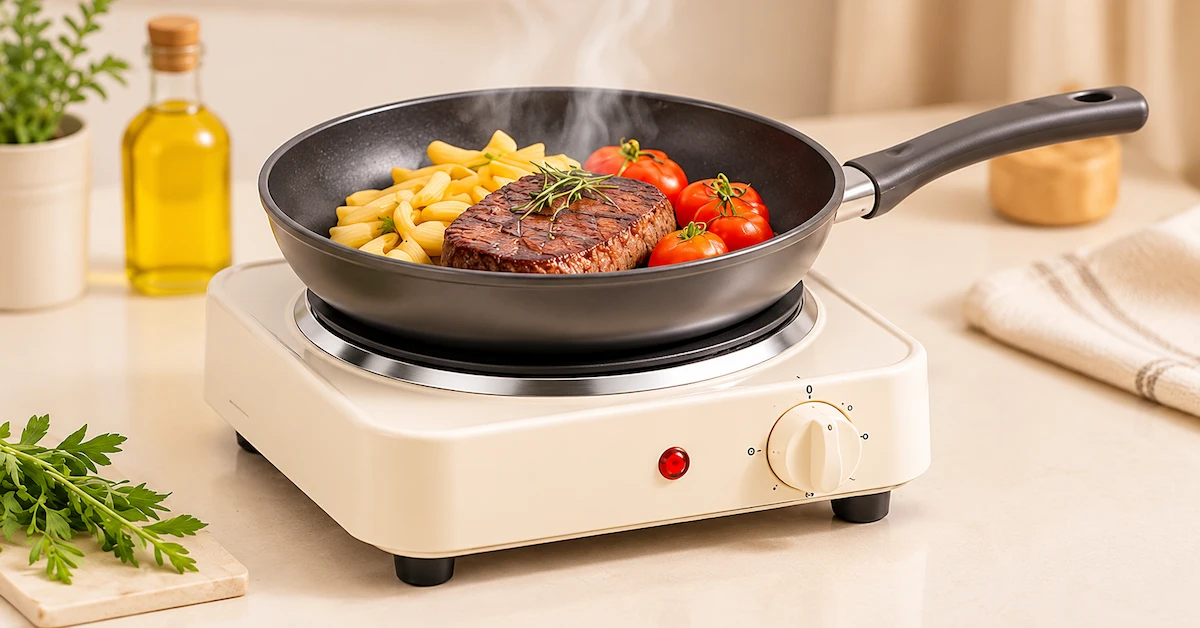
Key Takeaways
-
ODM development starts with an existing technical foundation. Buyers should establish whether a standard component can meet the application before requesting modifications.
-
Electrical ratings determine regional compatibility. Voltage and power configurations require engineering review and cannot be changed safely through labeling alone.
-
Mechanical tolerances affect production repeatability. Mounting dimensions, overall height, and terminal positions must match controlled appliance drawings.
-
Materials and construction influence reliability. Heating surfaces, insulation systems, terminals, and supporting structures require application-specific evaluation.
-
Design ownership must be agreed before development. Paying for tooling or samples does not automatically establish ownership of underlying intellectual property.
-
Production quality depends on revision control. The approved sample, technical specification, inspection plan, and commercial order must refer to the same product configuration.
Why Trust This Guide?
This guide combines publicly available product information from WEBO with established electrical-engineering principles and B2B supplier-qualification practices.
WEBO states that it was founded in 1998 and manufactures heating elements for international customers. Its website describes product categories, OEM/ODM development activities, and company-level quality-management information.
The discussion focuses on verifiable component categories and practical engineering decisions rather than unsupported performance guarantees.
The recommended calculations, inspection requirements, and sourcing procedures are engineering guidance. They are not presented as results from WEBO customer projects or factory tests.
Specific production tolerances, heating performance, MOQ, lead times, and certification documents should always be confirmed for the actual product.
For company information, see WEBO's Manufacturing Background.
Why Is an Electric Hot Plate ODM Supplier Important for Multi-Market Appliance Development?
An electric hot plate ODM supplier becomes particularly valuable when appliance manufacturers need to adapt an existing heating component to several product configurations without redesigning the entire component from the beginning.
The engineering challenge is determining which characteristics may remain unchanged and which require modification and requalification.
Electrical Compatibility Across Different Supply Voltages
Electric heating components are designed around specific electrical characteristics.
For a simplified resistive heating element:
P = V² / R
Where:
-
P = electrical power in watts
-
V = applied voltage
-
R = electrical resistance
This relationship demonstrates why a heating component cannot automatically be used at a different supply voltage.
For example, if voltage changes while resistance remains constant, electrical power changes approximately with the square of the voltage ratio.
A component operating at 120V cannot automatically replace a different component designed for 230V.
Such changes may affect heating performance, electrical current, control compatibility, and appliance qualification.
For an ODM project, the supplier and buyer must confirm the actual component design and rated conditions for every proposed configuration.
Market-Specific Product Requirements
Different markets may require different electrical ratings, labeling, safety assessments, and documentation.
However, market-specific development should not automatically result in a completely different component design.
The engineering team should determine whether certain characteristics can remain common.
| Development characteristic | Potentially shared | Requires market-specific review |
|---|---|---|
| Product geometry | When mechanically compatible | Different appliance housings |
| Nominal diameter | Where the heating area remains suitable | Product-specific cooking requirements |
| Electrical design | Only where ratings are compatible | Different supply voltages |
| Terminal arrangement | Where wiring interfaces match | Regional appliance wiring designs |
| Product identification | Common identification system | Variant-specific part numbers |
| Compliance documentation | Shared background documents | Market and product-specific requirements |
The table represents a development framework, not proof that all WEBO models share the same internal construction.
What to Remember
-
Establish the electrical requirements before selecting a component.
-
Never treat nominally similar models as interchangeable without verification.
-
Maintain separate approved specifications for configurations that differ in critical characteristics.
How Does ODM Development Turn an Existing Hot Plate into a New Appliance Component?
ODM development typically begins with evaluating an existing product and determining whether its construction can support the buyer's application.
A supplier's available models can reduce the amount of preliminary design work, but the final component still requires application-specific qualification.
Step 1: Select a Suitable Starting Model
WEBO publishes several hot plate references.
| Product model | Nominal diameter | Preliminary development consideration |
|---|---|---|
| HP-F90 | 90mm | Compact heating-zone designs |
| HP-F110 | 110mm | Intermediate heating-zone designs |
| HP-F145 | 145mm | Larger localized heating surfaces |
The model names identify published product references. The suggested applications do not establish verified compatibility.
A buyer should request the current dimensions, rated electrical characteristics, mounting information, and available technical documentation.
Explore WEBO Hot Plate Products for available categories.
Step 2: Define the Required Modifications
Potential ODM modifications may involve:
-
Heating plate dimensions or mounting features
-
Electrical ratings and heating requirements
-
Terminal configuration
-
Surface or construction requirements
-
Product identification and packaging
Not every modification will be feasible.
A change affecting the internal heating structure may require substantially more engineering and qualification than a packaging change.
Step 3: Establish the Approved Design
The buyer and supplier should agree on controlled technical drawings, electrical requirements, and acceptance criteria.
The approved specification becomes the reference for engineering samples and subsequent production.
Step 4: Validate the Modified Component
Engineering samples should undergo relevant electrical, dimensional, and thermal evaluation.
Whenever possible, testing should take place within a representative finished appliance.
Step 5: Release the Configuration for Production
After qualification, the buyer should establish the approved part number, revision, inspection requirements, and purchasing conditions.
A modification is not production-ready merely because one prototype functions during a demonstration.
Basic Comparison Table: Standard Sourcing vs. OEM vs. ODM
Three sourcing approaches are commonly considered when developing electric cooker products.
| Evaluation factor | Standard component sourcing | OEM manufacturing | ODM development |
|---|---|---|---|
| Starting design | Existing catalog product | Buyer-controlled specification | Existing supplier design or agreed development concept |
| Engineering involvement | Application verification | Manufacturing feasibility review | Design adaptation and development coordination |
| Customization | Limited | Based on buyer requirements | Based on agreed technical scope |
| Drawing ownership | Usually supplier-controlled | Defined by buyer agreement | Requires explicit ownership terms |
| Tooling | Often existing | May require buyer-specific tooling | Depends on development changes |
| Qualification | Application-specific | Buyer-defined | Jointly planned and allocated |
| Production control | Existing product specification | Controlled OEM specification | Approved ODM revision |
| Main risk | Incorrect product selection | Drawing or manufacturing mismatch | Ambiguous development responsibility |
| Best application | Compatible mature products | Established appliance platforms | New products or adapted variants |
Practical decision: Choose standard sourcing when an existing component fully meets the requirements. Use OEM manufacturing when the buyer has an established design. Consider ODM when supplier development support can solve a defined technical or commercial problem.
For appliance manufacturers, ODM and OEM may also occur sequentially: ODM during development, followed by manufacturing to the approved specification.
What Materials and Components Determine Electric Hot Plate Reliability?
Heating component reliability depends on the interaction of materials, electrical construction, mechanical support, and the operating environment.
A solid hot plate should be evaluated as an integrated assembly rather than as a heating surface alone.
Heating Surface and Thermal Behavior
The heating surface transfers energy to cookware.
Its behavior depends on material properties, surface geometry, contact conditions, and the heating structure.
The OEM should confirm the specific material and surface finish rather than assume that every solid hot plate uses identical construction.
Important evaluation criteria include dimensional stability, repeated thermal cycling, and suitability for the intended cookware load.
Electrical Insulation and Heating Construction
The internal heating structure must provide the required electrical performance while maintaining appropriate insulation characteristics.
Insulation suitability depends on construction and operating conditions.
The supplier should provide the available electrical specifications and relevant qualification information.
Terminals and Mechanical Connections
Electrical terminals can create integration problems even when the nominal heating diameter is correct.
Terminal location, orientation, connector compatibility, and temperature exposure require review.
For compact appliances, small dimensional differences may affect nearby controls or housing structures.
Practical Takeaways
-
Request material and construction details for the proposed model.
-
Validate electrical terminals together with the actual wiring arrangement.
-
Evaluate material or structural modifications for their effect on previous qualification results.
Which Factors Have the Greatest Impact on ODM Production Consistency?
Production consistency depends on maintaining the relationship between the approved design and manufactured components.
Three factors deserve particular attention: dimensional variation, electrical characteristics, and engineering change control.
Dimensional Variation and Assembly Tolerances
A nominal 145mm heating plate may not fit every housing designed around a 145mm heating zone.
The complete mounting structure must be evaluated.
For a simplified circular assembly:
Minimum radial clearance = (minimum opening diameter − maximum plate diameter) / 2 − maximum positional offset
This formula can help identify potential interference before assembly.
However, the real design may also require thermal expansion, coating thickness, mounting, and other allowances.
The calculation is a screening method, not a universal clearance recommendation.
Buyers should request actual drawing tolerances and validate the finished assembly.
Electrical and Thermal Variation
Components produced in different batches should remain within the approved electrical and mechanical specification.
Relevant measurements may include resistance, dimensions, terminal configuration, insulation performance, and application-specific thermal characteristics.
These should be measured under defined conditions.
A nominal wattage value alone cannot establish that every production batch behaves identically.
Engineering Changes and Batch Traceability
A supplier may propose modifying a material, terminal, manufacturing process, or other characteristic.
The customer should determine which changes require notification, testing, and formal approval.
Each approved product should have a controlled revision.
Recommended Production Control Matrix
| Critical characteristic | Possible problem | Recommended control |
|---|---|---|
| External dimensions | Assembly interference | Drawing-based inspection |
| Mounting geometry | Misalignment | Positional verification |
| Electrical resistance | Inconsistent electrical characteristics | Defined-condition measurement |
| Terminal configuration | Connection mismatch | Visual and dimensional inspection |
| Insulation performance | Electrical safety risk | Applicable electrical testing |
| Thermal behavior | Performance variation | Qualification testing |
| Product revision | Incorrect component supplied | Revision and batch identification |
| Packaging | Transport damage | Approved packing requirements |
Production principle: A reliable ODM supplier should maintain the approved product configuration rather than making undocumented substitutions during repeat production.
How Do Design Ownership and Tooling Affect ODM Sourcing Risk?
In ODM cooperation, the commercial value of a component depends partly on who controls its technical information.
A buyer may pay for development and still have limited rights to the supplier's original design.
Tooling ownership, drawing ownership, and intellectual property rights should be treated as separate issues.
Existing Designs Versus New Development
The supplier may already own an existing heating component design.
A customer-specific modification may introduce new drawings or technical information.
The agreement should define who owns or may use these materials.
Tooling Ownership and Production Transfer
If a project requires new tooling, the parties should clarify who pays for it, where it will be stored, who maintains it, and whether it can be transferred.
Paying for tooling does not automatically establish ownership of the underlying product design.
Confidentiality and Exclusivity
A private label customer may request exclusive use of a configuration.
This should be documented separately from product development and purchase commitments.
Ownership Checklist
| Item | Question to resolve |
|---|---|
| Existing component design | Who owns the original design? |
| Modified drawings | Who controls the new revision? |
| Customer technical data | How may it be used? |
| Tooling | Who owns and maintains it? |
| Exclusivity | Can the supplier sell the same configuration elsewhere? |
| Product branding | Who controls labels and brand assets? |
| Production transfer | What rights exist if supply arrangements change? |
| Design changes | Who must approve future modifications? |
These are recommended contractual considerations. WEBO's specific ODM agreement terms must be confirmed during negotiations.
How Does ODM Product Development Work in Practice? An Illustrative Cooker Variant Scenario
The following example demonstrates a common engineering decision process.
This is an illustrative scenario, not a documented WEBO customer case or measured factory result.
Application Scenario
An appliance brand wants to develop a compact electric cooker for two export markets.
The initial product concept uses a solid hot plate with a nominal diameter of 110mm.
The brand hopes to use similar external appliance designs across both markets while accommodating their different electrical requirements.
The purchasing team identifies WEBO's HP-F110 category as a potential starting point.
The key question is whether the project can use a common mechanical platform with appropriately qualified electrical variants.
Principle in Practice
The engineering team first reviews the mechanical installation.
The mounting dimensions, overall height, and terminal positions must match the proposed cooker housing.
Next, the team defines the electrical requirements for each target market.
Rather than applying a new label to an existing component, the team requests confirmation of suitable rated configurations.
The supplier and OEM then evaluate the electrical ratings, heating performance, and compatibility with the finished cooker's controls.
Finally, both product variants undergo appropriate sample and appliance-level testing.
What Results Should Be Measured?
| Evaluation objective | Required evidence |
|---|---|
| Mechanical commonality | Approved assembly drawings and fit checks |
| Electrical compatibility | Model-specific ratings and test results |
| Heating performance | Controlled tests under representative loads |
| Temperature management | Relevant internal and external measurements |
| Production readiness | Pilot assembly and inspection results |
| Commercial feasibility | Development, tooling, and unit-cost comparison |
| Repeat-order reliability | Part numbers, revision controls, traceability |
No reduction in development time, defect rate, tooling cost, or lead time can be claimed without actual project measurements.
Procurement Decision
If the mechanical platform can accommodate both qualified configurations, the project may proceed with a controlled product-family strategy.
If the proposed electrical changes affect mounting, control compatibility, or thermal performance, separate component or appliance designs may be necessary.
The purpose of ODM is to reuse a suitable technical foundation without overlooking the changes that require requalification.
How Should Buyers Evaluate WEBO for an ODM Hot Plate Project?
A suitable ODM supplier should combine relevant product options with clear technical communication and realistic manufacturing arrangements.
WEBO's product portfolio provides several heating element and appliance component categories for consideration.
Its published information describes hot plate models, product selection, technical adjustment, samples, and bulk supply support.
However, engineering feasibility and commercial terms must be confirmed for each project.
Recommended RFQ Information
| RFQ item | Information to provide |
|---|---|
| Appliance type | Electric stove, portable cooker, or other application |
| Target markets | Countries where the finished appliance will be sold |
| Candidate product | HP-F90, HP-F110, HP-F145, or proposed design |
| Electrical requirements | Voltage, power, control architecture |
| Mechanical requirements | Drawings, mounting, terminal arrangement |
| Product variants | Differences between planned configurations |
| Design ownership | Expected rights and tooling arrangements |
| Quality requirements | Inspection and qualification criteria |
| Development stage | Concept, prototype, pilot, or production |
| Estimated volume | Samples and projected annual demand |
| Packaging | Identification, labeling, transport requirements |
| Commercial request | Development costs, MOQ, lead time, quotation |
An effective ODM inquiry explains the application and required changes before requesting pricing.
WEBO also lists Energy Regulator Components and Rotary Switch Products for separate appliance control discussions.
These components must be assessed for compatibility with the selected heating system.
For ODM development inquiries, buyers can use the WEBO Contact Page to submit technical requirements.
FAQs
1. What is the main advantage of working with an electric hot plate ODM supplier?
The main potential advantage is using an existing component design as a starting point for product development.
This can reduce duplicated engineering work when the design is suitable for adaptation.
However, modifications still require technical verification, and development savings should be demonstrated rather than assumed.
2. What is the difference between an electric hot plate OEM and ODM supplier?
OEM manufacturing typically follows a design or specification controlled by the buyer.
ODM cooperation involves supplier design resources or existing product designs.
The specific development responsibilities, tooling arrangements, and intellectual property rights depend on the agreement.
3. Can one electric hot plate design support several export markets?
Possibly, but electrical compatibility, appliance architecture, and applicable market requirements must be evaluated for every configuration.
The same nominal diameter does not guarantee that different rated-voltage versions share identical construction or qualification status.
4. What electric hot plate sizes does WEBO publish?
WEBO publishes nominal 90mm, 110mm, and 145mm hot plate categories, with references including HP-F90, HP-F110, and HP-F145.
Detailed electrical ratings, dimensions, and customization availability should be confirmed through current product documentation.
5. Can an ODM supplier change voltage and wattage?
Changes may be technically feasible depending on the product design.
However, changes in voltage or rated power can affect the heating structure, electrical load, and qualification requirements.
The buyer should request an engineering review rather than assume the modification is a simple adjustment.
6. Who owns tooling and drawings in an ODM project?
Ownership depends on the contract.
Existing supplier designs, customer-provided information, new technical drawings, and tooling may have different ownership arrangements.
These terms should be resolved before significant development expenses are incurred.
7. What tests are needed before ODM hot plate mass production?
Depending on the application, testing may include dimensional inspection, electrical performance, insulation assessment, heating response, thermal cycling, assembly compatibility, and appropriate finished-appliance safety evaluation.
The test plan should use predefined acceptance criteria.
8. How can buyers control quality between ODM production batches?
Buyers should use approved specifications, controlled part numbers, inspection criteria, traceability arrangements, and engineering change procedures.
Production batches should match the approved configuration.
Significant changes may require additional testing or customer approval.
9. What affects ODM hot plate pricing and lead time?
Cost and timing may depend on the starting design, modification complexity, tooling requirements, qualification testing, purchasing volume, and production scheduling.
WEBO's exact MOQ, lead time, and development costs require a project-specific quotation.
10. How can overseas buyers request an ODM quotation from WEBO?
Prepare the appliance application, electrical requirements, mechanical drawings, proposed variants, development scope, target market, sample quantity, and expected purchasing volume.
Submit these details through the WEBO Contact Page for technical and commercial review.
Conclusion
Choosing an electric hot plate ODM supplier is an important engineering and procurement decision for appliance brands developing new products or expanding into multiple markets.
Successful ODM cooperation depends on more than component availability or customization claims. Buyers must evaluate electrical compatibility, mechanical tolerances, heating performance, materials, design ownership, and manufacturing consistency.
Existing product designs can provide useful development foundations, but they do not eliminate the need for application-specific validation.
For international appliance projects, a structured approach helps buyers distinguish reusable design features from modifications requiring additional engineering, testing, or documentation.
WEBO, established in 1998, manufactures electric heating elements and related appliance components. Its published hot plate products include HP-F90, HP-F110, and HP-F145, which may serve as starting points for ODM feasibility discussions.
Actual customization options, technical specifications, certification documents, tooling arrangements, MOQ, and production schedules should be confirmed for each proposed project.
Developing a new electric cooker, launching regional product variants, or evaluating a heating component ODM partner?
Share your application drawings, voltage requirements, preferred hot plate size, target markets, expected development scope, and purchasing forecast with WEBO.
Explore WEBO Electric Hot Plate Products or Request an ODM Technical Review and Quotation to discuss your next appliance component development project.