


What Makes a Professional Gas Stove Pan Support Factory?
A gas stove pan support factory is responsible for transforming raw materials into finished cooking components through controlled manufacturing processes.
For global appliance buyers, working directly with a factory provides better visibility into:
- Production capability
- Material control
- Manufacturing processes
- Quality inspection
- Custom development
- Delivery management
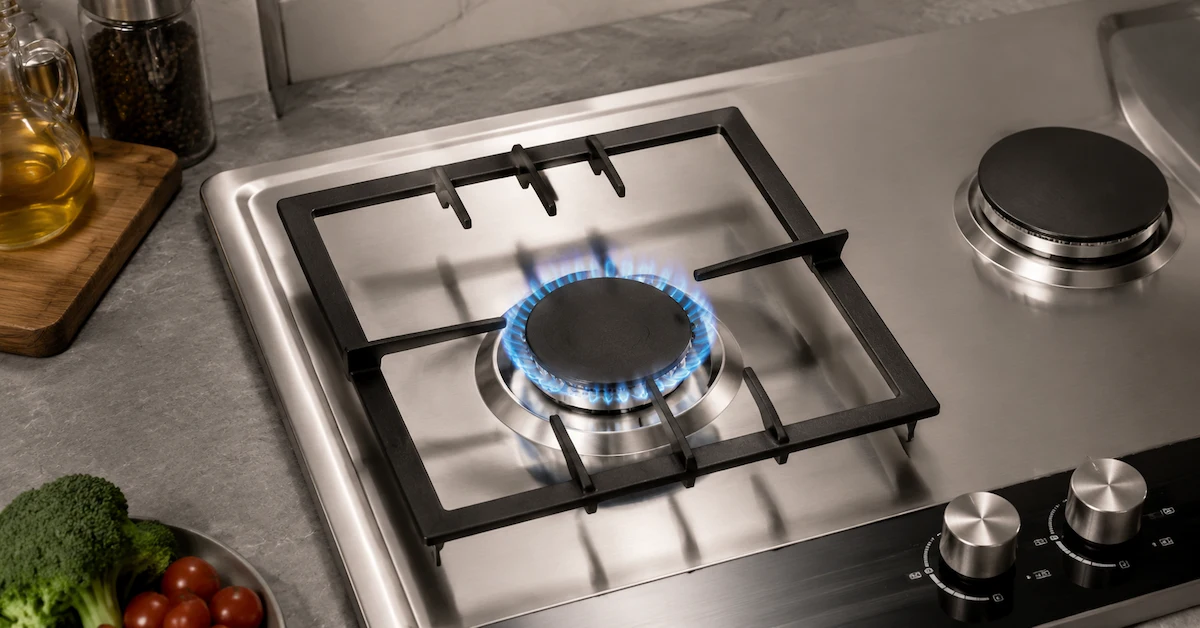
A gas stove pan support, also called a burner grate or stove trivet, may look like a simple component, but it plays an important role in the overall cooking experience.
The pan support must provide:
- Stable cookware support
- High-temperature resistance
- Long-term durability
- Accurate installation compatibility
For gas stove manufacturers and appliance brands, choosing a factory is not only about purchasing a component. It is about finding a manufacturing partner that can support:
- New product development
- Repeated production
- Quality consistency
- Supply chain stability
WEBO provides kitchen appliance components including Cast Iron Pan Support, Hot Plate, Ceramic Heater, Tube Heating Element, Rotary Switch, and Energy Regulator for appliance manufacturers and global buyers.
Factory Direct Supply vs Trading Supplier: Why Does It Matter?
When sourcing gas stove components, buyers often choose between trading suppliers and direct factories.
A factory-direct supplier provides closer control over the manufacturing process.
| Comparison | Factory Direct | Trading Supplier |
|---|---|---|
| Production control | Direct control | Depends on third party |
| Customization | Stronger capability | Limited by factory |
| Technical communication | Direct with engineers | Multiple communication layers |
| Cost control | Fewer middle costs | Additional margin |
| Quality tracking | Easier monitoring | More difficult |
For OEM buyers, direct cooperation with a factory can improve:
- Product accuracy
- Development efficiency
- Production transparency
- Long-term cooperation
However, buyers should verify that the supplier is truly a manufacturer with actual production capability.
Who Should Work With a Gas Stove Pan Support Factory?
Different customers choose factories for different reasons.
Gas Stove Manufacturers
Gas stove manufacturers need reliable component suppliers for:
- Built-in gas hobs
- Freestanding cookers
- Kitchen ranges
- Commercial cooking equipment
Their main requirements include:
- Stable dimensions
- Consistent quality
- Large production capacity
- Long-term supply
Kitchen Appliance OEM Brands
OEM brands often require factories that can support:
- New product development
- Custom designs
- Sample production
- Mass manufacturing
They need a factory that can transform product ideas into manufacturable components.
Importers and Distributors
Importers usually prefer factory cooperation because it provides:
- Competitive pricing
- Direct communication
- Product customization options
- Stable supply
Commercial Kitchen Equipment Companies
Commercial equipment manufacturers require:
- Strong load-bearing capability
- High-temperature durability
- Reliable batch quality
Applications include:
- Restaurant stoves
- Catering equipment
- Professional cooking systems
Applications of Gas Stove Pan Supports
Gas stove pan supports are widely used in different cooking environments.
| Application | Equipment | Factory Requirement |
|---|---|---|
| Home kitchen | Gas stove, hob | Appearance and stability |
| Commercial kitchen | Restaurant cooker | Heavy-duty structure |
| Catering equipment | Professional stove | Long operating life |
| Outdoor cooking | Portable gas cooker | Durable construction |
| OEM appliances | New stove models | Custom compatibility |
Buyers can review WEBO's gas stove pan support products to compare available designs and customization options for different cooking applications.
Household Gas Stoves
For home appliances, pan supports need to balance:
- Appearance
- Functionality
- Cleaning convenience
- Durability
Common requirements:
- Accurate fitting
- Stable cookware support
- Consistent surface quality
Commercial Cooking Equipment
Commercial kitchens create higher demands because equipment operates more frequently.
Important requirements:
- Strong structure
- Heat resistance
- Heavy cookware support
OEM Gas Stove Development
For new stove models, factories may need to customize:
- Shape
- Dimensions
- Burner arrangement
- Surface finish
- Packaging
Manufacturing Process Inside a Gas Stove Pan Support Factory
A professional factory should have a controlled production workflow.
1. Raw Material Preparation
The first step is selecting suitable cast iron materials.
Material quality influences:
- Product strength
- Heat resistance
- Service life
- Casting performance
A factory should control:
- Material specifications
- Incoming inspection
- Production suitability
Poor raw materials may lead to:
- Cracks
- Weak structures
- Shorter lifespan
2. Mold Development and Preparation
For customized pan supports, mold development is a critical stage.
The factory evaluates:
- Product design
- Casting structure
- Wall thickness
- Production feasibility
OEM customers may provide:
- Product drawings
- Existing samples
- Gas stove models
The factory then develops a suitable manufacturing solution.
3. Casting Process
Casting creates the basic pan support structure.
Important production controls include:
- Mold accuracy
- Casting temperature
- Material flow
- Cooling process
A stable casting process helps maintain:
- Product consistency
- Structural strength
- Appearance quality
4. Surface Processing
After casting, products usually require further processing.
Processes may include:
- Grinding
- Cleaning
- Surface treatment
- Finishing
The purpose is to improve:
- Appearance
- Surface quality
- User experience
5. Final Assembly and Preparation
Before shipment, products are prepared through:
- Final inspection
- Quantity checking
- Packaging
The factory ensures finished products match approved requirements.
Factory Equipment and Manufacturing Capability
When evaluating a gas stove pan support factory, buyers should understand the manufacturing capability behind the product.
Important areas include:
Production Equipment
A capable factory should have equipment supporting:
- Casting production
- Surface processing
- Inspection
- Packaging
Engineering Capability
Engineering support helps with:
- Design review
- Manufacturing improvement
- Sample development
- Production optimization
Production Management
A reliable factory should manage:
- Production scheduling
- Material supply
- Quality control
- Order tracking
Why Manufacturing Experience Matters
Gas stove components must maintain consistency across thousands or even millions of units.
Manufacturing experience helps factories manage:
- Material behavior
- Casting challenges
- Dimensional control
- Customer requirements
For appliance companies, supplier experience reduces:
- Development delays
- Quality problems
- Production risks