


How to Select an Induction Cooktop Glass Factory for OEM Projects
Choosing an induction cooktop glass factory is a technical decision involving material selection, appliance compatibility, production consistency, and long-term supply stability. For OEM cooktop manufacturers and component buyers, the glass panel is not an isolated surface component; it works together with induction coils, control systems, mounting structures, and the complete appliance design.
A qualified supplier evaluation should answer several questions: Can the glass panel match the appliance structure? Can the factory maintain consistent dimensions and appearance across batches? Can samples be converted into repeatable production? This guide focuses on OEM appliance manufacturers, private-label brands, and professional sourcing teams that need a reliable component partner.
WEBO provides ceramic glass and related appliance components for cooktop applications. Buyers can review the ceramic glass product category and discuss project requirements based on specific appliance designs.
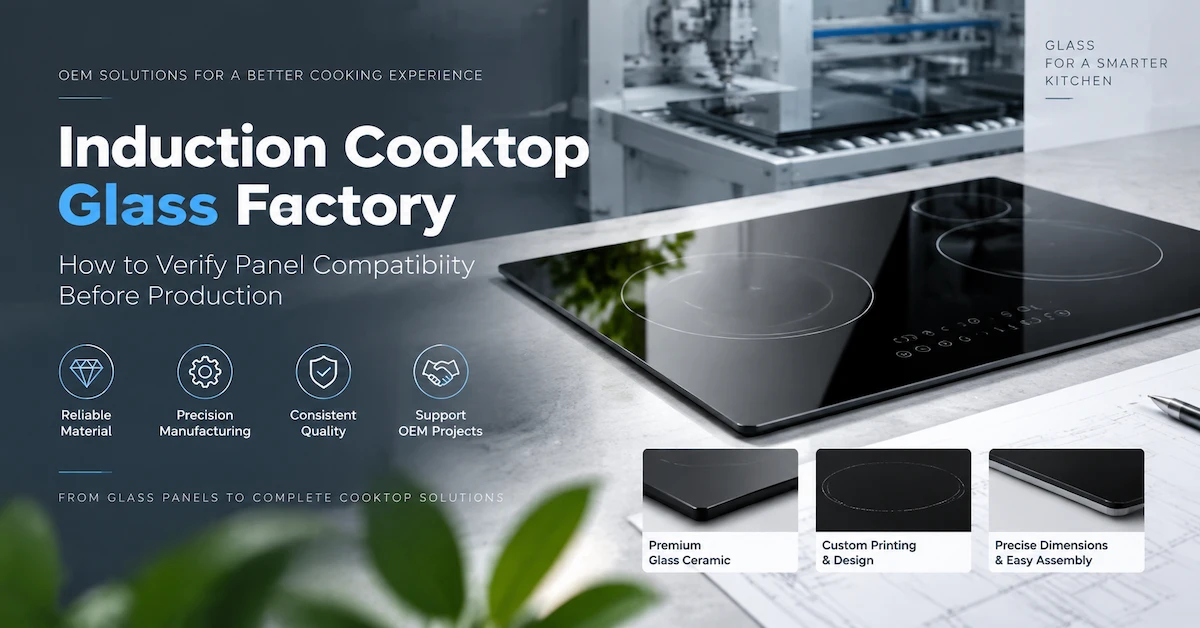
Understand the Role of Glass in an Induction Cooktop System
An induction cooktop glass panel is not only a visual surface. It affects user interaction, cleaning experience, product appearance, and the relationship between external design and internal components.
Although the glass itself does not generate heat, it works together with the induction system beneath the panel. The position of the cooking zones, the distance between glass and coil, the mounting structure, and the printed control area all influence the final appliance design.
When evaluating an induction cooktop glass factory, OEM buyers should review:
| Evaluation Area | Key Considerations |
|---|---|
| Material | Glass ceramic suitability, thickness, and surface requirements |
| Dimensions | Panel size, tolerance, and installation accuracy |
| Edge Processing | Edge finish, corner treatment, and appearance |
| Printing | Cooking-zone markings, logo, and control symbols |
| Assembly | Relationship with coils, frames, and electronics |
| Quality Control | Inspection methods and production consistency |
WEBO also provides related induction coil products, allowing buyers to evaluate related cooktop components during project discussions.
Confirm the Technical Specification Before Factory Selection
One common sourcing mistake is choosing a supplier based only on appearance samples. Two black glass panels may look similar while having differences in material, processing method, thickness, or installation requirements.
Before requesting quotations, prepare a complete specification document. A professional induction cooktop glass factory should be able to review technical requirements before production instead of relying only on product images.
| Specification Item | Buyer Should Define | Supplier Confirmation |
|---|---|---|
| Material | Glass ceramic type, thickness, and surface requirements | Available material options and documentation |
| Dimensions | Length, width, thickness, and tolerance | Manufacturing capability and measurement method |
| Edge Processing | Edge shape, polishing requirements, corner details | Processing method and inspection criteria |
| Printing | Logo, cooking zones, control symbols, artwork | Printing feasibility and approval process |
| Openings | Display windows, sensor areas, cutouts | Processing accuracy |
| Assembly | Frame structure, gasket, mounting method | Compatibility review |
| Application | Residential or commercial use | Recommended validation requirements |
| Packaging | Protection method and identification | Export packing proposal |
A clear specification reduces repeated communication and helps purchasing teams compare different suppliers using the same criteria.
Evaluate Glass Compatibility with Induction Components
Induction cooktops require coordination between the glass panel and internal heating components.
The glass surface must match the position of the induction coil, the control interface, and the mechanical structure. A panel that looks correct externally may still require additional review before approval.
Important compatibility points include:
Cooking Zone Alignment
The printed cooking zones on the glass surface should correspond with the induction coil position underneath.
Review:
- Cooking-zone marking position
- Coil center alignment
- Mounting tolerance
- Internal structure clearance
WEBO’s induction coil products provide a related component reference for evaluating cooktop system requirements.
Touch Control and Display Integration
Modern induction cooktops often use touch-control systems printed directly on the glass surface.
The evaluation should include:
- Touch-control symbol position
- Display window alignment
- Printing accuracy
- User operation visibility
A visually correct panel does not automatically confirm functional compatibility. The final approval should consider the complete appliance assembly.
Compare Different Induction Glass Supply Options
Different projects require different levels of supplier involvement. Buyers should clarify whether they need standard supply, customization, OEM production, or development support.
| Supply Type | Suitable For | Main Review Focus |
|---|---|---|
| Standard Glass Supply | Existing appliance designs | Dimensions, availability, consistency |
| Custom Printed Glass | Private-label products | Artwork, logo, appearance control |
| OEM Glass Manufacturing | New cooktop projects | Drawing review, samples, production approval |
| ODM Development Support | New product concepts | Design support and engineering cooperation |
For OEM projects, define which services are included before approving development work.
A supplier quotation should clearly identify:
- Product scope
- Customization scope
- Sample requirements
- Inspection requirements
- Production responsibilities
- Delivery conditions
Review Manufacturing Quality Control Processes
A reliable induction cooktop glass factory should have clear quality checkpoints throughout production.
Incoming Material Inspection
Before processing begins, confirm:
- Material identification
- Thickness consistency
- Surface condition
- Supplier documentation
Processing Inspection
During manufacturing, review:
- Cutting accuracy
- Edge finishing
- Corner quality
- Opening dimensions
Printing Inspection
For printed glass panels, check:
- Logo position
- Graphic alignment
- Color consistency
- Surface appearance
Final Inspection
Before shipment, confirm:
- Finished dimensions
- Appearance quality
- Packaging condition
- Product identification
WEBO provides company background and certification information through its certification information page. Buyers should request project-specific quality documents according to the selected product configuration.
Why Sample Approval Is Critical Before Bulk Production
Sample approval is an important step between design discussion and mass production.
A complete approval process usually includes:
Step 1: Drawing Confirmation
Confirm:
- Final dimensions
- Material specification
- Printing layout
- Assembly requirements
Step 2: Sample Review
Evaluate:
- Appearance
- Size accuracy
- Mounting compatibility
- Control layout
Step 3: Production Approval
Before bulk manufacturing, confirm:
- Approved sample reference
- Inspection requirements
- Packaging standards
- Revision control
The approved sample should become the reference point for future repeat orders.
Control Design Changes During OEM Projects
For OEM induction cooktop glass projects, changes should be controlled carefully after approval.
Common changes include:
- Logo updates
- Cooking-zone graphic changes
- Display-window adjustments
- Control symbol revisions
- Packaging modifications
Each change should be reviewed based on whether it affects:
- Appearance
- Assembly
- Function
- Inspection requirements
- Production consistency
A small graphic change may appear cosmetic, but it can affect display visibility or control alignment. The supplier and buyer should define whether another sample approval is required.
Consider Packaging and Export Requirements
Induction cooktop glass panels require careful protection during transportation because edge damage, scratches, or incorrect packaging can affect final product acceptance.
Before shipment, confirm:
| Packaging Item | Requirement |
|---|---|
| Individual Protection | Prevent surface and edge damage |
| Separation Method | Avoid panel-to-panel contact |
| Carton Structure | Support safe transportation |
| Identification | Match product code and revision |
| Quantity Control | Confirm packed quantity per unit |
For international buyers, packaging should be considered part of product quality control rather than a separate logistics issue.
How OEM Buyers Should Evaluate an Induction Cooktop Glass Factory
A practical supplier evaluation should include:
| Evaluation Area | Key Questions |
|---|---|
| Technical Capability | Can the factory meet required drawings and specifications? |
| Production Control | How are dimensions and appearance controlled? |
| Customization Ability | Can artwork and design changes be managed? |
| Quality System | Are inspection records available? |
| Communication | Can technical questions be answered clearly? |
| Supply Stability | Can repeat orders maintain consistency? |
The goal is not only finding a supplier that can produce one acceptable sample. The goal is establishing a supply relationship capable of supporting long-term production.
OEM Cooperation Process for Induction Cooktop Glass Projects
A structured cooperation process helps reduce communication problems.
Typical project stages include:
- Requirement discussion
- Drawing and specification review
- Material and process confirmation
- Sample production
- Customer testing and approval
- Mass production preparation
- Quality inspection
- Shipment and repeat-order management
For new projects, buyers should prepare:
- Cooktop drawings
- Target application
- Glass size requirements
- Artwork files
- Estimated order quantity
- Delivery requirements
WEBO buyers can submit project information through the contact page for further discussion.
Frequently Asked Questions
1. What should I provide when contacting an induction cooktop glass factory?
Provide application details, drawings, dimensions, artwork requirements, expected quantities, and delivery requirements. Complete specifications help suppliers evaluate feasibility more accurately.
2. Can induction cooktop glass panels be customized with logos?
Yes. Customization should be reviewed according to artwork requirements, printing methods, placement, and production limitations.
3. How do I compare different induction glass suppliers?
Compare technical capability, production control, customization support, inspection methods, and repeat-order consistency instead of only comparing unit prices.
4. Why is sample approval important?
Samples confirm whether design requirements, appearance, dimensions, and assembly conditions meet expectations before bulk production.
5. Can the same glass panel be used for different cooktop models?
Only after reviewing dimensions, mounting structures, heating layouts, and control requirements. Similar appearance does not guarantee compatibility.
6. What quality checks should induction glass panels pass?
Common checks include dimensions, surface appearance, edge condition, printing accuracy, and packaging inspection according to project requirements.
7. How early should packaging requirements be discussed?
Packaging should be discussed before production release because protection methods influence shipment safety and product acceptance.
8. Does an induction cooktop glass factory provide complete cooktops?
This depends on the supplier’s business scope. Buyers should confirm whether the supplier provides glass components only or additional appliance parts.
9. How can repeat order consistency be maintained?
Maintain approved drawings, samples, specifications, inspection requirements, and revision records for future production.
10. How can I request a quotation from WEBO?
Prepare your product requirements, drawings, quantities, and application details, then contact WEBO through the contact page.
Conclusion
Selecting an induction cooktop glass factory requires evaluating more than product appearance and price. OEM buyers should confirm material specifications, component compatibility, manufacturing controls, inspection methods, and sample approval procedures before committing to bulk orders.
A reliable supplier relationship depends on clear technical communication and consistent production standards. By preparing detailed requirements and reviewing each stage from design to shipment, buyers can reduce sourcing risks and build a stable supply process for induction cooktop glass panels.
To discuss your induction cooktop glass project, review the WEBO ceramic glass products and send your panel drawings, application requirements, and quantity details through the WEBO contact page for further evaluation.