


Why a ceramic cooktop still matters in a crowded appliance market
A ceramic cooktop is not usually the first thing people get excited about when they shop for kitchen equipment, but it is often the thing that makes day-to-day cooking easier. For sourcing managers, product teams, and kitchen appliance buyers, the decision is rarely about style alone. It is about footprint, cleaning, installation simplicity, and whether the heating surface fits the way the end user really cooks.
That is especially true for compact countertop models. A black glass portable electric cooktop, like the type shown in this category, solves a very practical problem: how to add cooking capacity without committing to a full built-in range. In a studio apartment, dorm, RV, temporary station, or prep area, a flat glass surface with touch controls can make the difference between a workable setup and a frustrating one. The appeal is simple enough, but the buying decision is not.
What buyers usually want to know first
Before comparing features, it helps to separate appearance from function. A glass ceramic hob can look almost identical to a radiant electric model, and some shoppers will assume all flat black cooktops behave the same. They do not. The visible design here suggests a slim rectangular body, rounded corners, silver edge trim, front-side touch controls, and digital displays. Those are useful cues, but they do not tell you everything about the heating method or cookware requirements.
That uncertainty matters. If you are sourcing for retail or specifying a product for a project, you need to know whether the unit is intended for induction-style operation or another electric heating approach. The image alone does not confirm that detail, so the safest reading is to treat it as a compact glass-top electric cooking platform with two zones and electronic control. That is enough to judge the user experience, but not enough to make technical claims beyond the evidence.
Two zones, one compact footprint
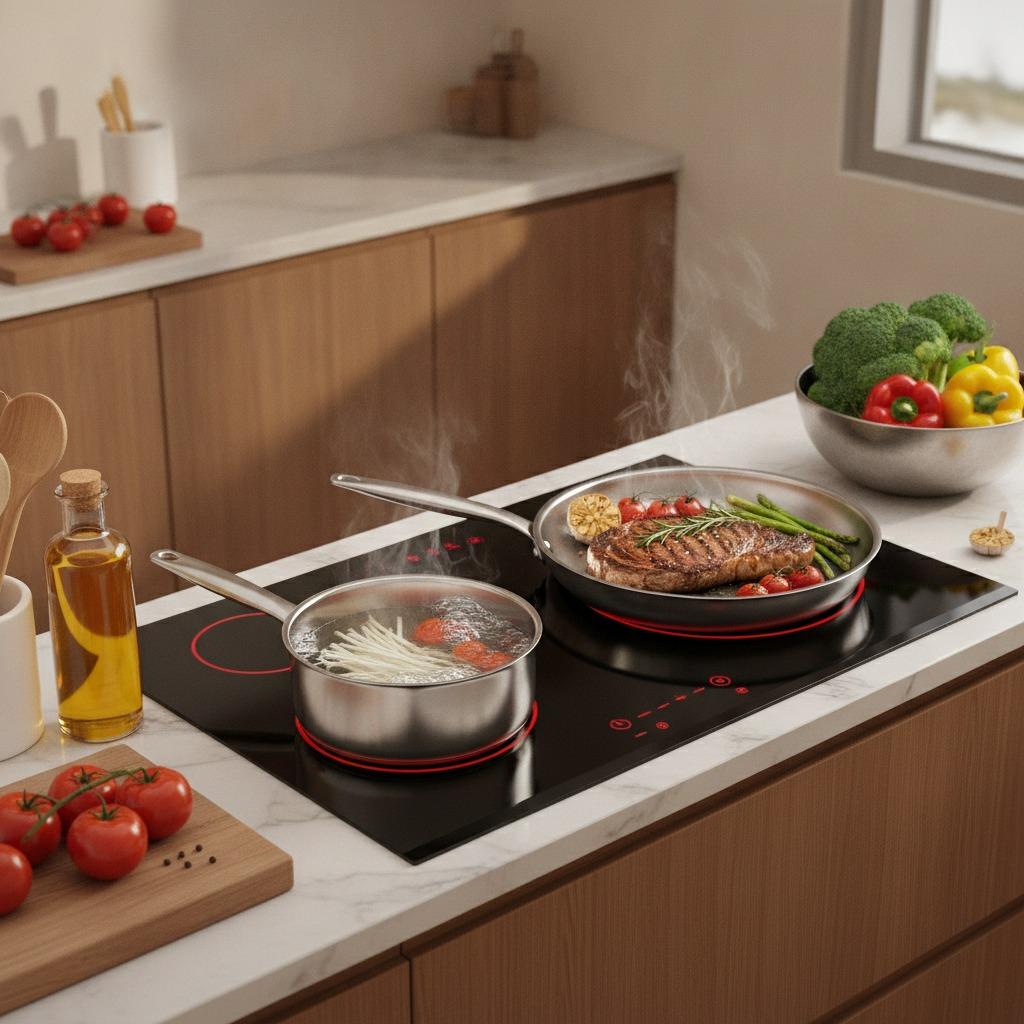
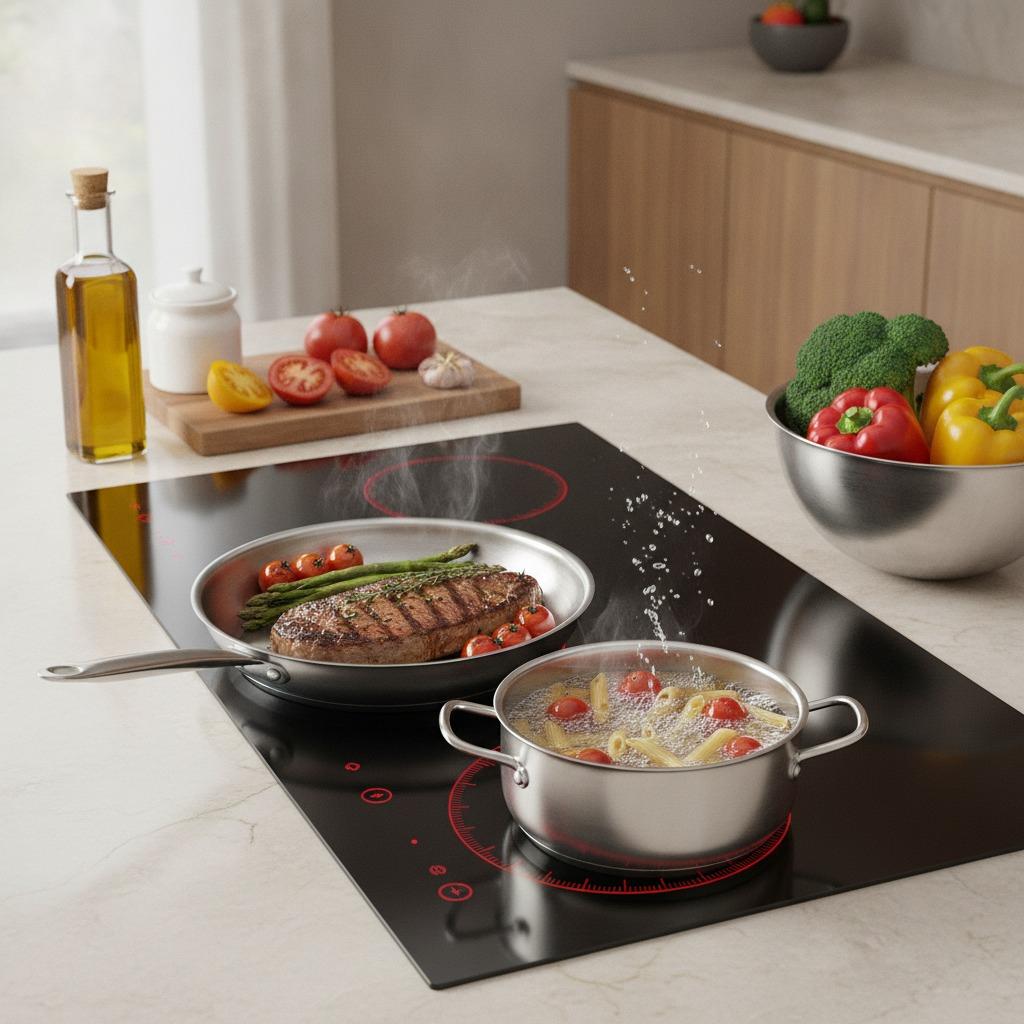
One reason these products sell is their basic utility. The visible layout shows two separate circular heating zones, with a frying pan on one and a saucepan on the other. That tells a story buyers understand immediately: boiling and sautéing at the same time, or simmering while reheating. For smaller kitchens, a ceramic hob with 4 zones may suit a built-in layout better, but a countertop unit with fewer zones can be the smarter answer when space is tight or the use case is temporary.
In practice, the smaller format tends to serve a different buyer. It is less about replacing a full cooktop and more about filling a gap. Extra burner use during holidays, back-of-house prep, catering overflow, and secondary cooking stations all fit neatly into this category. A compact unit also lowers the psychological barrier for first-time users; it looks less permanent, less intimidating, and often easier to clean.
Material and surface: where appearance becomes a buying criterion
The glossy black top gives the product its most obvious selling point: the ceramic cooking surface is visually clean and easy to wipe down. That matters in kitchens where speed and hygiene are both visible. Spills on a flat glass ceramic hob are easier to manage than on a grate-and-burner setup, though buyers should still be reminded that a smooth surface does not mean the unit is cold immediately after use. That is a practical caution worth keeping in the product copy as well.
For procurement teams, the surface finish also signals positioning. A black glass portable electric cooktop reads as modern, compact, and appliance-like rather than purely utility-driven. That can help in consumer channels, but it also means cosmetic consistency becomes important. Small scratches, visible trim mismatch, or weak printing around the control area can affect perceived quality faster than they would on a hidden industrial component.
How this product fits among similar cooktop types
Glass ceramic hob versus electric ceramic hob
These terms are often used loosely in the market, and that is where confusion starts. Some buyers use electric ceramic hob as a general label for any flat electric unit with a ceramic-glass top. Others use glass ceramic hob to emphasize the surface material. If you are writing a spec sheet or training sales staff, it helps to avoid overpromising and instead describe the unit based on confirmed features: flat glass top, electronic touch control, digital readout, and two cooking zones.
Ceramic hob replacement versus portable countertop use
A ceramic hob replacement usually implies a built-in retrofit scenario. This portable model is more flexible than that. It can sit on a countertop, be moved for seasonal use, or support overflow cooking without construction work. That difference is not trivial. Buyers who need a replacement part or permanent installed appliance will evaluate it differently than a café owner looking for an extra prep burner.
What the manufacturer profile suggests
GUANGDONG WEBO TECHNOLOGY Co., LTD presents itself as a sizable manufacturer with more than 500 employees and annual turnover of approximately $40 million. The company also states that it adheres to ISO 9001 and ISO 14001 management standards, and that its products are certified by VDE, TUV, UL, CE, and ROHS. Those are meaningful signals for B2B buyers, although the exact scope of each certification should still be checked at product level rather than assumed across every model.
For sourcing teams, that combination usually points to an operation accustomed to international buyer expectations: documentation discipline, export readiness, and the ability to support different market requirements. Even then, a prudent buyer will ask the unglamorous questions—what is the actual heating technology, what are the available power variants, what cookware is recommended, and how is the touch panel protected against everyday kitchen wear?
Common mistakes buyers make
The most common mistake is judging the product only by surface appearance. A second is assuming all glossy black cooktops are interchangeable. They are not. Control logic, heating response, panel layout, and serviceability can differ significantly, even when two units look nearly identical on a spec sheet.
Another trap is forgetting the end-user environment. A dorm user wants simple controls and easy cleaning. A catering team may care more about durability and quick recovery. A studio apartment buyer might prioritize compact size above everything else. The same ceramic hob may work for all three, but the feature hierarchy should change.
Practical buyer advice before you place an order
Ask for the heating principle in writing. Confirm whether the unit is induction-style or radiant electric, because that affects cookware compatibility and customer expectations. Request the control layout, cleaning guidance, and any installation or ventilation notes that apply to the model. If you are buying for retail, make sure the product description matches what the user will actually see: two zones, touch controls, digital display, and a flat black surface.
And if the project requires a ceramic hob replacement, verify dimensions and cutout requirements early. Portable countertop products are not always suitable substitutes for built-in equipment, no matter how similar they look in photographs.
Where this category fits next
For many buyers, the decision is not whether a ceramic cooktop is useful. It is which format best matches the cooking task, available space, and service expectations. This style of compact black glass unit makes sense when the priority is flexibility. It is not trying to be a full kitchen; it is trying to be the burner you can place where you need it.
If you are evaluating products in this category, start with the application, then work back to the technical questions. That sequence usually saves more time than any glossy brochure ever will.
FAQ
Is a glass ceramic hob always induction?
No. The surface material and the heating technology are not the same thing. The image shows a glass-top electric cooktop, but the exact heating method is not confirmed here.
Can this type of cooktop be used as an extra burner?
Yes, that is one of its most common use cases, especially for temporary cooking stations, small kitchens, and catering prep areas.
Is the surface easy to clean?
Generally, a flat glass surface is easier to wipe than a traditional burner assembly, though it still needs care after use because the surface can remain hot.
Talk to the supplier with the right questions
If you are sourcing a ceramic cooktop for a retail line, private label program, or appliance project, ask for the confirmed heating type, power specifications, material details, and certification scope before committing. The visible design already suggests a strong consumer-friendly profile, but the technical facts should do the heavy lifting.