


How to Select a Heating Element Manufacturer for OEM Applications
Selecting a heating element manufacturer is an important decision for appliance manufacturers and industrial equipment buyers because heating components directly influence product performance, reliability, and production consistency. A suitable supplier should not only provide heating parts but also understand application requirements, technical specifications, manufacturing processes, and quality expectations.
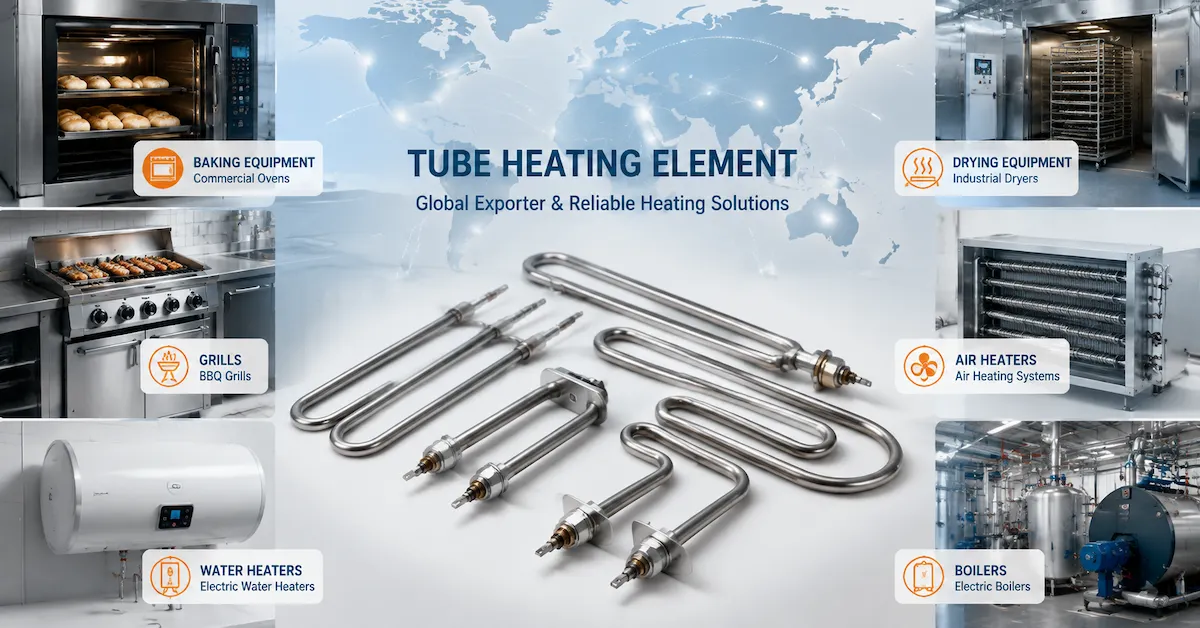
Heating elements are used across different equipment categories, including cooking appliances, heating systems, and industrial equipment. Because different applications require different structures and performance characteristics, buyers should evaluate suppliers based on technical capability rather than only unit price.
WEBO provides multiple heating-related components for appliance applications. Buyers can review the heating product categories and discuss specific requirements based on their project needs.
Understand Different Types of Heating Elements Before Sourcing
Before selecting a heating element manufacturer, buyers should understand the basic differences between heating component categories. Different heating structures are designed for different applications, operating environments, and installation requirements.
Common heating element categories include:
| Heating Element Type | Typical Application | Main Selection Factors |
|---|---|---|
| Tubular Heating Element | Ovens, grills, heating equipment | Shape, power, voltage, material, installation |
| Ceramic Heater | Ceramic cooktops and radiant heating applications | Heating area, temperature response, compatibility |
| Hot Plate Heating Element | Electric cooking appliances | Size, power rating, mounting structure |
| Induction Components | Induction cooking systems | Coil design, glass compatibility, control system |
WEBO provides tubular heating element products and ceramic heater products for different heating applications.
Selecting the correct heating element requires matching the component with the equipment design instead of choosing only by appearance.
Define Application Requirements Before Requesting a Quote
A professional heating element manufacturer needs detailed application information before recommending a solution.
Before requesting quotations, buyers should prepare:
- Equipment type
- Heating purpose
- Operating environment
- Required voltage
- Required power
- Installation space
- Expected working temperature
- Quantity requirements
A clear application description helps suppliers evaluate whether an existing product can meet the requirement or whether customization is needed.
| Requirement | Buyer Information | Supplier Evaluation |
|---|---|---|
| Application | Appliance or equipment type | Recommended heating solution |
| Power Requirement | Voltage and wattage | Electrical compatibility |
| Installation | Available space and mounting method | Structural feasibility |
| Environment | Air, liquid, or surface heating | Material suitability |
| Quantity | Trial order and production volume | Manufacturing plan |
Evaluate Heating Element Specifications Carefully
Technical specifications determine whether a heating element can perform correctly in the final equipment.
Important specifications include:
Power and Voltage
The heating element must match the equipment electrical design. Incorrect power selection can affect heating performance, energy consumption, and product reliability.
Heating Area and Structure
The physical shape and heating area should match the equipment design.
Important considerations include:
- Overall dimensions
- Heating length
- Heating distribution
- Mounting position
- Connection structure
Material Selection
Different applications may require different material considerations.
Buyers should confirm:
- Heating element material
- Protective structure
- Insulation requirements
- Operating environment compatibility
A heating element manufacturer should provide technical information that helps buyers evaluate whether the product matches the intended application.
Compare Standard Heating Elements and Custom Solutions
OEM projects often require different levels of customization. Some buyers need standard products, while others require modified structures.
| Supply Option | Suitable For | Main Consideration |
|---|---|---|
| Standard Heating Element | Existing equipment designs | Availability and specification matching |
| Modified Heating Element | Products requiring small adjustments | Feasibility and sample approval |
| Custom Heating Element | New equipment development | Design communication and validation |
| OEM Production | Long-term manufacturing projects | Consistency and production control |
Customization may involve:
- Shape adjustment
- Terminal design
- Size modification
- Power adjustment
- Installation changes
Before starting customization, buyers should confirm drawings, specifications, sample requirements, and production expectations.
Review Heating Element Manufacturing Quality Control
Quality control is a key factor when selecting a heating element manufacturer.
A complete quality management process may include:
Incoming Material Inspection
Verify:
- Material quality
- Component consistency
- Supplier documentation
Production Process Control
Monitor:
- Forming accuracy
- Assembly quality
- Electrical connections
- Manufacturing consistency
Performance Inspection
Evaluate:
- Electrical characteristics
- Heating performance
- Appearance condition
- Safety requirements
Final Inspection
Confirm:
- Product specifications
- Quantity accuracy
- Packaging requirements
- Shipment records
WEBO provides company information and certification details through its certification information page. Buyers should confirm project-specific quality documentation according to their requirements.
Consider Heating Element Compatibility with Complete Equipment
A heating element should not be evaluated separately from the equipment where it will operate.
For example:
- A cooking appliance requires coordination between heating components, controls, and surface materials.
- Industrial equipment requires consideration of operating conditions and installation environment.
- Heating systems require appropriate power control and safety design.
WEBO also provides related hot plate products for cooking appliance applications.
The final equipment design determines whether a heating element solution is suitable.
Sample Testing Before Mass Production
For OEM projects, sample approval helps prevent production issues.
A recommended process includes:
Step 1: Technical Review
Confirm:
- Product requirements
- Drawings
- Specifications
- Application conditions
Step 2: Sample Production
Evaluate:
- Dimensions
- Installation
- Heating performance
- Appearance
Step 3: Production Approval
Confirm:
- Approved sample
- Inspection requirements
- Production specifications
- Packaging standards
Approved samples should become the reference standard for repeat orders.
How OEM Buyers Evaluate a Heating Element Manufacturer
Supplier evaluation should include:
| Evaluation Area | Key Questions |
|---|---|
| Technical Capability | Can the supplier meet required specifications? |
| Manufacturing Ability | Can production remain consistent? |
| Customization Support | Can special requirements be developed? |
| Quality Control | Are inspection processes available? |
| Communication | Can technical issues be resolved efficiently? |
| Supply Stability | Can repeat orders maintain consistency? |
A reliable heating element manufacturer should support both technical development and long-term supply management.
Common Mistakes When Selecting Heating Element Suppliers
Many sourcing problems come from incomplete requirements.
Common mistakes include:
Choosing Only by Price
A lower unit price may create additional costs if specifications, quality, or delivery are inconsistent.
Providing Insufficient Technical Information
Without application details, suppliers may quote different solutions that cannot be compared directly.
Ignoring Sample Approval
Bulk production without sample confirmation increases the risk of installation or performance issues.
Not Planning Future Orders
Repeat production requires controlled specifications and revision management.
A structured supplier evaluation process helps reduce these risks.
Prepare Your Heating Element Project for WEBO
To evaluate WEBO as a heating element manufacturer, buyers should prepare:
- Equipment application
- Product drawings
- Technical requirements
- Required quantity
- Target market
- Delivery expectations
Review the WEBO product portfolio to understand available heating components and related appliance parts.
For project discussions, buyers can submit requirements through the WEBO contact page.
Providing complete project information helps both sides evaluate technical feasibility, customization options, and production requirements.
Frequently Asked Questions
1. What information should I provide to a heating element manufacturer?
Provide application details, equipment type, power requirements, dimensions, quantity, and installation conditions. Complete information helps suppliers recommend suitable solutions.
2. Can heating elements be customized for OEM projects?
Yes. Customization may involve structure, dimensions, terminals, power requirements, or installation methods depending on project needs.
3. How do I choose between tubular heating elements and ceramic heaters?
The choice depends on the application, heating method, installation structure, and operating environment. Buyers should evaluate the complete equipment design.
4. Why is sample approval important for heating elements?
Samples allow buyers to verify specifications, installation compatibility, and performance before mass production.
5. What quality checks should heating elements pass?
Typical checks include material inspection, dimensional verification, electrical testing, appearance inspection, and final shipment review.
6. Can one heating element design be used for different products?
Only after confirming compatibility with different equipment designs, power requirements, and operating conditions.
7. What affects heating element production lead time?
Factors include customization requirements, material availability, sample approval, production quantity, and inspection requirements.
8. How can buyers compare different heating element suppliers?
Compare technical capability, customization support, quality control, documentation, communication, and supply reliability.
9. Does WEBO provide different heating component categories?
WEBO provides multiple heating-related products, including tubular heating elements, ceramic heaters, and hot plate components.
10. How can I request a quotation from WEBO?
Prepare your technical requirements and contact WEBO through the contact page.
Conclusion
Choosing the right heating element manufacturer requires evaluating technical capability, application understanding, manufacturing control, and long-term supply reliability. OEM buyers should confirm specifications, test samples, review quality processes, and establish clear communication before starting mass production.
For your heating component project, review the WEBO heating element products and submit your application requirements through the WEBO contact page to discuss specifications, customization options, and production solutions.