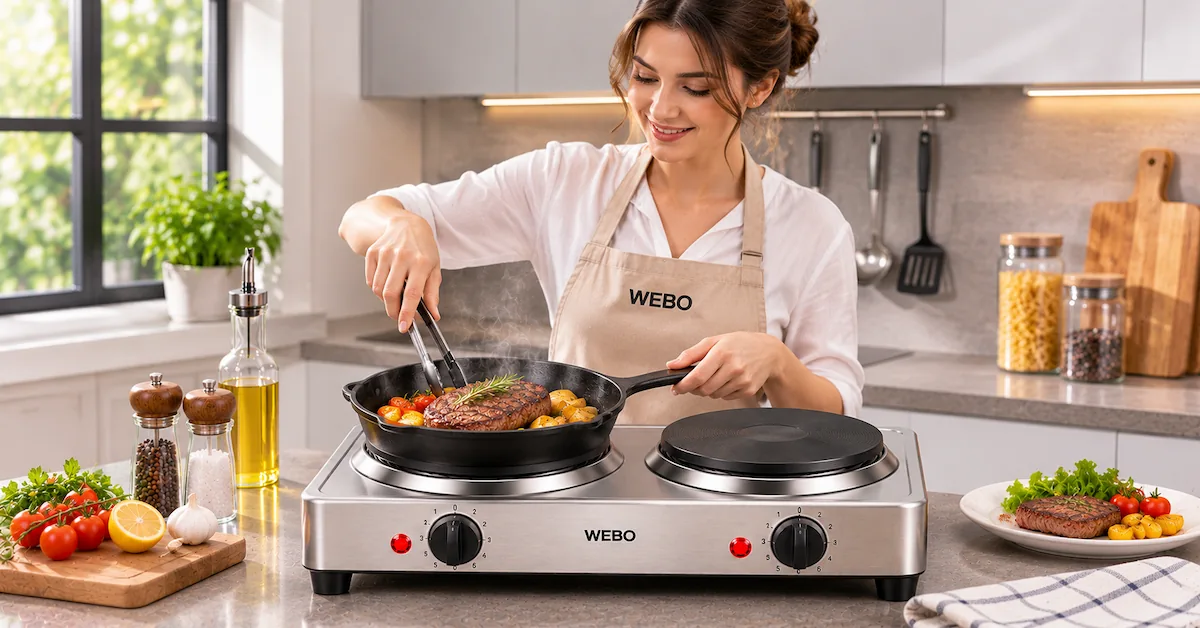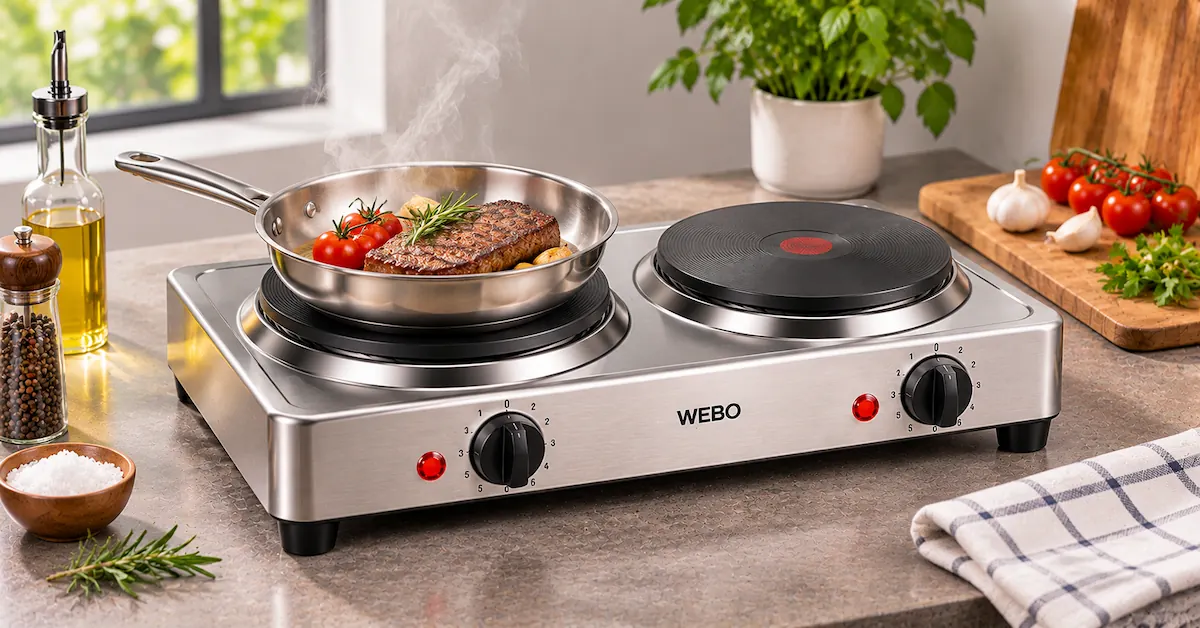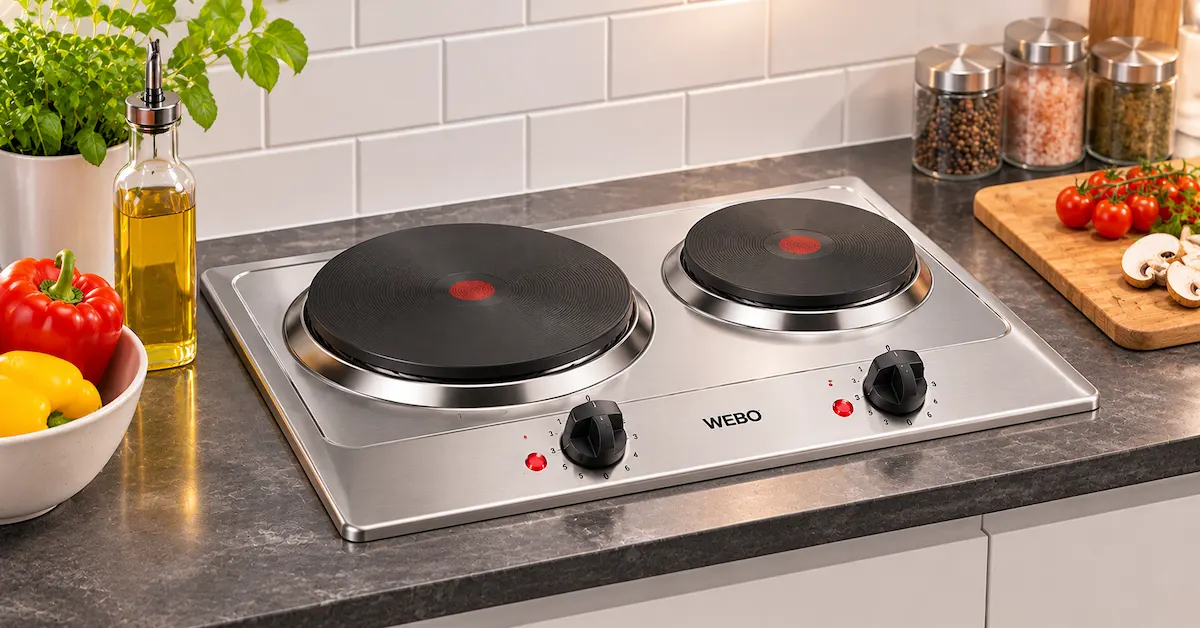



Quick Answer: When evaluating a cast iron hot plate factory, appliance OEMs should verify which manufacturing stages the supplier controls, whether the specified material and product construction are documented, how critical dimensions and electrical characteristics are inspected, and what evidence supports production-lot release. A dependable factory qualification decision should rely on approved specifications, traceable records, representative production samples, and defined acceptance criteria—not factory size or certification logos alone.
For an electric cooker manufacturer, a heating plate that passes prototype testing is only the beginning.
The more important commercial question is whether the factory can reproduce the approved component consistently across thousands of units and successive production orders.
A cast iron heating surface may involve several manufacturing stages, potentially including casting, surface preparation, machining, heating element integration, assembly, and final testing.
Different suppliers may perform these activities internally or purchase partially processed components from specialized subcontractors.
This distinction matters because the company supplying the finished heating plate is not necessarily the company that performs every manufacturing operation.
Without understanding process ownership, buyers may struggle to establish material traceability, investigate quality problems, or control engineering changes.
WEBO, officially GUANGDONG WEBO TECHNOLOGY CO., LTD, is a China-based electric heating element manufacturer established in 1998.
Its published products include solid electric hot plates, ceramic radiant heaters, tubular heating elements, and related cooking appliance components.
WEBO lists hot plate references in nominal 90mm, 110mm, and 145mm categories. However, the publicly available specifications do not confirm that every listed model uses a particular cast iron grade or that all manufacturing stages are performed in-house.
This article explains how OEM buyers can assess factory production controls and determine what evidence they should request before approving repeat orders.
Explore WEBO's Hot Plate Product Range for available models.
Key Takeaways
-
Identify the actual manufacturer of each critical component. Confirm which operations are performed internally and which are subcontracted.
-
Verify the material specification. A cast iron surface should be supported by suitable material documentation, not appearance alone.
-
Review a process control plan. Critical dimensions, electrical characteristics, and inspection methods should be defined.
-
Check measurement reliability. Inspection equipment, calibration, and measurement methods affect the credibility of quality records.
-
Agree on lot acceptance criteria. Sampling plans should reflect product risk and contractual requirements.
-
Require production traceability. Finished goods should be traceable to approved specifications and relevant production records.
-
Confirm production readiness before bulk orders. Samples, pilot production, capacity planning, and quality release should be evaluated separately.
1. What Should a Cast Iron Hot Plate Factory Actually Manufacture?
A cast iron hot plate factory may supply loose electric heating components, partially assembled heating units, or complete electric cooking appliances.
For OEM component purchasing, the product normally requires an electrical heating structure integrated into a mechanically suitable assembly.
The exact construction depends on the design.
Clarify the Product Before Auditing the Factory
| Product type | Manufacturing focus | Main buyer concern |
|---|---|---|
| Cast iron electric heating plate | Heating surface and electric heating assembly | Electrical and thermal performance |
| Solid electric hot plate | Complete heating component construction | Application compatibility and consistency |
| Complete portable electric cooker | Heating plate, controls, enclosure, and wiring | Finished-appliance safety and quality |
| Cast iron pan support | Cast structure supporting cookware | Dimensional stability and surface durability |
These products have different manufacturing requirements.
WEBO lists Hot Plate separately from Cast Iron Pan Support.
A gas stove pan support is not the same as an electric heating plate.
Who Should Use This Factory Audit Guide?
The framework is intended primarily for electric cooker OEMs, appliance quality engineers, sourcing managers, purchasing directors, and importers responsible for long-term component supply.
Buyers seeking a complete retail appliance should also evaluate finished-product assembly, labeling, safety, and conformity requirements beyond the component-level scope described here.
2. Which Production Stages Should Buyers Verify?
The first step in factory qualification is understanding the actual manufacturing process.
A supplier may control product design and final assembly while purchasing castings or other subcomponents from external manufacturers.
That arrangement is not automatically a disadvantage.
What matters is whether the supply chain is identified, controlled, and capable of producing the approved component.
Recommended Manufacturing Process Map
| Production stage | Main quality concern | Evidence to request |
|---|---|---|
| Material sourcing | Incorrect material or construction | Approved material specification |
| Casting, if applicable | Casting defects and material consistency | Casting supplier and inspection records |
| Machining | Critical dimensions and mounting geometry | Drawings and measurement records |
| Surface preparation | Finish consistency and surface defects | Surface acceptance criteria |
| Heating element integration | Electrical and mechanical assembly | Approved work instructions |
| Terminal assembly | Connection geometry and integrity | Inspection and test records |
| Electrical testing | Resistance, power, and insulation behavior | Defined test methods and results |
| Final inspection | Complete product conformity | Inspection report and release records |
| Packaging | Identification and transportation protection | Packaging specification |
This table describes a recommended industry audit framework. It is not a verified description of WEBO's individual factory production lines.
Questions Buyers Should Ask
Which operations are performed by the factory itself?
Which components are purchased from approved subcontractors?
How are incoming materials and subcomponents inspected?
Who authorizes engineering changes?
How are rejected materials identified and prevented from entering production?
If a quality problem occurs, which records can identify affected production lots?
A credible supplier should be able to explain the control system appropriate to the product being quoted.
3. How Do You Verify Cast Iron Material Quality?
For a product specifically requiring cast iron construction, material identity should be established before the buyer evaluates production consistency.
A black or textured heating surface is not sufficient proof of a particular cast iron specification.
Material Verification Checklist
| Material requirement | Factory audit question |
|---|---|
| Material type | Is the proposed material explicitly identified? |
| Material grade | Which specification applies? |
| Incoming inspection | How is the material checked? |
| Supplier approval | Who supplies the casting or processed material? |
| Defect criteria | What surface and structural defects are unacceptable? |
| Lot identification | Can material records be linked to production batches? |
| Material changes | Is customer approval required for significant substitutions? |
Relevant ASTM Reference
ASTM A48/A48M-22(2026), Standard Specification for Gray Iron Castings, addresses gray iron castings used for general engineering purposes where tensile strength is an important consideration.
The specification includes material classification and casting-related requirements.
For an OEM buyer, its practical value is establishing a possible basis for material and acceptance discussions if the selected component actually uses gray iron and the specification is contractually applicable.
It must not be assumed that every electric hot plate is manufactured to ASTM A48/A48M.
WEBO's publicly listed HP-F90, HP-F110, and HP-F145 products do not provide sufficient information to assign a specific cast iron grade.
Buyers should request that information directly.
4. Which WEBO Hot Plate Models Can Be Used for Factory Evaluation?
WEBO publishes several model references that can help buyers begin technical discussions.
Published Product References
| WEBO model | Nominal category | Available information | Further information required |
|---|---|---|---|
| HP-F90 | 90mm | Model and nominal size | Material, voltage, wattage, dimensions, terminals |
| HP-F110 | 110mm | Model and nominal size | Construction, electrical ratings, inspection requirements |
| HP-F145 | 145mm | Model and nominal size | Material, mounting, thermal and electrical data |
These models are references for sourcing inquiries, not evidence of identical manufacturing processes or confirmed cast iron construction.
Why Model-Level Verification Matters
Two heating plates may share a similar production process while requiring different electrical or mechanical controls.
For example, a change in mounting geometry may create different dimensional inspection requirements.
A change in electrical configuration may require an updated test method or acceptance criterion.
The factory control plan must therefore correspond to the approved product revision.
Procurement recommendation: Request a model-specific inspection plan rather than accepting a generic quality checklist for every heating component.
5. What Are the Seven Most Important Factory Audit Checkpoints?
A structured audit should assess both production activities and the evidence supporting them.
The following seven checkpoints provide a practical framework.
Factory Audit Scorecard
| Checkpoint | Audit focus | Recommended evidence |
|---|---|---|
| 1. Process ownership | Internal vs. subcontracted operations | Process flow and supplier responsibilities |
| 2. Material control | Material and component conformity | Specifications and incoming inspection |
| 3. Production instructions | Repeatable manufacturing | Controlled work instructions |
| 4. Critical-characteristic control | Dimensions, terminals, electrical characteristics | Control plan and measurements |
| 5. Test-system reliability | Accurate and repeatable inspection | Calibration and test method records |
| 6. Nonconforming-product control | Preventing defective shipments | Segregation and corrective-action records |
| 7. Lot release and traceability | Shipment conformity | Batch identification and release records |
Checkpoint 1: Process Ownership
Confirm whether critical operations are performed internally, outsourced, or shared between multiple suppliers.
If a casting supplier is involved, review how that supplier is approved and monitored.
Checkpoint 2: Incoming Material Control
Verify whether the factory has defined acceptance criteria for materials, heating components, insulation materials, and electrical connectors relevant to the approved design.
Checkpoint 3: Work Instructions
Ask how operators identify the correct product configuration and process requirements.
Instructions should be controlled and accessible at relevant operations.
Checkpoint 4: Critical Characteristics
The factory should identify dimensions and electrical properties that directly affect assembly, functionality, or safety.
These characteristics should receive appropriate inspection or process monitoring.
Checkpoint 5: Measurement Reliability
Review whether measuring instruments and test equipment are appropriate for the specified tolerances.
Checkpoint 6: Nonconforming Goods
Ask how failed components are identified, isolated, reviewed, and either corrected or rejected.
Checkpoint 7: Production Release
Verify who authorizes shipment and what documentation is required before the batch is released.
The purpose of a factory audit is to establish process confidence through evidence, not merely to confirm that equipment and operators are present.
6. How Should Critical Manufacturing Characteristics Be Controlled?
A production control plan connects product requirements to manufacturing operations and inspection methods.
Without this connection, the factory may produce components that look acceptable but vary in characteristics that are important to the appliance.
Example Critical-to-Quality Control Plan
| Characteristic | Main risk | Suggested control |
|---|---|---|
| Heating surface diameter | Incorrect installation fit | Drawing-based dimensional inspection |
| Overall height | Enclosure interference | Controlled measurement |
| Mounting geometry | Assembly misalignment | Fixtures and dimensional checks |
| Electrical resistance | Incorrect electrical behavior | Measurement under specified conditions |
| Rated power | Performance mismatch | Defined electrical test |
| Terminal positioning | Wiring incompatibility | Dimensional and visual checks |
| Electrical insulation | Safety-related failure | Appropriate verified test |
| Surface condition | Damage or unacceptable finish | Approved appearance criteria |
| Product identification | Mixed configurations | Part-number and revision verification |
The testing frequency and acceptance criteria should be determined from actual product risks and requirements.
Why Measurement Method Matters
A measurement result has limited value if the method is inconsistent.
For example, resistance may vary with temperature, so comparisons should specify measurement conditions.
Dimensional checks should identify the applicable datum references and measuring instruments.
Where relevant, buyers can request calibration evidence and measurement-system evaluation.
Process Capability
For stable, measurable characteristics with adequate data, capability indicators such as Cp and Cpk can support process evaluation.
However, these calculations are not meaningful without an appropriate measurement system, process stability assessment, and defined specification limits.
Buyers should avoid demanding arbitrary capability figures without establishing how the measurements are collected.
7. How Should a Factory Apply Acceptance Sampling?
Inspection plans should distinguish between routine characteristics, important functional requirements, and safety-related features.
Inspecting a sample of finished products is one way to assess a production lot, but it cannot guarantee that every unit is defect-free.
ISO Acceptance Sampling Reference
ISO 2859-1:2026, Sampling Procedures for Inspection by Attributes defines AQL-indexed sampling schemes for lot-by-lot inspection.
This standard can help buyers and suppliers establish consistent sampling procedures for suitable attribute-based inspections.
However, the buyer must define the relevant lot, inspection level, defect classifications, sampling arrangements, and acceptance rules.
Recommended Inspection Strategy
| Inspection category | Example characteristics | Planning approach |
|---|---|---|
| Appearance | Surface damage and identification | Defined attribute sampling |
| Dimensions | Diameter, height, terminal position | Agreed dimensional inspection |
| Electrical function | Resistance and power | Specified electrical verification |
| Safety-related characteristics | Relevant insulation and protection requirements | Risk-based test and process controls |
| Packaging | Carton identification and protection | Pre-shipment verification |
A sampling plan may be appropriate for some characteristics.
Safety-critical requirements may justify additional controls or individual testing, depending on product risk and applicable standards.
An AQL value is not a guarantee that a lot contains no defects.
An agreed acceptance sampling plan also does not replace upstream material control or production process monitoring.
8. Why Are ISO 9001 and Product Certifications Different?
Quality management certification and product conformity documentation address different questions.
A factory management system helps establish processes for controlling operations, records, customer requirements, nonconformities, and improvement.
Product testing and certification address specified requirements for an individual product or product family.
ISO 9001 Reference
ISO 9001:2026, Quality Management Systems — Requirements, describes requirements for establishing, implementing, maintaining, and improving a quality management system.
For buyers, the relevant audit question is whether the factory's documented system is effectively implemented for the components being purchased.
WEBO states on its website that it has implemented ISO 9001 and ISO 14001 management standards.
However, buyers should verify the current certificate, issuing body, certification scope, and applicable edition.
Factory Quality System vs. Product Approval
| Evidence | What it helps establish | What it does not automatically prove |
|---|---|---|
| ISO 9001 certificate | Defined quality management system scope | Every unit is defect-free |
| Material documentation | Specified material properties | Complete appliance safety |
| Product test report | Results for a tested configuration | Every future model is identical |
| Production inspection record | Evaluated batch characteristics | Unlimited service life |
| Finished-appliance conformity evidence | Compliance within the applicable scope | Approval of unrelated product variants |
Company-level references to VDE, TÜV, UL, CE, or RoHS should also be verified against the actual product and applicable market requirements.
Certification and conformity claims must not be generalized across all hot plate models.
9. How Do Buyers Verify Traceability and Engineering Change Control?
Traceability helps identify the products affected by a material, process, or component change.
For a cast iron heating plate project, traceability may involve records from incoming material to final shipment.
Recommended Traceability Chain
Approved drawing → Material or component lot → Production order → Inspection results → Finished product lot → Shipment identification
Not every component requires individual serialization.
A suitable batch-level system may be adequate when it supports the buyer's risk and investigation needs.
Engineering Change Control
The factory should establish how changes are reviewed and approved.
Examples may include changes to:
-
Cast iron material or casting supplier
-
Surface finishing methods
-
Heating element construction
-
Terminal materials or layout
-
Mounting geometry
-
Inspection methods
-
Critical subcontractors
Not every change has the same technical impact.
The buyer and supplier should agree in advance which changes require notification, testing, and customer approval.
Why This Matters Commercially
A new casting source may supply components with acceptable appearance but different underlying properties.
Without documented change control, the buyer might discover the change only after unexpected quality results.
A controlled approval process makes such issues easier to evaluate before they reach production.
10. How Can OEM Buyers Approve a Factory for Mass Production?
A factory's capability should be evaluated using production-intent evidence.
A successful prototype does not necessarily establish repeatable bulk production.
Recommended Approval Stages
| Stage | Main activity | Expected outcome |
|---|---|---|
| 1. Technical review | Confirm approved specifications | Defined product requirements |
| 2. Process review | Identify manufacturing operations and suppliers | Agreed process responsibilities |
| 3. Sample approval | Evaluate representative components | Technical feasibility |
| 4. Production trial | Review production-intent output | Evidence of repeatability |
| 5. Quality-system review | Check records and inspection practices | Defined control arrangements |
| 6. Commercial approval | Confirm capacity, MOQ, price, and delivery | Agreed supply conditions |
| 7. Production release | Approve final part number and revision | Controlled purchasing baseline |
Illustrative Production Trial
Suppose an electric cooker OEM plans to purchase a nominal 145mm heating component.
The engineering team approves initial samples, but the purchasing department needs evidence that regular production will follow the same specification.
The buyer can request production-intent samples made using the proposed manufacturing route.
The supplier and buyer then review measured critical dimensions, electrical characteristics, inspection records, and batch identification.
If unacceptable variation appears, corrective actions should be completed before the relevant release decision.
This is a hypothetical example, not a documented WEBO production project.
11. What Factory Capabilities Affect MOQ, Capacity, and Lead Time?
MOQ and lead time are commercial outcomes influenced by manufacturing arrangements.
For custom products, tooling and setup requirements may affect the minimum economical production quantity.
For established models, material availability, production scheduling, and current order commitments may influence delivery.
Factory Capacity Questions
| Buyer question | Why it matters |
|---|---|
| What is the actual output capacity for this model? | Avoids reliance on company-wide figures |
| Which operation is the production bottleneck? | Identifies potential delays |
| Are critical parts subcontracted? | Reveals external supply dependencies |
| What is the production lead time after approval? | Supports purchasing schedules |
| How are urgent orders handled? | Clarifies flexibility |
| Can future orders retain the approved configuration? | Supports repeat supply |
| How is capacity reserved for forecast demand? | Helps coordinate longer-term orders |
WEBO's website reports approximately 50,000 square meters of factory space and more than 500 employees.
These company-published figures provide general organizational context.
They do not establish monthly capacity, equipment ownership, or lead times for a particular cast iron hot plate model.
Buyers should request model-specific production information.
12. How Should Buyers Compare Factory Quotations?
A competitive quotation should be evaluated alongside quality controls and the total cost of obtaining usable components.
Factory Quotation Comparison
| Evaluation factor | Basic price quotation | Manufacturing-focused quotation |
|---|---|---|
| Unit price | Included | Included |
| Approved specification | May be unclear | Clearly identified |
| Material requirements | May be unspecified | Agreed documentation |
| Production process | Limited information | Manufacturing responsibilities defined |
| Inspection criteria | Generic assurance | Agreed test and acceptance plan |
| Tooling and customization | May be excluded | Clarified when applicable |
| Lot traceability | May be unspecified | Defined records |
| Delivery terms | Quoted | Quoted with schedule assumptions |
Common Hidden Costs
Buyers should consider the potential cost of additional inspection, rejected lots, assembly rework, delayed production, packaging damage, and repeat testing.
The lowest unit price does not necessarily produce the lowest total procurement cost.
Purchasing recommendation: Compare suppliers using the same technical specification, inspection requirements, purchasing volume, packaging conditions, and delivery basis.
13. Why Consider WEBO for Heating Plate Factory Sourcing?
WEBO was established in 1998 and operates in the electric heating element and cooking appliance component industry.
According to its published company profile, the company serves customers in Europe, Asia, Africa, and the Americas.
Its product range includes solid hot plates, ceramic radiant heaters, tubular heating elements, induction coils, cast iron pan supports, and related components.
This may be relevant to appliance manufacturers purchasing multiple component categories.
For example, a cooker development project may involve a heating plate and a suitable control component.
WEBO also publishes Energy Regulator and Rotary Switch categories.
Any proposed electrical or mechanical compatibility must be verified.
What Still Requires Confirmation?
For a cast iron hot plate factory inquiry, buyers should ask WEBO to confirm:
-
Whether the proposed model uses cast iron construction
-
The specified material grade and technical documentation
-
Which manufacturing stages are performed internally
-
Any relevant subcontracted operations
-
Available inspection and traceability records
-
Current capacity, MOQ, tooling requirements, and lead time
-
Applicable product-specific compliance documentation
The objective is to establish the actual capabilities for the product being purchased rather than infer them from the company's general product portfolio.
Learn more through WEBO's Company Introduction.
14. How to Prepare a Factory Audit and OEM RFQ
A detailed RFQ helps the factory understand both the component requirements and the quality evidence expected by the buyer.
Recommended RFQ Checklist
| Information | Details to provide |
|---|---|
| Application | Electric cooker, portable stove, or replacement component |
| Product construction | Required cast iron or other approved material |
| Reference model | HP-F90, HP-F110, HP-F145, or buyer drawing |
| Electrical specifications | Voltage, wattage, resistance requirements |
| Mechanical requirements | Diameter, mounting, height, terminals |
| Surface requirements | Finish and defect criteria |
| Manufacturing requirements | Required process or subcontractor controls |
| Testing | Electrical, dimensional, and relevant safety checks |
| Inspection | Sampling plan and acceptance criteria |
| Traceability | Product revision and batch identification |
| Order quantities | Prototype, pilot, and annual forecast |
| Commercial conditions | MOQ, tooling, pricing, lead time, shipping |
Request a Factory Capability Review
Looking for a cast iron hot plate factory for OEM electric cooker production or long-term component sourcing?
Start by submitting the intended application, technical drawing, material specification, electrical requirements, and estimated order quantity.
Ask WEBO to confirm the construction of the proposed heating plate, available process documentation, relevant testing arrangements, and production capabilities.
Explore WEBO Hot Plate Products
Contact WEBO for OEM Factory Evaluation and Quotation
15. Frequently Asked Questions
1. What does a cast iron hot plate factory produce?
A cast iron hot plate factory may manufacture electric heating plates incorporating cast iron construction. Buyers should distinguish loose heating components from complete portable cooking appliances and verify the actual construction of the proposed product.
2. Does WEBO operate a cast iron foundry?
WEBO publishes manufacturing information for electric heating components, but its public information does not establish whether cast iron casting operations for specific hot plate models are performed in-house. Buyers should confirm process ownership directly.
3. What hot plate sizes does WEBO offer?
WEBO publishes HP-F90, HP-F110, and HP-F145 in nominal 90mm, 110mm, and 145mm categories. Their material construction and complete technical specifications require model-specific confirmation.
4. How do I verify cast iron material quality?
Request the specified material grade, relevant records, incoming inspection criteria, and traceability information. If an ASTM specification is required, confirm that it applies to the actual material and component.
5. What is the difference between factory inspection and product testing?
Factory inspection evaluates manufacturing processes, control systems, and records. Product testing evaluates whether the selected component meets defined technical requirements. Both may be necessary for OEM supplier approval.
6. What is an AQL inspection plan?
An AQL-based plan uses a defined statistical sampling scheme to evaluate lots by attributes. It does not guarantee that every component is defect-free and should be applied according to the relevant requirements.
7. Why is production traceability important?
Traceability helps connect delivered components to approved specifications, production lots, and inspection records. It supports investigation and containment when quality problems occur.
8. Can WEBO support custom cast iron hot plate projects?
WEBO's published materials discuss OEM and ODM-related heating component development. The feasibility of a specific cast iron construction, size, electrical rating, or mounting modification must be confirmed through technical review.
9. What affects factory MOQ and production lead time?
Requirements may depend on the selected model, material sourcing, tooling, customization, order volume, inspection needs, and production scheduling. Buyers should request a project-specific quotation.
10. How can I request a factory audit or quotation from WEBO?
Submit the product application, required material, drawings, electrical ratings, quality requirements, sample quantity, annual forecast, and destination market through the WEBO Contact Page. Ask which factory records and qualification arrangements are available.
Conclusion
Choosing a reliable cast iron hot plate factory requires more than evaluating company experience, manufacturing photographs, or competitive quotations.
For electric cooker OEMs and international component buyers, the most important purchasing objective is to establish whether the proposed production system can consistently deliver components that meet the approved specification.
Factory qualification should begin with product identification and confirmation of the actual manufacturing responsibilities.
Material specifications, subcontractor controls, production instructions, critical-characteristic inspection, measurement reliability, batch traceability, and lot-release procedures all contribute to repeatable manufacturing.
Relevant references such as ASTM A48/A48M, ISO 2859-1, and ISO 9001 can support material, sampling, and quality-system discussions when applied within their proper scope.
However, standards references and company-level certification claims do not replace model-specific technical evidence.
WEBO, established in 1998, manufactures electric heating elements and related appliance components. Its published product range includes HP-F90, HP-F110, and HP-F145 hot plates that may serve as initial references for OEM inquiries.
The exact cast iron construction, material grade, manufacturing process ownership, inspection capabilities, production capacity, and commercial conditions must be confirmed for each project.
Evaluating a heating plate factory for a new appliance, custom component, or repeat production program?
Share your technical requirements, material specifications, drawings, inspection criteria, and purchasing forecast with WEBO to discuss available product configurations and manufacturing arrangements.
View WEBO Hot Plate Products or Request a Factory Capability Review and OEM Quotation to begin your next sourcing project.