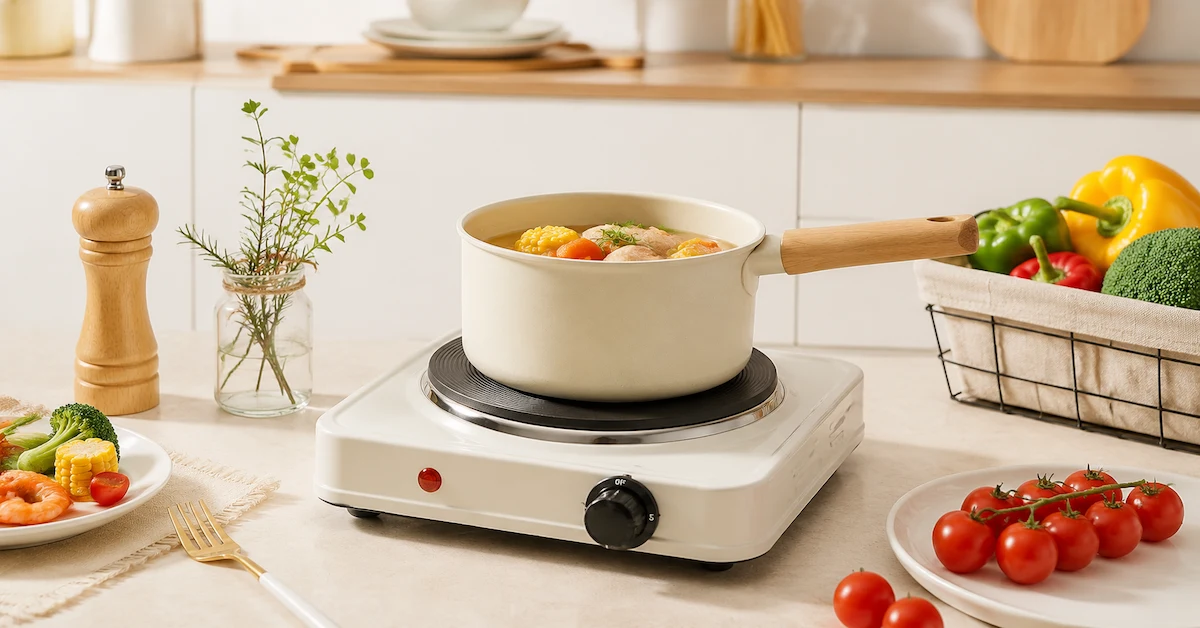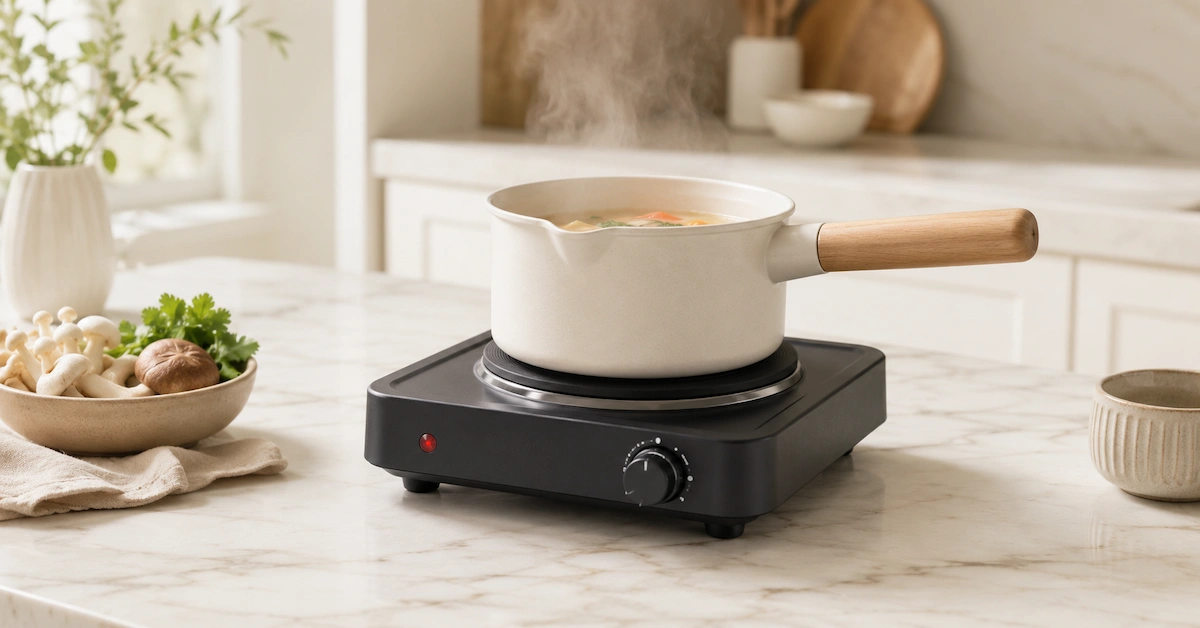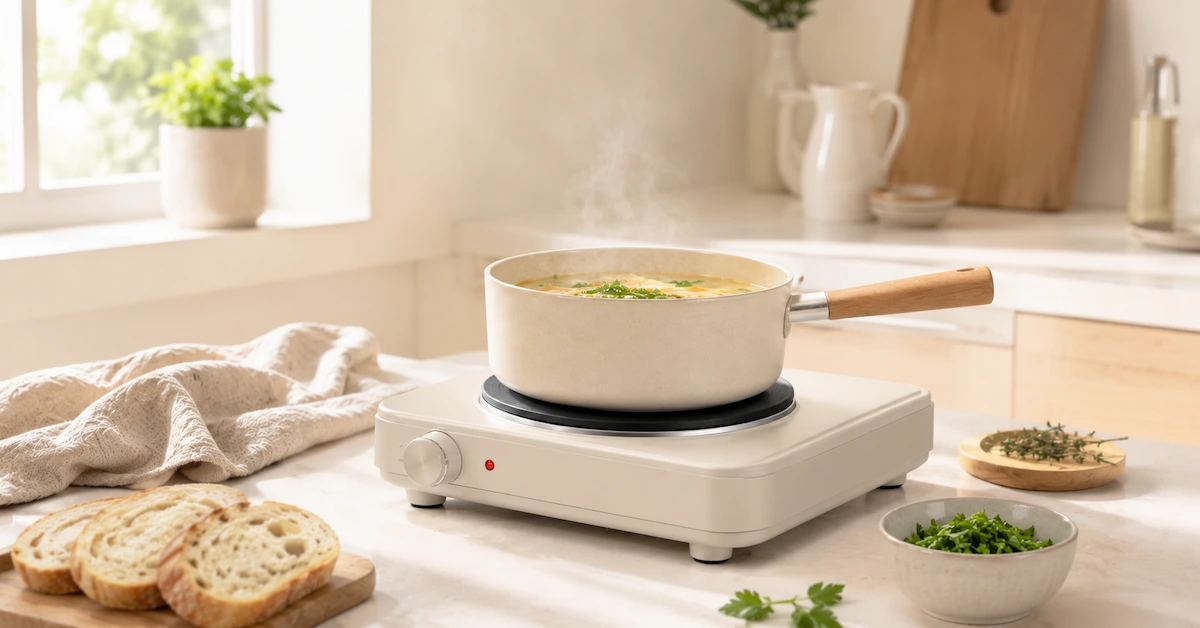



Choosing a reliable electric hot plate manufacturer is a critical sourcing decision for electric stove brands, portable cooker factories, importers, repair-parts distributors, and OEM appliance manufacturers.
An electric hot plate may appear to be a simple circular heating component. However, its diameter, voltage, rated power, terminal arrangement, mounting structure, surface treatment, and electrical stability can directly affect the finished appliance.
A product that does not fit the appliance housing may delay assembly. Incorrect power can cause slow heating or excessive temperature. Weak terminal construction may increase wiring problems and after-sales risks. Inconsistent repeat batches can also create inventory and replacement compatibility issues.
For B2B buyers, the right manufacturer should provide more than a competitive quotation. It should support technical confirmation, sample testing, quality control, customization, packaging, and long-term production stability.
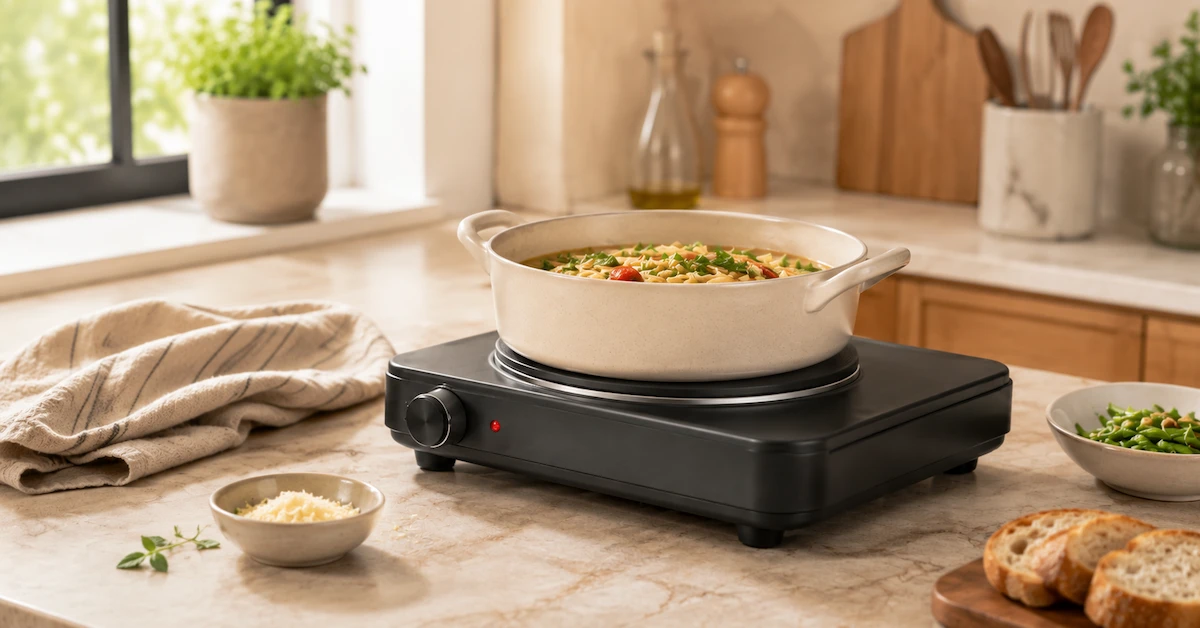
What Does an Electric Hot Plate Manufacturer Produce?
An electric hot plate manufacturer produces resistance-heating components used to transfer heat directly to cookware or appliance surfaces.
A typical solid electric hot plate includes:
- A durable black heating surface
- An internal resistance-heating system
- Insulation materials
- A metal housing
- Electrical terminals
- Mounting points or brackets
These products are commonly used in:
- Single-burner electric stoves
- Double-burner cookers
- Portable electric cooking appliances
- Tabletop kitchen equipment
- Compact household appliances
- Replacement-parts programs
- OEM and private label projects
- Selected commercial heating equipment
WEBO offers electric hot plates together with ceramic heaters, tube heating elements, induction coils, ceramic glass, rotary switches, energy regulators, and other appliance components. Buyers can review the current range on the WEBO products page.
Which Buyers Need an Electric Hot Plate Manufacturer?
Different customer groups have different sourcing priorities.
| Buyer Type | Main Requirement | Key Concern |
|---|---|---|
| Electric stove brands | Stable heating components | Product performance and certification |
| Appliance factories | Production-line compatibility | Size, terminals, mounting structure |
| Importers | Market-ready products | Documentation and export packaging |
| Wholesalers | Stable inventory | Batch consistency and repeat supply |
| Repair-parts distributors | Replacement compatibility | Dimensions and terminal stability |
| OEM buyers | Custom product support | Samples, drawings, and bulk production |
| Private label buyers | Branded product lines | Packaging, labels, and barcodes |
A professional manufacturer should first understand the buyer’s final application before recommending a product.
Confirm the Application Before Selecting a Model
The correct electric hot plate depends on how the finished appliance will be used.
For example, a compact portable cooker may require a smaller heating surface and controlled power. A household electric stove may need a larger diameter and faster heating response. A replacement-parts distributor may prioritize compatibility with common appliance models.
Before requesting a quotation, buyers should clarify:
- Final appliance type
- Destination market
- Cookware size
- Expected heating speed
- Operating duration
- Control method
- Housing dimensions
- Required production quantity
- Replacement or OEM purpose
Clear application information helps the manufacturer avoid recommending an unsuitable model.
Choose the Correct Diameter
Diameter affects appliance fit, cookware contact, heating efficiency, and mounting structure.
WEBO’s hot plate range includes common categories such as:
| Diameter | Typical Use |
| 90mm | Compact appliances and small cooking equipment |
| 110mm | Portable cookers and small electric stoves |
| 145mm | Standard electric stove applications |
| Custom diameter | OEM appliances and special product structures |
Nominal diameter alone is not enough to confirm compatibility. Buyers should also check:
- Overall product height
- Housing opening
- Mounting points
- Terminal clearance
- Connection orientation
- Cookware contact area
- Ventilation space
- Control-component location
Before bulk production, the selected model should be installed and tested in the actual appliance.
Match Voltage and Power to the Target Market
Voltage and rated power directly influence appliance performance.
The correct configuration depends on:
- Destination-country voltage
- Appliance wiring
- Heating-surface diameter
- Target heating speed
- Cookware load
- Control system
- Housing ventilation
- Intended operating cycle
Higher wattage is not automatically better. A high-power hot plate may heat faster, but it may also increase electrical load and housing temperature. A low-power product may consume less energy but fail to meet cooking expectations.
During sample testing, buyers should evaluate:
- Heating-up time
- Temperature stability
- Repeated operating cycles
- Response to power controls
- Housing temperature
- Performance with normal cookware
- Recovery after switching cycles
An experienced electric hot plate manufacturer should help buyers select a practical balance between heating performance, safety, and energy use.
Verify Terminal and Mounting Compatibility
Terminals and mounting structures are common sources of assembly problems.
Two hot plates with the same diameter and power may use different:
- Terminal types
- Terminal quantities
- Terminal positions
- Connection directions
- Mounting brackets
- Screw locations
- Product heights
Before approving a product, buyers should confirm that the terminals are accessible inside the appliance and compatible with the existing wiring process.
Terminal inspection should cover:
- Position accuracy
- Mechanical strength
- Secure installation
- Contact reliability
- Resistance to deformation
- Wiring clearance
Correct mounting design helps keep the hot plate stable during transportation, assembly, and appliance operation.
Check Control-System Compatibility
Electric hot plates may work with different control devices, including:
- Rotary switches
- Energy regulators
- Thermostats
- Mechanical multi-level controls
- Electronic control systems
The heating component and control device must be properly matched.
Buyers should confirm:
- Rated voltage
- Rated current
- Power level
- Terminal layout
- Wiring diagram
- Switching cycle
- Regulator compatibility
- Temperature-control strategy
Poor matching can cause unstable heat output, frequent switching, slow heating, or reduced component life.
WEBO’s product portfolio includes rotary switches and energy regulators, allowing appliance buyers to discuss heating and control components within the same project.
Evaluate Materials and Surface Quality
Electric hot plates operate through repeated heating and cooling cycles. Material quality therefore affects structural stability, corrosion resistance, appearance, and service life.
Buyers should ask about:
- Heating-surface materials
- Metal housing construction
- Internal resistance components
- Insulation materials
- Terminal materials
- Surface treatment
- Mounting components
- Thermal-cycle durability
The heating surface should remain stable under normal cookware loads. The metal housing should resist deformation, while the terminals should remain secure throughout the expected product life.
Visual appearance alone cannot prove long-term quality. Material selection and manufacturing-process control are more important.
Review the Manufacturer’s Quality-Control Process
A reliable electric hot plate manufacturer should inspect products throughout production rather than relying only on final appearance checks.
Incoming Material Inspection
Metal components, insulation materials, heating structures, terminals, and purchased parts should be verified before production.
Dimensional Inspection
The factory should check:
- Diameter
- Product height
- Mounting dimensions
- Terminal positions
- Housing dimensions
- Connection clearance
Electrical Testing
Testing may include:
- Rated power verification
- Electrical continuity
- Insulation resistance
- Dielectric strength
- Leakage performance where applicable
Heating Performance Testing
The hot plate should be evaluated for stable and repeatable heating under the agreed operating conditions.
Terminal Inspection
Terminal location, strength, alignment, and connection quality should be checked before packaging.
Surface Inspection
The factory should inspect for scratches, cracks, deformation, coating defects, and inconsistent finishes.
Packaging Inspection
Product quantity, labels, protective materials, model separation, and carton strength should be verified before shipment.
For bulk buyers, the approved sample should become the reference standard for every production batch.
Confirm Safety Testing and Certifications
Safety and certification requirements vary according to the appliance and destination market.
Buyers may need to confirm:
- Insulation performance
- Dielectric-strength testing
- Leakage-current requirements
- Temperature-rise testing
- Thermal-cycle testing
- Terminal reliability
- Material compliance
- Factory quality systems
- Product-specific certificates
Depending on the project, relevant documentation may include CE, RoHS, UL, VDE, TUV, ISO 9001, or ISO 14001.
Buyers should verify whether the required certificate applies to the exact model and technical specification being purchased. General certification claims should not replace model-specific document confirmation.
OEM and ODM Manufacturing Options
Standard electric hot plates can meet common appliance requirements. Special projects may need customized products.
OEM Electric Hot Plate Manufacturing
OEM is suitable when the buyer already has:
- A product drawing
- An existing sample
- Fixed technical specifications
- A mature appliance structure
- Confirmed packaging requirements
The manufacturer produces the heating plate according to these approved requirements.
ODM Electric Hot Plate Development
ODM is suitable when the buyer understands the application but needs help selecting and modifying an existing product.
The supplier may recommend a suitable model and adjust:
- Diameter
- Voltage
- Rated power
- Terminal layout
- Mounting structure
- Surface treatment
- Packaging
After the sample is approved, the project can move into controlled mass production.
Sample Development and Approval Process
Sample approval helps prevent costly mass-production errors.
A practical development process includes:
- Buyer submits appliance requirements
- Manufacturer reviews existing models
- Technical specifications are confirmed
- Samples are produced
- Factory testing is completed
- Buyer installs samples in the appliance
- Necessary adjustments are made
- Final sample and drawing are approved
- Bulk production begins
Buyer testing should evaluate:
- Appliance fit
- Terminal access
- Wiring compatibility
- Heating speed
- Control response
- Cookware stability
- Housing temperature
- Repeated operation
- Product appearance
- Packaging protection
The approved sample, specification sheet, and packaging instructions should remain the reference for repeat orders.
Consider Export Packaging Early
Electric hot plates are relatively heavy metal components with exposed terminals.
Weak packaging may cause:
- Scratched heating surfaces
- Bent terminals
- Deformed housings
- Mixed models
- Broken cartons
- Moisture exposure
- Difficult warehouse identification
Buyers should confirm:
- Individual product protection
- Internal separators
- Quantity per carton
- Export-carton strength
- Model labels
- SKU identification
- Barcode requirements
- Carton marks
- Pallet options
- Private label packaging
Packaging should be confirmed before production is completed, particularly for export, wholesale, and private label orders.
Compare Total Purchasing Cost
The lowest quotation does not always produce the lowest real cost.
Total sourcing cost may include:
- Product price
- Sample development
- Tooling
- Testing
- Inspection
- Packaging
- Freight
- Duties
- Incoming inspection
- Assembly rework
- Product returns
- Warranty claims
- Inventory losses
A more reliable product may create better long-term value by reducing assembly delays, customer complaints, shipping damage, and replacement costs.
Information Needed for an Accurate Quotation
A complete inquiry helps the manufacturer provide a suitable recommendation.
| Required Information | Example |
| Appliance application | Electric stove, portable cooker, replacement part |
| Required diameter | 90mm, 110mm, 145mm, or custom |
| Voltage and power | Based on the target market |
| Terminal structure | Drawing, photo, or existing sample |
| Mounting method | Appliance design or technical drawing |
| Control system | Rotary switch, regulator, thermostat |
| Order quantity | Sample, trial order, or annual demand |
| Destination market | Europe, North America, Asia, Africa |
| Certification needs | Based on the selected market |
| Packaging | Bulk carton, private label, barcode, pallet |
Buyers should also explain the main problem they want to solve, such as slow heating, poor fitting, wiring difficulty, or inconsistent existing supply.
Why Choose WEBO as Your Electric Hot Plate Manufacturer?
WEBO has manufactured heating elements since 1998 and supports appliance brands, importers, distributors, and OEM factories.
Its product portfolio includes:
- Hot Plate
- Ceramic Heater
- Tube Heating Element
- Cast Iron Pan Support
- Induction Coil
- Ceramic Glass
- Rotary Switch
- Energy Regulator
As an electric hot plate manufacturer, WEBO can support:
- Standard 90mm, 110mm, and 145mm hot plates
- Custom size, voltage, and power
- Terminal and mounting adjustments
- OEM and ODM development
- Sample confirmation
- Quality-control support
- Bulk production
- Export packaging
- Private label requirements
- Related appliance component sourcing
Buyers can explore available products on the WEBO Hot Plate page.
More information about WEBO’s manufacturing background, factory capabilities, and international business is available on the About Us page.
For samples, drawings, custom specifications, packaging requirements, or bulk pricing, submit the project through the WEBO contact page.
FAQ
1. What does an electric hot plate manufacturer produce?
An electric hot plate manufacturer produces resistance-heating plates for electric stoves, portable cookers, compact appliances, and replacement-parts markets.
2. What sizes of electric hot plates are available?
Common categories include 90mm, 110mm, and 145mm, while customized sizes may be developed for OEM projects.
3. Can voltage and power be customized?
Yes. Voltage and rated power can be discussed according to the appliance design, target market, and heating-performance requirements.
4. Why should buyers test samples in the final appliance?
Appliance testing confirms product fit, wiring compatibility, heating performance, controls, housing temperature, and repeated operation before bulk production.
5. What is the difference between OEM and ODM hot plates?
OEM follows buyer-provided specifications, while ODM helps buyers select and modify an existing hot plate design.
6. What information is required for a quotation?
Provide the application, diameter, voltage, power, terminals, mounting structure, order quantity, destination market, certification needs, and packaging requirements.
7. What packaging is suitable for electric hot plates?
Suitable packaging may include individual protection, internal separators, strong export cartons, product labels, barcodes, and pallets.
8. Can WEBO supply switches and energy regulators?
WEBO’s product range includes rotary switches, energy regulators, and other heating-related appliance components.
9. How can buyers start an OEM project?
Send the appliance drawing, existing sample, technical specifications, expected order quantity, target market, and packaging requirements to WEBO for evaluation.
Conclusion
Choosing the right electric hot plate manufacturer requires more than comparing product diameter, power, and unit price.
Buyers should evaluate application compatibility, electrical specifications, terminals, mounting structure, materials, quality testing, certification support, sample development, packaging, and repeat-order consistency.
A dependable manufacturing partner helps reduce appliance-development risks, assembly delays, warranty claims, and long-term supply problems.
WEBO provides standard and customized electric hot plates for electric stoves, portable cookers, compact appliances, replacement markets, and OEM projects. Buyers can submit drawings, samples, specifications, expected quantities, and target-market requirements to receive product-matching support and a customized quotation.