


Quick Answer: A successful bulk order gas stove pan support plan starts with the number of complete gas hobs to be assembled, rather than the total quantity of individual grates. Buyers should calculate component requirements for each appliance model, approve drawings and samples, confirm material and surface specifications, and coordinate production lots with assembly schedules. Protective packaging, batch identification, and complete-set delivery checks help reduce shortages and avoidable purchasing losses.
For gas stove manufacturers, purchasing thousands of cast iron pan supports does not necessarily mean having enough components to assemble thousands of finished appliances.
A shipment may contain the correct total number of grates but an incorrect combination of single-burner supports, double-burner supports, or model-specific components.
Even a relatively small shortage of one required part can delay the completion of an entire appliance production batch.
For buyers preparing a bulk order gas stove pan support RFQ, the objective should therefore be obtaining the correct quantity of approved components at the right time.
WEBO, officially GUANGDONG WEBO TECHNOLOGY CO., LTD, is a China-based manufacturer of heating elements and cooking appliance components established in 1998 in Yangjiang, Guangdong Province.
Its published product portfolio includes single-burner cast iron pan supports, double-burner pan supports, and cast iron grate grid product groupings.
This guide explains how international B2B buyers can prepare and manage bulk purchasing programs for gas stove pan supports.
Explore the WEBO Cast Iron Pan Support Product Range.
Key Takeaways
-
Calculate purchasing quantities according to complete appliance sets, not total burner count alone.
-
Confirm the required part number, mounting geometry, material, and surface finish before bulk production.
-
Separate different grate models and revisions throughout manufacturing, packaging, and delivery.
-
Evaluate quotation costs per usable appliance set rather than individual component price alone.
-
Coordinate batch deliveries with the finished-appliance production schedule.
-
Use agreed inspection and packaging requirements to reduce casting damage, surface defects, and assembly interruptions.
1. What Is a Gas Stove Pan Support?
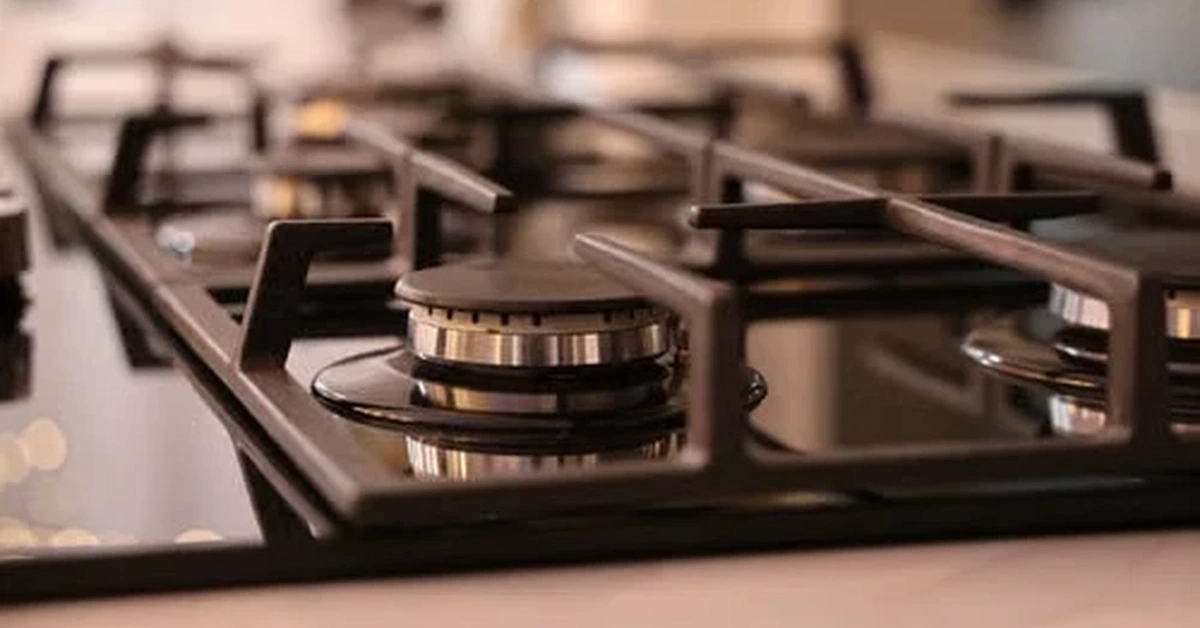
A gas stove pan support is a structural component installed above gas burners to hold cookware in its intended cooking position.
It is commonly described as a gas burner grate, stove trivet, cast iron stove grate, or cast iron pan support.
The component provides a stable interface between cookware and the gas appliance while maintaining the required clearance above the burner.
Its geometry, seating points, material, and surface condition must be suitable for the intended gas hob design.
Common Pan Support Applications
| Application | Typical support configuration | Main purchasing consideration |
|---|---|---|
| Single-burner gas stove | Individual pan support | Burner opening and locating points |
| Two-burner gas stove | Individual or shared supports | Burner spacing and overall fit |
| Multi-burner gas hob | Multiple supports or sectional grate grids | Complete-set alignment |
| Built-in gas cooktop | Appliance-specific support structures | Installation and appearance |
| Replacement-parts programs | Approved replacement references | Exact model compatibility |
These are general application categories. Individual WEBO product suitability must be confirmed through technical review.
Who Should Purchase Pan Supports in Bulk?
Bulk purchasing is particularly relevant to gas stove OEM manufacturers, kitchen appliance brands, international component importers, regional appliance assemblers, and distributors supplying approved replacement parts.
It is less suitable for individual consumers who need a single replacement grate but do not have verified appliance compatibility information.
2. Bulk Order Gas Stove Pan Support: How Many Pieces Should You Purchase?
The first step is converting finished-appliance demand into component requirements.
Do not assume that every burner requires one separate pan support.
Some two-burner appliances use two individual supports. Others use one shared grate structure. A four-burner appliance may use two separate double-burner grates or another approved configuration.
The correct purchasing quantity should come from the appliance's approved bill of materials, or BOM.
Calculate Pan Support Requirements by Appliance Model
Consider a hypothetical OEM production plan involving three gas hob models.
| Gas hob model | Planned appliance quantity | Pan support requirement per appliance |
|---|---|---|
| Model A: Two-burner stove | 3,000 | 2 × Support S1 |
| Model B: Two-burner hob | 2,000 | 1 × Support D1 |
| Model C: Four-burner hob | 1,000 | 1 × Support D1 and 1 × Support D2 |
The resulting component purchasing requirements are:
| Component | Basic demand | Illustrative 2% reserve | Total order quantity |
|---|---|---|---|
| Support S1 | 6,000 | 120 | 6,120 |
| Support D1 | 3,000 | 60 | 3,060 |
| Support D2 | 1,000 | 20 | 1,020 |
| Total | 10,000 | 200 | 10,200 |
In this example, 6,000 finished appliances require 10,000 individual pan supports before purchasing reserves.
The additional 2% is an illustrative planning assumption, not an industry requirement or WEBO defect-rate estimate.
Actual reserve quantities should be calculated using historical rejection rates, transportation damage records, spare-parts requirements, and replenishment conditions.
The hypothetical part numbers above are not WEBO product models. Sharing one component across different appliance platforms requires documented compatibility approval.
3. Which Technical Specifications Should Be Confirmed Before Bulk Production?
Before placing a large order, buyers should establish a controlled specification for each pan support.
A product photograph is useful for preliminary identification but insufficient for engineering approval.
Gas Stove Pan Support Technical Specification Checklist
| Specification | Required purchasing information |
|---|---|
| Product configuration | Single-burner, double-burner, or grid-style structure |
| Overall length and width | Approved dimensions and tolerances |
| Overall height | Required cookware support position |
| Burner opening | Clearance and alignment requirements |
| Locating feet | Position, dimensions, and seating geometry |
| Support-arm structure | Approved shape and contact arrangement |
| Material | Specified cast iron type and grade |
| Surface finish | Approved coating or finishing requirement |
| Component weight | Agreed nominal weight and tolerance, if required |
| Flatness and seating | Defined inspection fixture and acceptance criteria |
| Mechanical performance | Approved application-specific test requirements |
| Product identification | Part number and drawing revision |
| Packaging | Protective material and carton requirements |
These are recommended procurement specifications rather than published WEBO model parameters.
Why Burner Clearance Matters
The pan support must maintain the intended relationship between cookware, the burner, and the surrounding cooktop structure.
Incorrect geometry can cause poor seating, assembly interference, or changes in finished-appliance operating behavior.
For this reason, buyers should approve the component on the intended gas appliance rather than relying solely on external dimensions.
Cookware stability and relevant safety assessments should be completed by qualified appliance engineers.
4. Which Cast Iron Materials and Manufacturing Processes Matter?
Cast iron pan support quality depends on the specified material, component geometry, casting consistency, finishing operations, and handling.
The term cast iron alone does not define a complete material specification.
Material and Workmanship Requirements
| Production characteristic | Purchasing concern |
|---|---|
| Cast iron material | Compliance with approved material requirements |
| Casting geometry | Consistent shape and dimensions |
| Casting integrity | Unacceptable cracks or other defined defects |
| Surface preparation | Removal of unwanted casting residues and irregularities |
| Locating surfaces | Correct seating and installation |
| Surface treatment | Appearance and relevant service conditions |
| Final handling | Protection against impact and surface damage |
Control the Surface Finish
Depending on the appliance design, pan supports may require a specified enamel, coating, or other approved finish.
Buyers should clarify:
-
The required surface treatment and appearance.
-
Acceptable surface texture and color variation.
-
Relevant resistance to operating temperatures and cleaning conditions.
-
Inspection criteria for exposed and functional surfaces.
-
Protection requirements during storage and shipment.
Do not assume that all cast iron pan supports use the same finish.
The material grade, finishing process, and performance requirements must be confirmed for the selected product.
Why Batch-to-Batch Appearance Matters
On appliances with several visible pan supports, significant variation in finish or texture can affect the appearance of the completed gas hob.
For premium appliance brands, buyers may need to compare components together as a complete appliance set rather than inspect each part in isolation.
5. Which WEBO Pan Support Models Can Buyers Evaluate?
WEBO publishes several single-burner and double-burner cast iron pan support references.
These products provide starting points for drawing-based inquiries and potential bulk purchasing discussions.
WEBO Product Reference Comparison
| Product reference | Published configuration | Main selection consideration |
|---|---|---|
| CIPS1-02 | Single-burner cast iron pan support | Individual burner position and locating geometry |
| CIPS2-12 | Two-burner cast iron pan support | Burner spacing and overall installation dimensions |
| CIPS2-34 | Two-burner cast iron pan support | Support geometry, mounting, and finish requirements |
WEBO also lists Cast Iron Grate Grids within its Cast Iron Pan Support category.
However, the public product pages do not provide sufficient information to establish exact dimensions, material grades, load ratings, current bulk pricing, or model-specific production capacity.
A bulk order gas stove pan support quotation should therefore identify the approved model, drawing revision, required quantity, and current commercial conditions.
View the complete WEBO Cast Iron Pan Support Category.
6. What Should Buyers Approve Before Releasing a Large Production Order?
An approved sample should establish the reference configuration for subsequent bulk production.
Where appropriate, the buyer should validate both individual components and complete pan support sets.
Sample Approval and Production Release
| Approval stage | Main requirement |
|---|---|
| Drawing approval | Confirm dimensions, material, and product revision |
| Sample inspection | Evaluate representative component characteristics |
| Appliance assembly | Verify fit, seating, and burner clearance |
| Application validation | Assess cookware support and relevant operating behavior |
| Appearance approval | Compare finish against an agreed reference |
| Pilot production | Confirm that the intended process reproduces the approved design |
| Bulk order release | Authorize production against controlled specifications |
For multi-burner appliances, samples should be evaluated together wherever the support structures interact.
An acceptable individual grate does not automatically establish that all components fit correctly when installed as a complete set.
Establish a Controlled Reference
The buyer and supplier should agree on the approved drawing revision, representative sample, appearance criteria, and relevant inspection records.
These references help reduce disagreement when later production batches are evaluated.
7. How Should Large Pan Support Orders Be Inspected?
Bulk purchasing requires an inspection plan that reflects the product characteristics and purchasing risks.
Recommended Lot Inspection Matrix
| Inspection item | Evaluation objective |
|---|---|
| Part number and revision | Prevent incorrect model delivery |
| Order quantity | Confirm the required number of each component |
| Overall dimensions | Verify drawing conformity |
| Seating and flatness | Identify unstable or incorrectly seated supports |
| Casting appearance | Detect unacceptable visible defects |
| Surface condition | Identify coating damage or appearance variation |
| Complete-set assembly | Check combined installation compatibility |
| Packaging and labeling | Protect parts and preserve identification |
| Batch records | Support traceability and quality investigations |
For suitable attribute-based acceptance inspections, ISO 2859-1:2026 provides AQL-indexed sampling schemes for inspecting production lots.
Buyers should agree on lot definitions, inspection levels, defect classifications, sampling arrangements, and acceptance criteria before shipment.
Sampling inspection does not guarantee that every delivered component is defect-free. Critical characteristics may require additional process controls or individual inspection.
What About Product Certifications?
WEBO states in its company profile that it has implemented ISO 9001 and ISO 14001 management standards.
Its broader product portfolio references VDE, TÜV, UL, CE, and RoHS.
These company and product-portfolio statements do not establish that every cast iron pan support carries the same certification or conformity documentation.
The applicable requirements should be evaluated for the finished gas appliance and its destination market.
8. How Should Buyers Plan Bulk Production and Partial Deliveries?
A bulk order gas stove pan support delivery plan should follow the OEM assembly schedule rather than simply dividing the total order into equal shipments.
Compare Three Delivery Arrangements
| Delivery arrangement | Best suited for | Main purchasing risk |
|---|---|---|
| One complete shipment | Stable demand and sufficient warehouse capacity | Higher inventory commitment |
| Scheduled partial deliveries | Continuous appliance production | Incorrect component allocation |
| Forecast-based repeat orders | Long-term production programs | Demand or lead-time variation |
Example: Avoiding Incomplete Appliance Sets
Using the hypothetical production program from Section 2, suppose the first delivery is intended to support:
-
1,500 Model A appliances.
-
1,000 Model B appliances.
-
500 Model C appliances.
The required components, excluding reserves, are:
| Component | First-delivery requirement | Illustrative actual quantity |
|---|---|---|
| Support S1 | 3,000 | 3,060 |
| Support D1 | 1,500 | 1,530 |
| Support D2 | 500 | 450 |
Although S1 and D1 quantities exceed the basic requirements, Support D2 is 50 units short.
Only 450 of the planned 500 Model C appliances can be completed using that delivery.
Assuming the other parts are approved and available, the production team can complete 2,950 appliances instead of the planned 3,000.
This example shows why total component quantity is not a sufficient measure of delivery performance.
Confirm Capacity and Lead Time by SKU
Request the following information before issuing the purchase order:
-
Available production capacity for each approved part number.
-
Minimum order quantity per model.
-
Sample and production approval schedules.
-
Proposed production completion dates.
-
Inspection and packaging schedules.
-
Partial shipment feasibility.
-
Repeat-order lead times.
WEBO's overall manufacturing scale should not be interpreted as guaranteed capacity for any specific cast iron pan support model.
9. What Affects the Price of Bulk Gas Stove Pan Supports?
The purchasing price depends on multiple technical and commercial factors.
Main Bulk Order Cost Drivers
| Cost factor | Potential impact |
|---|---|
| Cast iron material | Material specification and consumption |
| Product size and weight | Material and transportation costs |
| Casting complexity | Manufacturing requirements |
| Tooling | New or modified design investment |
| Surface finishing | Processing and appearance requirements |
| Order quantity | Production setup and purchasing economics |
| Inspection | Required testing and documentation |
| Packaging | Protective materials and labor |
| Freight | Shipment weight and delivery arrangements |
Calculate Cost per Usable Appliance Set
Consider a hypothetical gas hob requiring one left-side grate and one right-side grate.
| Purchasing item | Quantity | Unit cost | Total cost |
|---|---|---|---|
| Left-side grate | 500 | $3.50 | $1,750 |
| Right-side grate | 500 | $3.70 | $1,850 |
| Total | 1,000 | — | $3,600 |
The planned component cost is $7.20 per appliance set.
However, if 20 right-side grates are rejected and no replacements or credits are immediately available, only 480 complete sets can be assembled.
The current purchase cost allocated across those complete sets becomes:
$3,600 ÷ 480 = $7.50 per complete set.
The remaining 20 usable left-side grates are still inventory and may be used once matching parts arrive. Their value should not automatically be treated as a permanent loss.
This simplified example illustrates the operational effect of component imbalance rather than a final accounting cost.
All prices, quantities, and rejection assumptions are illustrative. They do not represent WEBO quotations or actual quality performance.
10. How Can Protective Packaging Reduce Cast Iron Grate Damage?
Cast iron components may be relatively heavy and can be vulnerable to impact damage during incorrect handling.
Surface finishes can also be damaged when parts rub against one another during transportation.
Recommended Packaging Requirements
| Packaging control | Intended purpose |
|---|---|
| Individual component separation | Reduce direct contact and abrasion |
| Protective inserts | Limit movement during handling |
| Suitable cartons | Support the packaged component weight |
| Controlled stacking | Reduce compression and impact risks |
| Pallet protection | Improve load stability |
| Moisture protection where needed | Reduce exposure during storage and transit |
| Accurate carton labels | Prevent mixed-model receiving errors |
The International Safe Transit Association's packaging test procedures provide different evaluation approaches for packaged products and distribution environments.
For example, ISTA Procedure 3E addresses unitized loads of similar packaged products transported through full-truckload distribution.
Buyers shipping heavy cast iron components can use relevant packaging test frameworks to discuss load stability, handling risks, and suitable package validation.
The appropriate procedure must match the actual transportation route. Referencing ISTA does not establish that WEBO's packaging has undergone ISTA testing.
Maintain Complete-Set Identification
For orders containing several complementary grate designs, carton and pallet labels should clearly identify the appliance model, component part number, revision, quantity, and lot.
Where complete-set packaging is required, confirm its feasibility and packing specification with the supplier before production.
11. Can Gas Stove Pan Supports Be Customized for OEM Orders?
Standard catalog configurations may not satisfy every gas appliance design.
OEM projects may require changes to the overall dimensions, support geometry, burner openings, locating feet, appearance, or surface finish.
Standard vs. Customized Purchasing
| Evaluation factor | Existing configuration | Customized configuration |
|---|---|---|
| Design requirements | Must match an approved existing part | Developed or adapted for the appliance |
| Development work | Potentially limited | Engineering review may be required |
| Tooling | Existing tooling may be available | New or modified tooling may be necessary |
| Sample approval | Compatibility verification | Design and production validation |
| MOQ | Model-specific quotation | Project-specific quotation |
| Lead time | Depends on availability | Includes development dependencies |
WEBO describes customized appliance-component cooperation in its published business materials.
Specific pan support design changes, OEM or ODM arrangements, tooling ownership, sample costs, and production feasibility must be confirmed through project review.
12. Why Consider WEBO for Bulk Gas Stove Pan Support Sourcing?
WEBO was established in 1998 and operates in Yangjiang, Guangdong, China.
According to its official company profile, the company manufactures and supplies heating elements and cooking appliance components to international customers.
Its product portfolio covers:
-
Cast Iron Pan Support
-
Hot Plate
-
Ceramic Heater
-
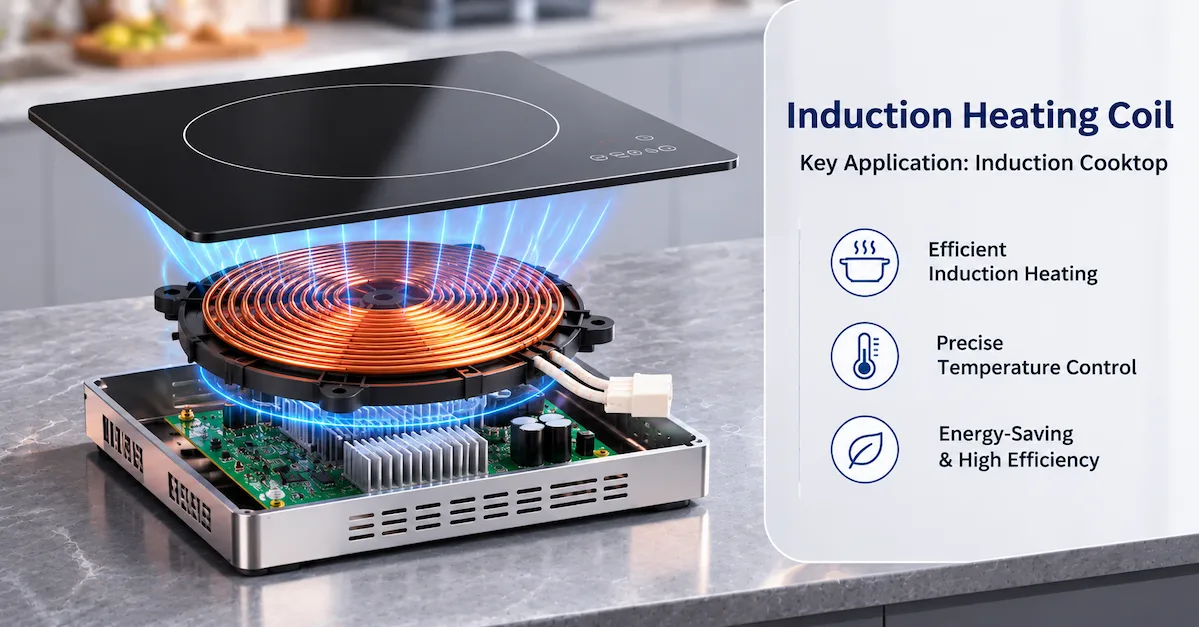
Induction Coil
-
Tube Heating Element
-
Ceramic Glass
-
Rotary Switch
-
Energy Regulator
For appliance manufacturers, these product categories provide opportunities to discuss several component purchasing requirements with one supplier.
WEBO's public single-burner and double-burner pan support references offer a starting point for assessing existing designs and discussing customized projects.
Buyers should request model-specific drawings, available production arrangements, quality documentation, packaging proposals, and current commercial quotations.
Prepare Your Bulk Order RFQ
| Required information | Details to provide |
|---|---|
| Appliance application | Gas stove, built-in hob, or approved replacement |
| Burner layout | Number and arrangement of burners |
| Product reference | Existing model, drawing, or sample |
| Quantity per appliance | Number of each required pan support |
| Material and finish | Approved specifications |
| Technical requirements | Dimensions, tolerances, and validation criteria |
| Order quantity | Required quantity per part number |
| Production schedule | First order and repeat-order forecast |
| Packaging | Individual or complete-set packing requirements |
| Destination | Delivery country and location |
Planning a large gas stove production program or purchasing cast iron pan supports for international distribution?
Send WEBO your drawings, appliance BOM, required quantities per model, and delivery schedule.
Request a quotation covering suitable configurations, customization feasibility, MOQ, inspection requirements, and bulk packaging.
Explore WEBO Cast Iron Pan Supports
Request Bulk Order Pricing and Technical Evaluation
13. Frequently Asked Questions
1. What should a bulk order gas stove pan support RFQ include?
Include approved drawings, burner layout, material, finish, quantity per appliance, order quantity per SKU, packaging requirements, and the expected delivery schedule.
2. How many pan supports are required for a gas stove?
The quantity depends on the approved appliance design. A two-burner gas stove may use two individual supports or one shared grate structure.
3. Can I order single-burner and double-burner pan supports together?
Mixed-model purchasing may be possible depending on available configurations, MOQ, and production arrangements. Request a quotation for each required part number.
4. What is the minimum order quantity for WEBO pan supports?
A verified universal MOQ is not publicly available. Buyers should request a project-specific MOQ based on the selected model, finish, customization, and order requirements.
5. Can a standard cast iron grate fit different gas stove models?
Only when compatibility has been verified. Similar appearance or burner count does not establish identical mounting geometry or suitable operating conditions.
6. How can buyers prevent inconsistent quality in bulk orders?
Establish approved drawings, sample references, material specifications, appearance criteria, inspection procedures, and batch identification before production.
7. What affects the price of cast iron pan supports?
Material, component weight, casting complexity, tooling, surface finishing, purchasing volume, inspection, packaging, and transportation can influence the quotation.
8. Can cast iron pan supports be shipped in complete appliance sets?
Complete-set packaging may be considered when the buyer supplies an approved BOM and packing specification. Supplier feasibility and associated costs should be confirmed.
9. How can OEM buyers reduce assembly-line shortages?
Calculate requirements for every individual part number, coordinate deliveries with production schedules, maintain appropriate reserves, and verify complete-set availability before assembly.
10. How can I request bulk pricing from WEBO?
Provide your product references, drawings, appliance configuration, required quantities, packaging needs, and delivery destination through the WEBO Contact Page.
Conclusion
A successful bulk order gas stove pan support program depends on more than purchasing large quantities at a competitive price.
Gas stove manufacturers and appliance-component buyers should calculate requirements by complete appliance set, confirm technical compatibility, approve representative samples, establish production inspection requirements, and coordinate deliveries with actual assembly schedules.
Accurate model identification and protective packaging can help reduce avoidable purchasing errors, transportation damage, and incomplete appliance sets.
WEBO, established in 1998, publishes single-burner and double-burner cast iron pan supports alongside other cooking appliance components.
Whether you are developing a new gas hob, planning a large OEM production order, or expanding your appliance-parts distribution portfolio, begin with a controlled specification and a model-by-model purchasing forecast.
Ready to discuss your next bulk gas stove pan support order?
View WEBO Cast Iron Pan Support Products or Contact WEBO for a Project-Specific Bulk Order Quotation with your drawings, quantities, quality requirements, and delivery schedule.