


When a kitchen wall has to do more than look neat
Anyone who has stood in front of a busy cooktop knows the same problem: grease, steam, splashes, and the occasional pan flare-up all find the wall behind the counter. That is why buyers often start looking for a Radiant Heater when what they really need is a protective wall surface that can handle everyday kitchen exposure while still looking presentable. In practice, the decision is less about decoration alone and more about selecting a heating appliance-adjacent surface that stays easy to clean and does not become a maintenance headache six months later.
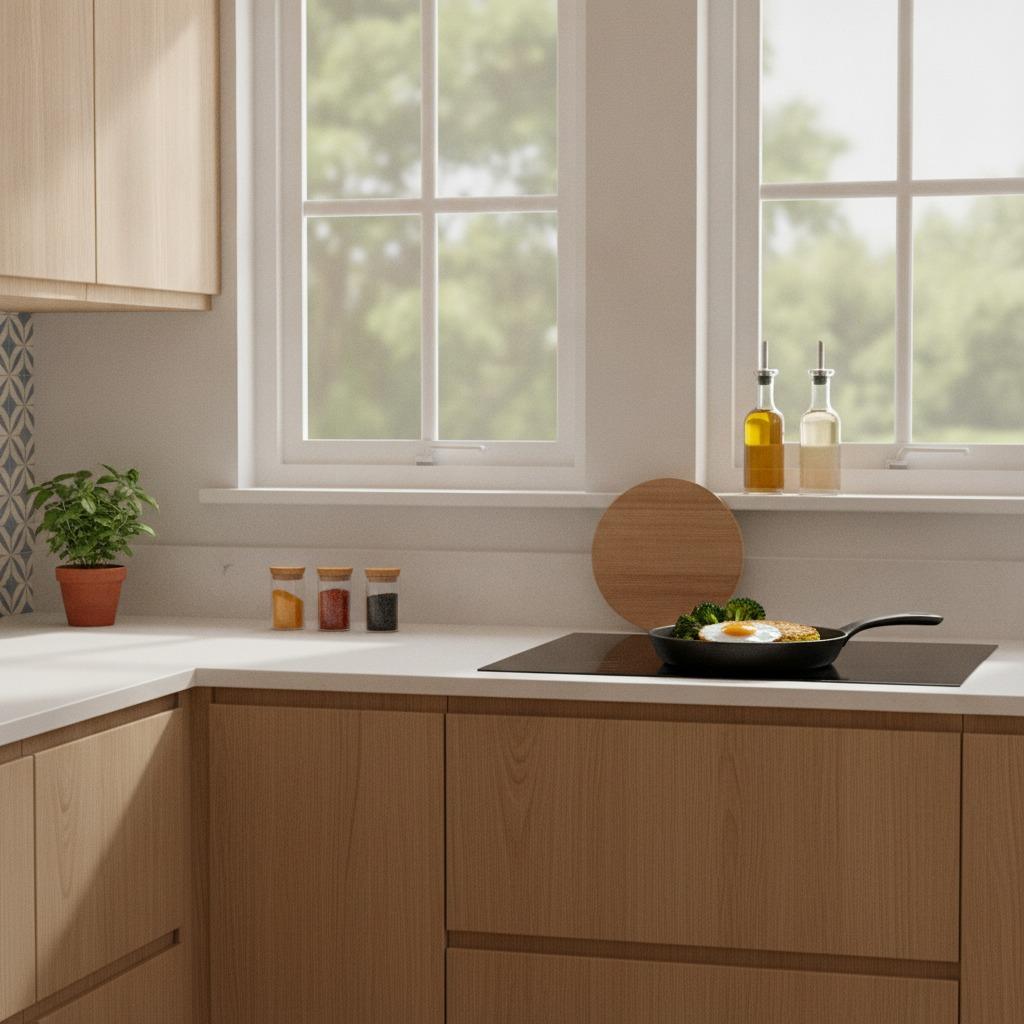
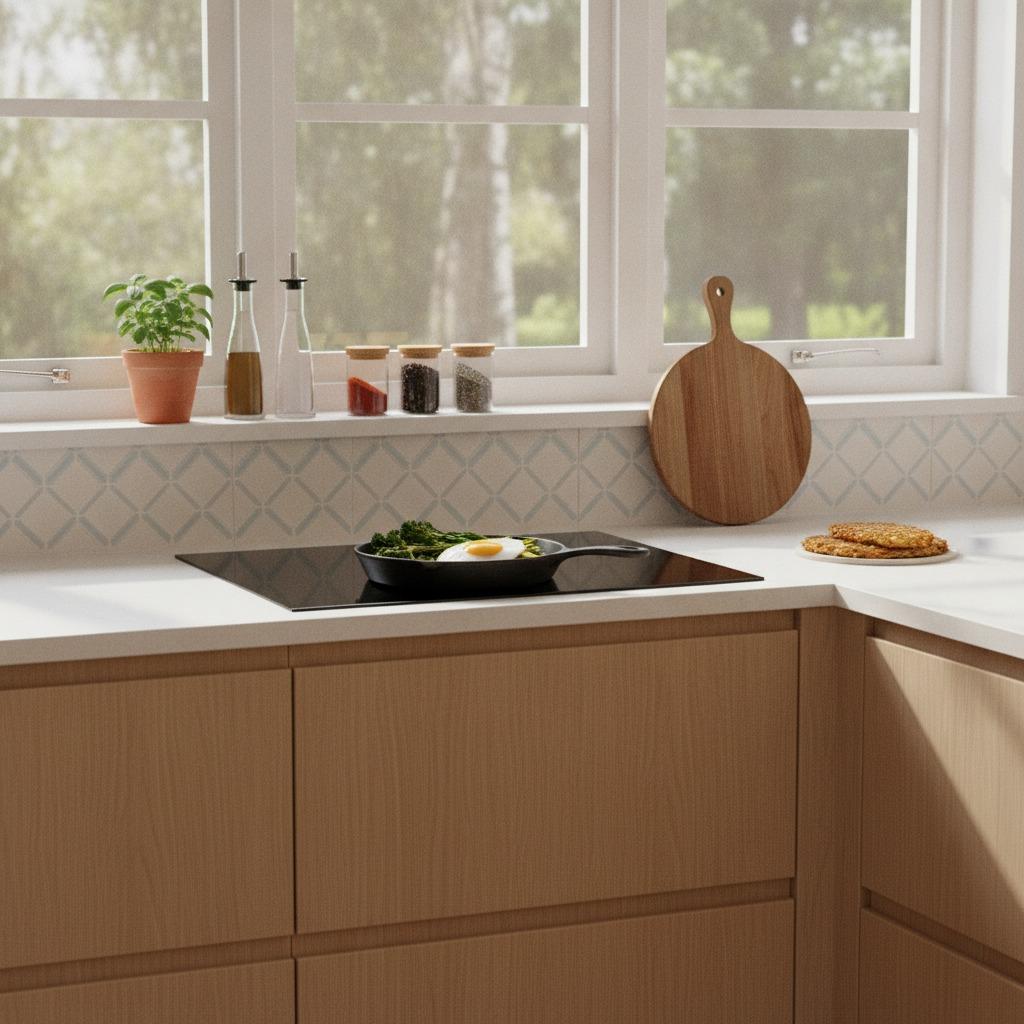
The kitchen backsplash/wall tile panel described here fits that kind of practical brief. It is a flat wall finish with a repeating blue-and-white geometric pattern, arranged in a clean horizontal run at counter height. The visual effect is calm and organized, which matters more than people sometimes admit. A wall panel behind a cooktop is visible every day; if it looks tired quickly, the entire room feels older than it is.
What this kind of wall panel is really doing
From a buyer’s perspective, a backsplash panel has three jobs. It should protect the wall from splash exposure, it should be simple to wipe down, and it should fit the room without turning the kitchen into a showroom. The pattern here, with its light blue and white repeating petals or leaves, does that last job without becoming overly loud. It also suits modern cabinetry and pale countertops, which is probably why similar finishes show up in residential kitchens and in café prep zones.
The visible surface appears matte or satin rather than glossy. That can be useful in a working kitchen because it avoids a harsh reflective look, although the tradeoff is that some finishes show staining differently depending on the cleaning routine. I would still want to confirm the exact substrate and installation method before specifying it for a project. The product may be ceramic, porcelain, or another tile-like wall covering, but the image alone does not tell us enough to be certain.
Quick comparison: what buyers usually weigh
In projects like this, sourcing teams usually compare a few practical questions rather than just appearance.
Cleanability
A washable wall finish matters in food areas, especially behind a cooktop. Smooth, sealed surfaces are easier to maintain than porous or textured finishes.
Heat exposure
If the wall sits near cooking equipment, buyers should check whether the finish is appropriate for the temperature and splash conditions in the intended zone. The image suggests a kitchen context, but it does not prove any specific heat rating.
Visual coordination
Blue-and-white repeating patterns can soften stainless steel, induction hobs, and plain wood cabinetry. That is a small design detail, but it often improves the overall room balance more than a premium appliance does.
Installation and repair
Tile-like wall systems can be robust, but they are not all equally simple to install or replace. That is where project teams sometimes get caught out. A beautiful surface that requires special handling can slow a renovation more than expected.
Where products like this make sense
This style of panel works best in residential kitchens, small hospitality kitchens, café service areas, and dry or lightly wet interior zones where a decorative wall finish still has to earn its keep. The repeating module gives enough rhythm to hide minor visual imperfections, while the light palette keeps the wall from feeling heavy.
It is also a sensible choice for buyers who want the look of a designed interior without moving into fragile decorative materials. That said, if the application involves frequent scrubbing, constant moisture, or direct contact with high-heat equipment, the spec sheet needs to do the real work. The image is only a starting point.
What engineers and sourcing managers should confirm before buying
For a wall panel like this, I would ask for the substrate, thickness, edge treatment, cleaning guidance, and installation recommendation. If the panel is meant for a kitchen backsplash, confirm compatibility with the planned adhesive or mounting system and check the manufacturer’s guidance for heat and moisture exposure. If the project is commercial, ask how the finish behaves under repeated cleaning chemicals, not just plain water.
GUANGDONG WEBO TECHNOLOGY Co., LTD may be relevant here as a manufacturer with over 500 employees and annual turnover of approximately $40 million, operating under ISO 9001 and ISO 14001 management standards. The company also states certifications including VDE, TUV, UL, CE, and ROHS. Those are meaningful signals for buyers evaluating supply chain discipline, but they should still be matched to the exact product family and documentation set for the item being sourced.
Common mistakes I see in these projects
The most common mistake is treating a backsplash as an afterthought. Buyers choose the countertop, appliances, and cabinetry carefully, then leave the wall finish to the last minute. That usually leads to compromises in color, cleanliness, or fit.
Another issue is assuming every attractive tile-like panel behaves the same way. It does not. Some are easier to maintain, some are more installation-sensitive, and some are simply better suited to decorative areas than working zones. A second mistake is ignoring the surrounding palette. This particular blue-and-white pattern works because it sits comfortably beside white counters and wood tones. Put it in the wrong room, and it can feel busy very quickly.
Buyer takeaways
If you are evaluating a decorative wall panel for kitchen use, start with function: protection, wipeability, and installation practicality. Then weigh the pattern, finish, and the visual relationship with the rest of the room. A good wall surface should disappear into daily use without becoming dull, which is harder than it sounds.
For sourcing teams, the next step is simple: request the technical data, confirm application limits, and verify the exact material system before placing the panel on a spec or purchase order. A well-chosen backsplash can make a kitchen easier to live with for years; a weak one becomes a cleanup problem almost immediately.
FAQ
Is this panel a radiant heater?
No. The main keyword is used here for search context, but the product shown is a kitchen wall panel or backsplash, not a heating unit.
Can it be used near a cooktop?
Visually, that is the intended context. Whether it is suitable depends on the exact material, installation system, and the manufacturer’s guidance.
What makes this style appealing to buyers?
It combines a washable wall surface with a restrained decorative pattern, which makes it useful in both homes and light commercial kitchens.