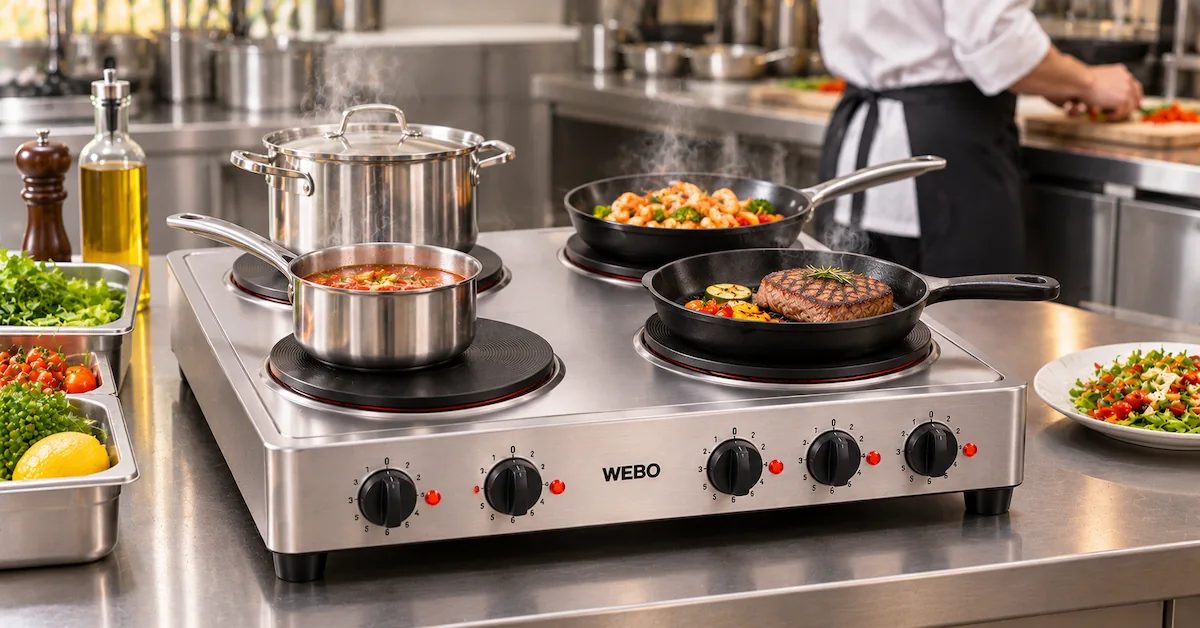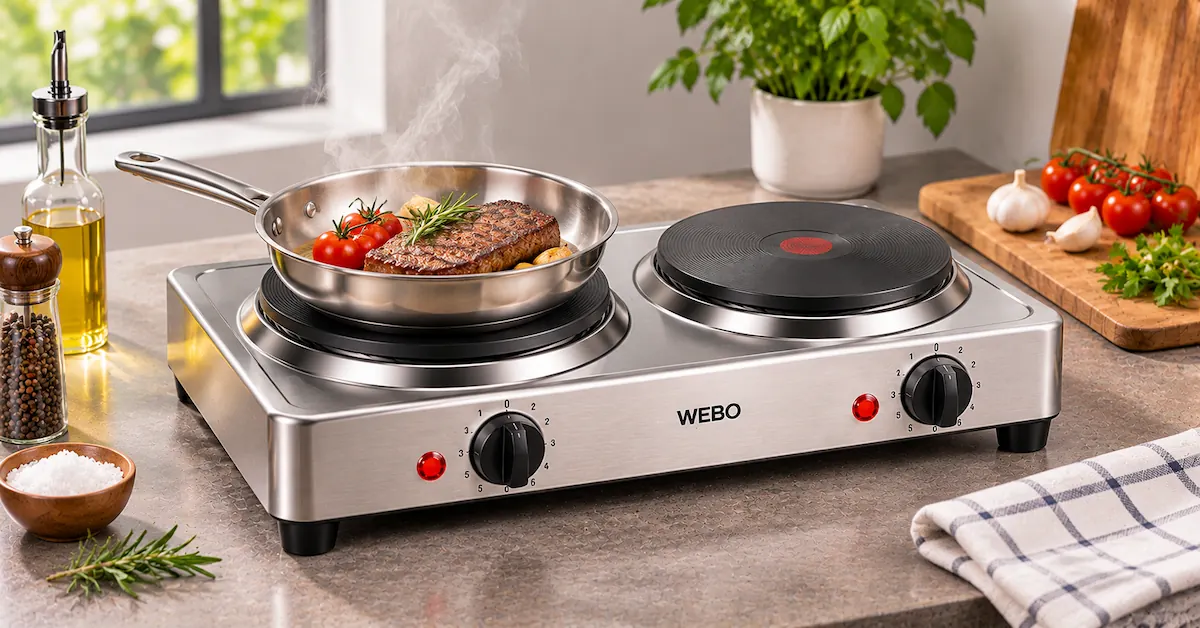



Quick Answer: A reliable cast iron hot plate wholesale supplier should help distributors purchase correctly specified heating components under commercially clear terms. Before ordering, buyers should confirm the material and electrical configuration, select an appropriate product assortment, compare quantity-based quotations, calculate landed cost per sellable unit, and agree on packaging, identification, and returns procedures. The lowest unit price is not always the most profitable wholesale option.
For appliance-parts importers and distributors, a successful wholesale program depends on two outcomes: products that customers can use and margins that remain profitable after purchasing, transportation, handling, and returns.
A heating plate that appears inexpensive at the factory may become costly if it requires repackaging, arrives with incomplete identification, or generates frequent wrong-part returns.
The risk increases when a distributor supplies multiple electric cooker brands or replacement-parts markets.
Different heating plates may have similar appearances but use different electrical configurations, terminals, installation dimensions, or materials.
If those differences are not clearly identified, downstream dealers may order the wrong component, even when the shipment itself meets the supplier's original specification.
This makes product assortment planning, accurate quotations, and channel management important parts of selecting a wholesale partner.
WEBO, officially GUANGDONG WEBO TECHNOLOGY CO., LTD, is a China-based manufacturer of electric heating elements and cooking appliance components established in 1998.
Its published Hot Plate range includes products in nominal 90mm, 110mm, and 145mm categories.
These models offer starting points for international sourcing discussions. However, the exact cast iron construction, electrical ratings, wholesale prices, and minimum order quantities must be confirmed for the selected products.
This guide explains how wholesale buyers can build a commercially viable distribution program without compromising product identification or purchasing control.
Explore WEBO's Electric Hot Plate Range for available product references.
Key Takeaways for Wholesale Buyers
-
Buy for a defined sales channel. Appliance manufacturers, repair-parts dealers, and general wholesalers have different product information and packaging needs.
-
Do not select by diameter alone. Material, electrical ratings, terminals, and installation details must match the intended application.
-
Compare mixed-model quotations carefully. Confirm whether quantity discounts and minimum order requirements apply to individual SKUs or the entire purchase order.
-
Calculate landed margin. Include relevant freight, duties, handling, inspection, and expected claims costs.
-
Control product identification. Accurate SKU, carton, and optional barcode information helps reduce channel errors.
-
Agree on claims procedures. Define what happens when goods are damaged, incorrectly identified, or do not meet approved specifications.
1. What Does a Cast Iron Hot Plate Wholesale Supplier Provide?
A cast iron hot plate wholesale supplier supplies heating plate components in commercial quantities for resale, appliance manufacturing, or parts distribution.
However, the term can describe different products.
Some buyers use it to refer to a complete countertop electric cooker. Others mean the cast iron or solid heating plate installed inside an appliance.
These products require different specifications, packaging, and market-entry arrangements.
Product Type Comparison
| Product type | Main function | Typical wholesale buyer |
|---|---|---|
| Cast iron electric heating plate | Transfers electrically generated heat to cookware | Appliance-parts distributor |
| Solid electric hot plate component | Heating assembly for electric cooking appliances | OEM manufacturer or parts wholesaler |
| Complete countertop hot plate | Finished electric cooking appliance | Retail-product importer |
| Cast iron pan support | Supports cookware on gas cooking equipment | Gas stove parts distributor |
WEBO separately lists Hot Plate and Cast Iron Pan Support.
Buyers must distinguish these categories before requesting a quotation.
The material construction of a specific electric hot plate should also be verified rather than assumed from its appearance.
Who Is This Wholesale Model Suitable For?
The primary target buyers are importers supplying appliance-parts wholesalers, distributors selling to repair networks, and companies purchasing heating components for resale to qualified appliance assemblers.
It is less suitable for buyers seeking a universally compatible replacement component or a fully certified retail cooker without conducting the necessary product-specific assessment.
2. How Should Distributors Build a Profitable Hot Plate Product Assortment?
A wholesale assortment should reflect customer demand and verified technical requirements.
Importers sometimes purchase several heating plate sizes because they expect a broader catalog to attract more buyers.
However, adding product models without confirmed demand increases purchasing complexity.
A smaller, well-documented assortment can be easier to sell and support than a large inventory of poorly identified components.
WEBO Hot Plate Product References
| Product reference | Published nominal diameter | Possible distribution consideration | Information to confirm |
|---|---|---|---|
| HP-F90 | 90mm | Compact heating-component inquiries | Material, power, voltage, terminals |
| HP-F110 | 110mm | Intermediate heating-zone inquiries | Dimensions, ratings, intended application |
| HP-F145 | 145mm | Larger heating-zone inquiries | Construction, mounting, compatibility |
These are published WEBO model references, not confirmation of cast iron material, identical performance, or interchangeability.
Three Assortment Groups
Confirmed-demand products: Components already requested by established customers or required for approved appliance programs.
Evaluation products: Models undergoing compatibility assessment or sample testing.
Expansion products: Additional configurations considered for future customers but not yet supported by sufficient demand evidence.
This distinction allows distributors to prioritize commercially justified products without assuming that every available size should be stocked immediately.
3. What Technical Information Must Every Wholesale SKU Contain?
A product catalog should contain enough information for dealers and purchasing customers to identify the correct heating component.
Nominal diameter alone is insufficient.
Distributor Product Data Sheet
| Product information | Why wholesalers need it |
|---|---|
| Supplier model number | Accurate factory ordering |
| Distributor SKU | Internal inventory identification |
| Material and construction | Product description accuracy |
| Nominal diameter | Initial size selection |
| Overall dimensions | Installation assessment |
| Rated voltage | Electrical compatibility |
| Rated wattage | Appliance design compatibility |
| Terminal arrangement | Wiring identification |
| Mounting geometry | Fit verification |
| Product revision | Configuration control |
| Packaging quantity | Warehouse and sales units |
| Applicable documentation | Customer technical inquiries |
If any critical information is unavailable, the distributor should identify it as pending confirmation rather than inventing a specification.
Prevent Misleading Compatibility Claims
A reseller should not describe a component as "universal fit" simply because it matches a common nominal diameter.
Replacement compatibility depends on the approved appliance configuration.
Similarly, a loose heating component should not be marketed as a complete consumer-ready appliance.
Accurate product information can help prevent costly returns and customer complaints.
4. How Should Wholesale Buyers Compare Mixed-Model Quotations?
Quantity-based pricing often plays an important role in wholesale purchasing.
However, the lowest quoted price may depend on conditions that are not immediately obvious.
For example, a supplier may provide one price when a buyer orders a large quantity of a single model and another price for a smaller mixed assortment.
Questions to Ask About Quantity Pricing
| Quotation item | Question for the supplier |
|---|---|
| MOQ | Is the minimum based on each model or the total order? |
| Price break | Are discounts calculated per SKU or across combined quantities? |
| Carton multiple | Must orders match full inner or master cartons? |
| Mixed-model order | Can different approved configurations share one purchase order? |
| Custom packaging | Is there a separate setup or minimum quantity? |
| Sample cost | Are samples priced separately? |
| Tooling | Are modifications or tooling charged independently? |
| Freight basis | Which delivery terms apply? |
| Payment | What are the agreed payment conditions? |
| Repeat-order pricing | How are future price adjustments handled? |
Illustrative Quantity-Tier Example
The following figures are hypothetical and do not represent WEBO pricing.
| Order structure | Illustrative unit price | Purchasing consideration |
|---|---|---|
| 200 units of one model | $5.40 | Lower initial commitment |
| 500 units of one model | $5.10 | Moderate purchasing volume |
| 1,000 units of one model | $4.85 | Larger inventory commitment |
| 1,000 units across three models | To be quoted | Depends on mixed-SKU rules |
The lowest unit price is not automatically the best choice.
If the distributor cannot sell the additional inventory within a commercially acceptable period, a larger order may increase financing and storage costs.
Purchasing recommendation: Request separate quotations for your expected product mix and your preferred single-model purchasing quantities.
5. How Do You Calculate Wholesale Landed Cost and Distributor Margin?
Wholesale profitability should be measured after considering the costs required to obtain and sell usable inventory.
A practical planning formula is:
Estimated Trading Margin = (Net Wholesale Selling Price − Estimated All-in Unit Cost) ÷ Net Wholesale Selling Price × 100%
The all-in unit cost can include relevant product purchasing costs, transportation, nonrecoverable duties, inspection, receiving, and an allowance for expected claims.
Actual accounting treatment varies by business and jurisdiction.
Illustrative Landed-Cost Calculation
Suppose a distributor is evaluating one heating plate configuration.
| Cost component | Illustrative amount per unit |
|---|---|
| Factory purchase price | $5.00 |
| International freight and insurance | $0.65 |
| Import duties and clearance allocation | $0.45 |
| Receiving, inspection, and handling | $0.25 |
| Expected claims allowance | $0.40 |
| Estimated all-in unit cost | $6.75 |
| Planned net wholesale selling price | $9.00 |
The estimated trading margin is:
($9.00 − $6.75) ÷ $9.00 × 100% = 25%
The corresponding markup on estimated cost is approximately 33.3%.
Margin and markup are different measures and should not be confused.
All prices, costs, and assumptions in this example are illustrative.
Why This Calculation Matters
A distributor comparing factory quotations should consider whether lower purchasing prices compensate for additional handling, packaging, returns, or inventory risks.
A quotation with a slightly higher unit price may still be commercially attractive if it better satisfies the distributor's approved requirements.
Conversely, a low-priced component may become unprofitable when customer returns or fulfillment costs are high.
6. What Packaging Is Appropriate for Wholesale Distribution?
Wholesale packaging should protect the product and allow the receiving warehouse to identify it correctly.
Heating plates can have exposed metal surfaces and electrical connection features that require appropriate protection.
The exact packaging method depends on the product construction and agreed transport conditions.
Packaging Levels
| Packaging level | Main purpose | Information to confirm |
|---|---|---|
| Individual protection | Prevent unacceptable surface and terminal damage | Protective materials |
| Inner packaging | Organize components for handling | Units per inner pack |
| Master carton | Support bulk transport and storage | Quantity, dimensions, weight |
| Pallet or logistics unit | Support larger shipment handling | Stacking and identification |
| Distributor labeling | Support inventory and customer fulfillment | SKU, model, quantity, batch |
When Are GS1 Barcodes Relevant?
Distributors serving structured retail or wholesale networks may need standardized item identifiers.
According to the GS1 explanation of Global Trade Item Numbers, a GTIN uniquely identifies trade items that may be ordered, priced, or invoiced in supply chains.
Different trade items require appropriate identification.
For distributors, this can help distinguish product configurations across purchasing, warehousing, and sales systems.
However, not every industrial component shipment requires a GTIN.
An internal SKU may be appropriate for certain B2B arrangements, while customer systems may require additional barcode standards.
Ask the supplier whether the agreed identification and labeling requirements can be supported. Do not assume barcode or private-label services are automatically included in the quotation.
7. How Can Wholesalers Reduce Product Returns and Warranty Disputes?
Returns can substantially affect distributor profitability.
However, not every return indicates that the supplied component is defective.
A component may fail to fit because the dealer ordered an incorrect configuration.
Other problems may result from transportation damage, documentation errors, or genuine manufacturing nonconformities.
Wholesale Claims Responsibility Matrix
| Issue | Information to verify | Recommended handling |
|---|---|---|
| Incorrect model shipped | PO, packing list, product labels | Investigate order fulfillment discrepancy |
| Transport damage | Carton condition and receiving records | Review carrier and contractual responsibility |
| Wrong customer selection | Ordered specification vs. application | Review distributor product information |
| Electrical nonconformity | Approved ratings and test results | Technical investigation |
| Dimensional nonconformity | Approved drawing and measurements | Inspection and corrective action |
| Unapproved product revision | Change records and delivered part number | Supplier-customer review |
| Slow-moving inventory | Sales and purchasing records | Commercial stock management |
The buyer and supplier should define the claims process contractually.
What Should a Wholesale Claims Agreement Cover?
A practical agreement may identify the claim notification period, supporting evidence, inspection procedure, replacement or credit conditions, freight responsibilities, and escalation process.
It should also distinguish manufacturing defects from damage after the agreed delivery point and from incorrect end-customer selection.
Why Batch Identification Matters
If a problem affects a particular production lot, batch records can support investigation and prevent unnecessary rejection of unrelated stock.
For wholesale distributors, this is especially valuable when similar components are sold to multiple customers.
8. Which International Shipping Terms Should Buyers Compare?
International wholesale quotations should state the applicable delivery basis.
Two unit prices cannot be compared fairly when transportation and delivery responsibilities differ.
The International Chamber of Commerce Incoterms® 2020 rules clarify the allocation of certain delivery obligations, costs, and risks between buyers and sellers.
For example, FCA, FOB, CIF, and DAP can involve different responsibilities.
The appropriate term depends on the shipment method and commercial arrangement.
For containerized or multimodal shipments, buyers should consider the relevant rule carefully instead of automatically requesting FOB.
Wholesale Quotation Checklist
A comparable quotation should identify:
-
The exact heating plate specification
-
Purchase quantity and packaging
-
Currency and price validity
-
Named delivery place and applicable Incoterm
-
Transport method and shipment assumptions
-
Payment conditions
-
Inspection and claims arrangements
Incoterms do not replace the full sales contract and do not establish product compliance or warranty obligations.
Importers must also determine the correct customs classification and applicable import requirements for their destination market.
9. How Can Distributors Evaluate the Risk of Unsold Inventory?
Buying more heating plates may reduce the quoted unit cost, but it can increase inventory exposure.
Wholesale businesses should consider the likelihood that products will remain commercially relevant.
Common Inventory Risks
| Risk | Potential impact | Recommended response |
|---|---|---|
| Unverified customer demand | Excess stock | Prioritize confirmed sales requirements |
| Too many similar variants | Fulfillment complexity | Maintain accurate product identification |
| Product revision changes | Obsolete inventory | Monitor configuration changes |
| Poor market documentation | Limited resale opportunities | Confirm customer technical requirements |
| Excessive minimum order | Capital tied up in stock | Compare order structures |
| Inappropriate packaging | Higher handling cost | Agree on channel-ready packaging |
A Better Assortment Decision
A distributor might initially focus on components associated with confirmed customer requirements rather than ordering every available model.
Additional products can be evaluated when new inquiries justify the purchasing commitment.
This approach is particularly important for specialized heating components that cannot be substituted freely.
The objective is not simply to maximize the number of SKUs.
It is to maintain a product assortment that customers can identify, purchase, and use correctly.
10. What Quality and Compliance Information Should Wholesale Buyers Request?
Wholesalers need sufficient documentation to support accurate sales and downstream customer inquiries.
However, a product-specific certificate should not be assumed from general company marketing information.
Recommended Documentation
| Document | Commercial value |
|---|---|
| Product datasheet | Accurate catalog information |
| Technical drawing | Supports component identification |
| Material specification | Verifies required construction |
| Electrical test information | Supports customer technical review |
| Relevant conformity documentation | Helps assess market requirements |
| Inspection criteria | Defines supplied quality expectations |
| Batch identification | Supports claims investigation |
| Product change notification | Helps maintain catalog accuracy |
WEBO's company materials reference ISO 9001 and ISO 14001 management standards, along with VDE, TÜV, UL, CE, and RoHS.
The applicability of any certification or conformity evidence must be verified against the exact model and destination requirements.
A loose heating plate component should not automatically be represented as a fully certified finished cooker.
Similarly, a wholesaler should not advertise a particular cast iron material grade unless the supplier can substantiate it.
11. Why Consider WEBO for Wholesale Hot Plate Sourcing?
WEBO was established in 1998 and supplies electric heating elements and related appliance components.
Its published portfolio includes Hot Plate, Ceramic Heater, Tube Heating Element, Cast Iron Pan Support, Induction Coil, Ceramic Glass, Rotary Switch, and Energy Regulator.
This product range may be relevant to distributors sourcing several related appliance-component categories.
For example, a distributor serving electric cooker manufacturers may receive inquiries for both heating plates and associated controls.
WEBO also publishes Rotary Switch and Energy Regulator categories.
The technical suitability and commercial availability of each component must be assessed individually.
According to its published company information, WEBO operates in Yangjiang, Guangdong Province, China, and serves international markets.
Its company history and product portfolio provide a basis for initial supplier discussions.
However, current wholesale prices, cast iron specifications, MOQ, available stock, packaging services, model-specific certification, and lead times require confirmation.
Learn more about WEBO's Company Background.
12. What Should You Include in a Wholesale Hot Plate RFQ?
A useful wholesale quotation should reflect the products you intend to sell and the conditions under which you will distribute them.
Distributor RFQ Template
| RFQ field | Information to submit |
|---|---|
| Buyer business | Importer, wholesaler, or parts distributor |
| Destination market | Country and receiving location |
| Product type | Loose heating plate or finished appliance |
| Material requirement | Cast iron specification, if required |
| Model references | HP-F90, HP-F110, HP-F145, or buyer specification |
| Electrical ratings | Required voltage and wattage |
| Mechanical requirements | Drawings, terminals, mounting |
| Product mix | Quantity for each approved SKU |
| Price quotation | Requested quantity tiers |
| MOQ | Per-SKU and combined-order clarification |
| Packaging | Inner packs, cartons, labels, barcodes |
| Documentation | Technical and market-related requirements |
| Order plan | Trial quantity and expected repeat purchasing |
| Shipping | Preferred delivery term and named location |
| Claims | Proposed inspection and return procedures |
Request a Wholesale Quotation from WEBO
Looking for a cast iron hot plate wholesale supplier for appliance-parts distribution, electric cooker manufacturing, or international resale?
Start with your customer applications, required component specifications, expected product mix, and estimated purchasing volume.
Ask WEBO to verify which products meet your material and technical requirements.
Then request pricing for the proposed quantities, along with available packaging, documentation, and delivery conditions.
Explore WEBO's Hot Plate Product Range
Contact WEBO for Wholesale Pricing and Product Information
13. Frequently Asked Questions
1. What does a cast iron hot plate wholesale supplier sell?
A wholesale supplier may offer cast iron electric heating components or complete electric cooking appliances. Buyers should specify the product type and verify the material, electrical configuration, and intended application before ordering.
2. Does WEBO offer cast iron hot plates for wholesale sourcing?
WEBO publishes solid electric hot plate products and serves international B2B customers. The cast iron construction and wholesale availability of any specific model should be confirmed directly.
3. What electric hot plate sizes does WEBO publish?
WEBO lists HP-F90, HP-F110, and HP-F145 within nominal 90mm, 110mm, and 145mm categories. Other electrical and mechanical specifications require verification.
4. Can I order different hot plate models in one wholesale shipment?
A mixed-model order may be commercially possible, but the supplier must confirm accepted SKU combinations, minimum order requirements, packaging arrangements, and pricing.
5. How are wholesale hot plate prices calculated?
Prices may depend on the model, material, electrical configuration, order quantity, customization, packaging, inspection, and delivery terms. Request quotations using the same purchasing assumptions.
6. How do I calculate distributor profit margin?
Subtract estimated all-in unit cost from the net selling price, then divide by the net selling price. Include relevant purchasing, logistics, and expected claims costs for a practical commercial estimate.
7. What packaging should wholesale heating plates use?
Packaging should protect the approved components and support accurate product identification. The buyer should confirm carton quantities, terminal protection, labeling, and transportation requirements.
8. Do wholesale hot plates need GS1 barcodes?
Not all B2B components require GS1 identifiers. Requirements depend on customer systems, sales channels, and the type of trade item being supplied. Confirm barcode requirements before placing an order.
9. Can WEBO discuss OEM or private-label wholesale requirements?
WEBO's published materials describe OEM and ODM-related services. The availability of specific product modifications, labels, custom packaging, and related commercial terms should be verified for each project.
10. How can I request a wholesale quotation from WEBO?
Provide your intended application, required product construction, electrical specifications, quantity by model, destination market, packaging requirements, and desired shipping terms. Submit these through the WEBO Contact Page.
Conclusion
Choosing a suitable cast iron hot plate wholesale supplier requires a commercial strategy that connects product specifications with distributor profitability.
For appliance-parts wholesalers and importers, the most valuable supplier relationship is not necessarily the one offering the lowest initial unit price.
Buyers should evaluate whether the product assortment matches confirmed customer requirements, whether different configurations can be identified accurately, and whether the total landed cost supports an acceptable selling margin.
Mixed-model quotation terms, carton quantities, labeling, technical documentation, and agreed claims procedures can influence the true cost of a wholesale program.
WEBO, established in 1998, manufactures electric heating elements and related appliance components. Its published Hot Plate range includes HP-F90, HP-F110, and HP-F145, providing product references for preliminary sourcing discussions.
The exact cast iron construction, model specifications, wholesale MOQ, quantity discounts, packaging options, and delivery conditions should be confirmed before purchasing.
Planning a wholesale electric hot plate product line or expanding your appliance-parts distribution business?
Share your required specifications, target market, proposed SKU mix, estimated purchasing volume, and packaging requirements with WEBO.
View WEBO Hot Plate Products or Request a Wholesale Supply Quotation to discuss your next distribution project.