


What Should a Cast Iron Stove Grate OEM Manufacturer Actually Provide?
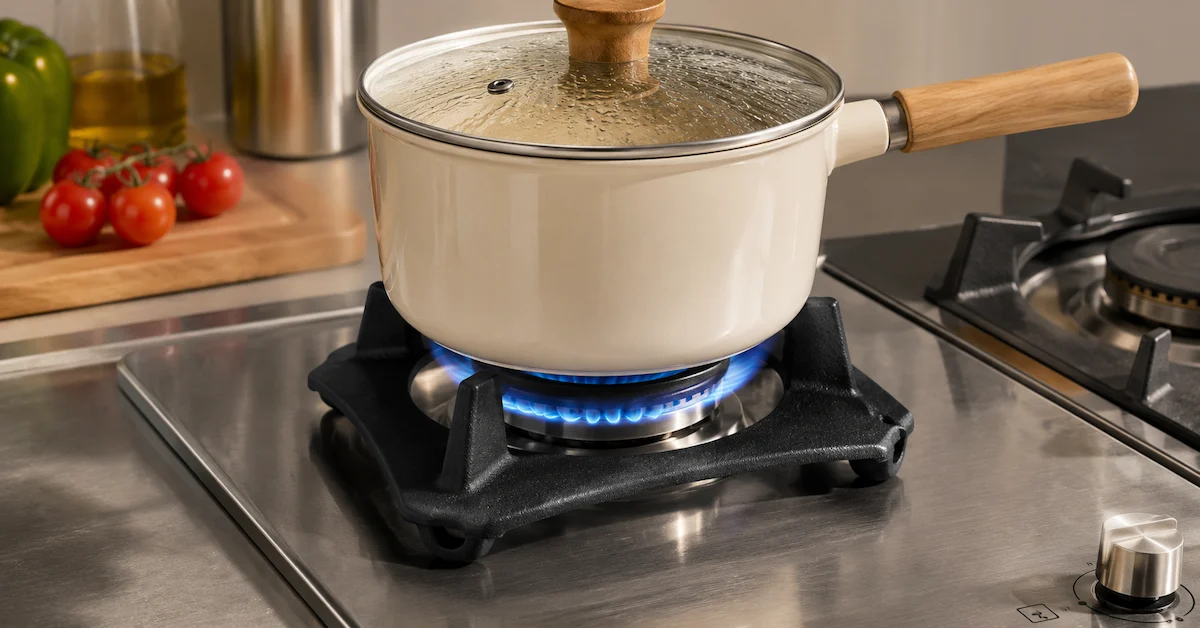
A cast iron stove grate OEM manufacturer should do more than copy the visible shape of an existing grate. For appliance brands, the real objective is to convert a drawing, reference sample, burner layout, or new stove concept into a repeatable component that fits the appliance and can be reproduced consistently in mass production.
A serious OEM program therefore involves several connected stages:
- Application and drawing review
- Material and structure confirmation
- Tooling or mold development where required
- Prototype production
- Fit and functional validation
- Drawing revision control
- Quality-control definition
- Trial and mass production
- Export packaging
WEBO currently groups its cast iron pan support range into Single Burner, Double Burner, and Cast Iron Grate Grids, giving OEM buyers several existing structural directions to evaluate before developing a completely new design.
For buyers, the key question is not simply:
Can you cast this shape?
It is:
Can you reproduce the approved geometry, material, finish and critical dimensions consistently across future orders?
Who Needs OEM Cast Iron Stove Grates?
OEM production is most valuable when an existing catalog grate does not correctly match the finished appliance.
Typical buyers include:
- Gas stove manufacturers
- Built-in hob brands
- Freestanding cooker manufacturers
- Commercial cooking-equipment companies
- Private-label appliance brands
- Gas grill manufacturers
- Importers developing proprietary models
- Replacement-part companies controlling their own specifications
OEM Is Best When You Need Product-Specific Compatibility
Consider OEM production when your project requires:
- Unique burner spacing
- Custom overall dimensions
- Specific pan-support height
- Proprietary contact points
- Different grate geometry
- Target weight or structural requirements
- Customer-defined surface finish
- Dedicated packaging
- Repeat production under a controlled drawing
When OEM May Not Be Necessary
A standard product can be more economical when an existing grate already matches your:
- Burner arrangement
- Dimensions
- mounting/contact points
- appearance requirements
- application
This distinction matters because unnecessary tooling increases development cost and project time.
A capable manufacturer should first check whether an existing platform can be adapted before recommending a completely new mold.
Start the OEM Project With the Appliance, Not Just the Grate Drawing
A grate drawing tells the factory what the part looks like.It does not always explain how it interacts with the stove.
Before tooling or sampling, the manufacturer should understand:
- Appliance type
- Number and position of burners
- Burner diameter
- Distance between flame and grate
- Cookware types
- Grate support points
- Adjacent glass or metal surfaces
- Target market
- Expected order volume
This context helps identify dimensions that are genuinely critical.
For example, an outer dimension may have some manufacturing tolerance, while the feet or support points that contact the cooktop may require much tighter control.
What Should Be Defined on an OEM Stove Grate Specification?
Do not approve mass production from a photograph alone.
A useful OEM specification should define both functional and cosmetic requirements.
| Item | Buyer Should Confirm | Why It Matters |
|---|---|---|
| Overall dimensions | Length,width or diameter | Determines appliance fit |
| Grate height | Finished support height | Affects cookware position |
| Burner opening | Size and location | Prevents burner interference |
| Support points | Position and geometry | Controls stability |
| Material | Required cast iron specification | Controls engineering requirement |
| Weight | Target or acceptable range if critical | Affects structure and cost |
| Surface finish | Coating/enamel/finish requirement | Affects appearance and use |
| Flatness | Acceptance requirement | Helps prevent rocking |
| Critical tolerances | Drawing-defined | Controls assembly |
| Packaging | Individual/bulk/export | Protects finished surfaces |
| Drawing revision | Version number | Prevents wrong-version production |
Define the Material Requirement Instead of Saying Only “Cast Iron”
“Cast iron” is a material family rather than a complete engineering specification.
If a buyer requires a specific gray-iron grade or mechanical requirement, it should be written into the drawing or purchase specification.
For example, ASTM A48/A48M covers gray iron castings for general engineering applications and classifies castings by tensile-strength requirements. Its requirements also address visual defects such as adhering sand, scale, cracks and hot tears. That does not mean every stove grate must use ASTM A48; it illustrates why B2B buyers should define the required material standard rather than assume all cast iron is equivalent.
ASTM A48/A48M gray iron standard
How an OEM Cast Iron Stove Grate Project Should Progress
A controlled development process helps reduce expensive corrections after tooling and mass production.
Step 1: Send the Application and Technical Inputs
A useful RFQ should include:
- Stove or grill application
- 2D drawing or CAD data
- Reference sample if available
- Burner layout
- Required dimensions
- Quantity forecast
- Surface requirement
- Target market
- Packaging requirement
If you do not yet have a finished drawing, identify which parameters are still open rather than guessing them.
Step 2: Manufacturer Reviews Manufacturability
The manufacturer should evaluate whether the design presents risks involving:
- Thin or uneven sections
- Difficult casting geometry
- Weak structural areas
- Difficult grinding locations
- Excessively tight tolerances
- Unstable support points
- Tooling complexity
This stage can prevent a design that works in CAD but is difficult to manufacture consistently.
Step 3: Freeze the First Sample Specification
Before sampling, both sides should confirm:
- Drawing number
- Revision
- Material requirement
- Critical dimensions
- Appearance criteria
- Surface treatment
- Packaging direction
A controlled drawing is much safer than specifications spread across multiple emails.
Step 4: Develop the Tooling and Sample
Where a new casting design requires dedicated tooling, the sample stage should verify not just appearance but actual appliance compatibility.
The sample should be installed on the intended stove or representative assembly.
Step 5: Validate the Sample in the Real Application
Check:
- Does the grate sit flat?
- Are all support points correctly positioned?
- Does it interfere with the burner?
- Is cookware stable?
- Is the finished height correct?
- Does it contact the surrounding cooktop correctly?
- Is the surface appearance acceptable?
- Does repeated heating reveal dimensional or finish issues?
A sample that looks correct on a table may still fail during assembly.
Step 6: Record Revisions
If changes are needed, update the drawing.
Do not rely on notes such as:
“Use the second sample but move this leg slightly.”
Each accepted change should appear in the current controlled revision.
Step 7: Approve a Final Reference
The approved drawing and physical sample can serve as production references.
This gives both buyer and manufacturer a clearer basis for resolving future quality questions.
What Quality Controls Matter for OEM Stove Grates?
Quality control should focus on characteristics that affect the buyer's final appliance.
Incoming Material Control
The manufacturer should control the material against the agreed specification.
If a material grade, source or equivalent requirement is critical, define it before production rather than after a problem occurs.
Casting Inspection
Potential casting issues that buyers may want controlled include:
- Cracks
- Incomplete areas
- Excessive flash
- Visible inclusions
- Surface defects
- Distortion
The acceptance standard should match the part's functional and cosmetic requirements.
Dimensional Inspection
Critical dimensions can include:
- Outer dimensions
- Burner clearances
- Feet/contact positions
- Support height
- Spacing
- Flatness
Not every dimension needs the same tolerance.
A better drawing identifies the dimensions that actually influence assembly and performance.
Surface and Finish Inspection
Depending on the agreed product specification, inspection may address:
- Uniform appearance
- Coverage
- Visible defects
- Contact surfaces
- Edge condition
Avoid vague acceptance criteria such as “good quality.”
Specify what is acceptable.
Sample Approval Is Not Enough—Control the Mass-Production Risk
One of the biggest OEM risks occurs after a good prototype has been approved.
A manufacturer may deliver an excellent sample, but repeat orders still require process discipline.
Buyers should ask how the supplier controls changes to:
- Material
- Mold
- dimensions
- surface process
- subcontracted processes
- packaging
Establish Change Control
If a critical design, material or process changes, the manufacturer should determine whether buyer approval or revalidation is required.
For an appliance brand planning several years of production, this is more valuable than judging the supplier from a single sample.
OEM vs Standard Cast Iron Stove Grates
| Factor | Standard Product | OEM Stove Grate |
|---|---|---|
| Starting point | Existing model | Buyer/project requirement |
| Dimensions | Fixed | Project-specific |
| Burner layout | Existing design | Matched to appliance |
| Tooling | Usually existing | May require new tooling |
| Development time | Lower | Higher |
| Sample validation | Basic | Essential |
| Design ownership/control | Limited | Higher |
| Best for | Common applications | Proprietary stove models |
OEM manufacturing makes sense when compatibility and differentiation create enough value to justify development.
If your requirement can be met by an existing WEBO product, reviewing the current Cast Iron Pan Support range first may reduce unnecessary development work.
View WEBO Cast Iron Pan Support products
What Affects OEM Cast Iron Stove Grate Cost?
There is no meaningful universal OEM price because several project variables affect both tooling and unit cost.
Major cost drivers include:
- Casting weight
- Overall size
- Geometry complexity
- Material specification
- Tooling requirement
- Tolerance level
- Surface treatment
- Inspection requirement
- Packaging
- Order quantity
Separate Tooling Cost From Unit Price
This is important when comparing quotations.
Supplier A may quote:
- Lower tooling
- Higher unit cost
Supplier B may quote:
- Higher tooling
- Lower unit cost
The better commercial choice depends on your expected production volume and tooling life assumptions.
Compare the Same Specification
A lower quote is not automatically cheaper if it uses:
- Different material
- Different finished weight
- Wider tolerances
- Different finish
- Less inspection
- Different packaging
For meaningful comparison, send the same controlled RFQ to each candidate.
What Should Buyers Ask Before Selecting an OEM Manufacturer?
Use this supplier-evaluation checklist before approving tooling.
| Buyer Question | What It Helps Verify |
|---|---|
| Can you review our drawing before quotation? | Engineering involvement |
| Can an existing design be adapted? | Development efficiency |
| Who owns and maintains the tooling? | Long-term control |
| How are critical dimensions inspected? | Production consistency |
| How are sample revisions documented? | Change control |
| What happens if material/process changes? | Supply risk |
| Can you support trial and repeat orders? | Production scalability |
| How is export packaging defined? | Shipping protection |
A supplier that answers these questions clearly gives buyers more decision value than one that only sends a unit price.
Why Consider WEBO for Cast Iron Stove Grate OEM Projects?
GUANGDONG WEBO TECHNOLOGY states that it was established in 1998 in Yangjiang, Guangdong, operates approximately 50,000 square meters of manufacturing space and has more than 500 workers. Its current product portfolio includes Cast Iron Pan Support, Hot Plate, Ceramic Heater, Tube Heating Element, Induction Coil, Ceramic Glass, Rotary Switch and Energy Regulator.
The company also states that it implements ISO 9001 and ISO 14001 management standards.Buyers should still verify which certificates, inspection documents and product requirements apply to the exact cast iron grate project, rather than assuming a company-level or other-product certificate automatically covers every custom component.
Learn about WEBO manufacturing capabilities
For an OEM project, the strongest starting point is to send WEBO:
- Drawing or sample
- Appliance type
- Burner layout
- Critical dimensions
- Surface requirement
- Estimated trial quantity
- Expected annual volume
- Packaging requirement
- Destination market
This allows the project to be evaluated around the actual manufacturing requirement instead of a generic “best price” request.
What to Include in Your RFQ for Faster Technical Evaluation
A detailed RFQ reduces back-and-forth communication and makes quotations easier to compare.
Minimum RFQ Information
Product: Cast iron stove grate / pan support
Application: Gas stove, built-in hob,cooker or grill
Drawing: 2D/CAD preferred
Reference sample: Available / not available
Material: Required grade or supplier recommendation
Dimensions: Include critical tolerances
Finish: Specify appearance/surface requirement
Quantity: Sample + first order + estimated annual volume
Packaging: Bulk / individual / customer-specific
Market: Destination country or region
Timeline: Target sample and production dates
If you already have a grate sample but no drawing, send both the sample and the appliance interface dimensions. This is more useful than asking the factory to copy appearance alone.
Send your OEM stove grate RFQ to WEBO
FAQ
1. What is a cast iron stove grate OEM manufacturer?
A cast iron stove grate OEM manufacturer produces customized grates according to buyer drawings, approved samples, appliance interfaces and defined specifications rather than supplying only standard catalog parts.
2. What should I send before requesting an OEM quotation?
Send the drawing or reference sample, application, burner layout, critical dimensions, material requirement, finish, quantity forecast, destination market and packaging requirement.
3. Can a manufacturer copy an existing stove grate sample?
A sample can provide a useful physical reference, but buyers should also define dimensions, material, surface requirements and critical performance criteria. Copying appearance alone creates unnecessary sourcing risk.
4. Does every custom grate require a new mold?
Not necessarily.If an existing design can be modified to meet the requirement, a new mold may not be necessary. The manufacturer should review existing platforms before recommending tooling.
5. What dimensions are most important?
It depends on the stove design, but common critical dimensions include overall size, burner clearance, grate height, support/contact points and dimensions that affect assembly.
6. How should an OEM sample be approved?
Install it on the intended appliance and verify fit, burner clearance, cookware stability, surface appearance and any project-specific acceptance requirements before freezing the drawing.
7. What causes OEM stove grate prices to vary?
Material, casting weight, geometry, tooling, tolerances, finishing, inspection, packaging and order volume can all affect project cost.
8. How can buyers reduce quality risk in repeat orders?
Use a controlled drawing, approved reference sample, defined inspection criteria and change-control process. Do not rely only on the first successful sample.
9.Can WEBO support different grate structures?
WEBO's current Cast Iron Pan Support category includes Single Burner, Double Burner and Cast Iron Grate Grid product directions. Exact OEM feasibility should be confirmed from the buyer's drawing and application.
10. How do I start a cast iron stove grate OEM project with WEBO?
Prepare your drawing or reference sample together with burner layout, dimensions, surface requirement and expected order quantity, then submit the project for technical evaluation.
Contact WEBO for OEM project evaluation
Conclusion
Choosing a cast iron stove grate OEM manufacturer should be treated as an engineering, quality and supply-chain decision—not simply a unit-price comparison.
The most reliable OEM process moves through a controlled sequence: define the appliance interface, review the drawing, confirm materials and tolerances, develop tooling where necessary, validate samples in the real appliance, freeze the approved specification and maintain change control during repeat production.
For gas stove manufacturers, cooking-appliance brands and importers, this process reduces the risk of incompatible dimensions, uncontrolled materials, inconsistent finishes and sample-to-mass-production differences.
WEBO offers a range of cast iron pan supports and related appliance components and can evaluate custom requirements based on drawings, samples and project specifications.