


How to Choose a Rotary Switch Wholesale Supplier for Appliance Projects
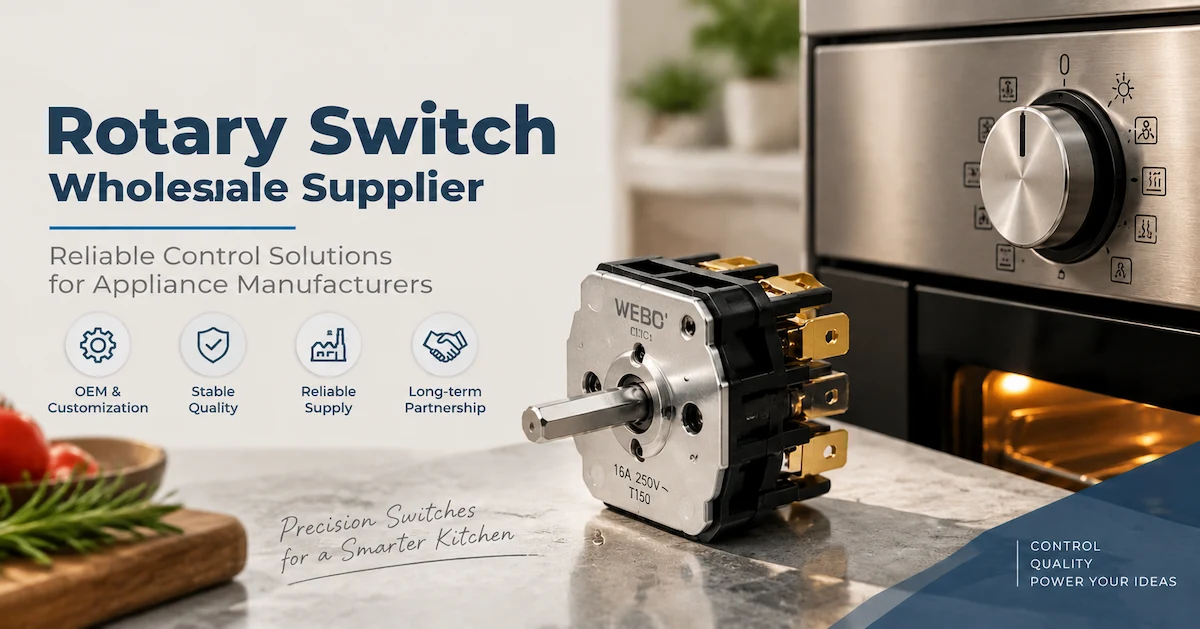
Selecting a rotary switch wholesale supplier is an important decision for appliance manufacturers, kitchen equipment brands, and component distributors. A rotary switch is not only an external control knob component but also a functional part of the appliance control system, affecting user operation, electrical connection, and product reliability.
For OEM buyers, the right supplier should understand how the switch integrates with the final appliance design. Factors such as switching function, electrical requirements, installation structure, operating experience, and production consistency all influence whether a rotary switch can support long-term manufacturing.
A professional supplier evaluation should answer key questions:
- Can the supplier provide suitable rotary switch solutions for the intended application?
- Can the product match electrical and mechanical requirements?
- Can the supplier support OEM customization?
- Can repeat orders maintain consistent quality?
WEBO provides appliance control components. Buyers can review the rotary switch product category and evaluate suitable solutions based on their appliance requirements.
Understand the Role of Rotary Switches in Appliance Control Systems
A rotary switch controls electrical functions through a rotating operation. In appliance applications, it is commonly used for selecting operating modes, adjusting functions, or controlling different settings.
A rotary switch normally needs to work together with:
| Component Area | Relationship with Rotary Switch |
|---|---|
| Control Panel | Determines installation position and user operation |
| Electrical Circuit | Defines switching function and connection requirements |
| Appliance System | Determines operating modes and control logic |
| Mechanical Structure | Affects mounting and shaft compatibility |
When choosing a rotary switch wholesale supplier, buyers should evaluate the complete application rather than selecting a product only by external appearance.
Identify Rotary Switch Applications Before Purchasing
Different appliances require different rotary switch designs. The application environment directly affects product selection.
Rotary Switch for Appliances
A rotary switch for appliances is commonly used in household and commercial equipment where users need mechanical function selection.
Typical application considerations include:
- Number of operating positions
- Rotation angle
- Shaft structure
- Terminal configuration
- Installation method
- Electrical requirements
Appliance manufacturers should confirm how the rotary switch connects with the complete control system.
Rotary Switch for Oven Applications
A rotary switch for oven applications requires reliable operation because users frequently select cooking functions and adjust operating modes.
Important evaluation factors include:
| Requirement | Buyer Consideration |
|---|---|
| Function Selection | Number of cooking modes required |
| Electrical Compatibility | Matching appliance circuit design |
| Mechanical Installation | Panel and knob compatibility |
| User Operation | Smooth and consistent rotation |
For oven manufacturers, the rotary switch should support both technical requirements and user experience expectations.
What Should Buyers Expect from a Rotary Switch Manufacturer?
A reliable rotary switch manufacturer should provide more than production capability. OEM buyers need technical communication, quality control, and stable supply management.
Important supplier capabilities include:
| Capability | Buyer Value |
|---|---|
| Product Development | Helps identify suitable solutions |
| Engineering Support | Reduces technical communication issues |
| Manufacturing Control | Improves batch consistency |
| Quality Inspection | Reduces production risks |
| Supply Management | Supports repeat orders |
A qualified manufacturer should be able to explain product specifications, production processes, and customization possibilities.
Compare Standard Rotary Switch Supply and OEM Cooperation
Different buyers have different sourcing requirements. Some projects require standard products, while others require customized solutions.
| Supply Type | Suitable Buyer | Main Focus |
|---|---|---|
| Standard Supply | Existing appliance designs | Availability and compatibility |
| Modified Supply | Small product adjustments | Technical feasibility |
| OEM Supply | Appliance brands and manufacturers | Customization and consistency |
| Development Cooperation | New product projects | Engineering support |
For OEM projects, working with an OEM rotary switch supplier can provide more flexibility.
OEM cooperation may include:
- Product specification adjustment
- Terminal design changes
- Structure modification
- Packaging requirements
- Sample approval process
Before starting cooperation, buyers should prepare:
- Appliance application information
- Technical drawings
- Required functions
- Expected quantity
- Quality requirements
Evaluate Electrical and Mechanical Specifications
Before purchasing from a rotary switch wholesale supplier, buyers should define technical specifications clearly.
Important specifications include:
| Specification | Why It Matters |
|---|---|
| Voltage Rating | Ensures electrical compatibility |
| Current Rating | Supports required load conditions |
| Switching Positions | Defines operating functions |
| Shaft Design | Determines knob installation |
| Terminal Layout | Affects wiring connection |
| Mounting Structure | Ensures panel compatibility |
| Operating Feel | Influences user experience |
A clear specification allows suppliers to provide accurate recommendations and reduces incorrect product selection.
Select an Electric Rotary Switch Supplier Based on Application Requirements
An electric rotary switch supplier should understand both mechanical operation and electrical performance.
When evaluating suppliers, buyers should review:
Electrical Performance
Confirm:
- Rated voltage
- Rated current
- Switching function
- Electrical connection method
Mechanical Performance
Review:
- Rotation operation
- Shaft design
- Installation method
- Product consistency
Application Compatibility
Confirm:
- Appliance type
- Working environment
- Expected usage frequency
- Control requirements
The selected supplier should provide products that match the appliance system instead of only meeting basic dimensions.
Develop Custom Rotary Switch Solutions for OEM Projects
For appliance manufacturers, a custom rotary switch solution may be required when standard products cannot fully match the equipment design. Customization allows buyers to adjust specific mechanical or electrical features according to the appliance structure and control requirements.
Common customization requirements include:
| Customization Area | Buyer Requirement |
|---|---|
| Shaft Design | Match knob structure and control panel design |
| Terminal Configuration | Match electrical connection requirements |
| Switching Function | Support specific operating modes |
| Mounting Structure | Fit appliance installation conditions |
| Product Appearance | Match brand and product design |
| Packaging | Support OEM product management |
Before developing a customized rotary switch, buyers should provide:
- Appliance application information
- Technical drawings
- Electrical requirements
- Expected production quantity
- Testing requirements
A professional OEM rotary switch supplier should review these requirements before confirming development feasibility.
The typical customization process includes:
- Requirement discussion
- Technical evaluation
- Sample production
- Customer approval
- Mass production
A structured development process helps reduce risks during product launch.
How to Evaluate a Rotary Selector Switch Manufacturer
A rotary selector switch manufacturer focuses on switches that allow users to select different operating functions.
These switches are commonly used in appliances where users need mechanical mode selection.
Buyers should evaluate:
| Evaluation Item | Key Question |
|---|---|
| Switching Positions | Does the switch support required functions? |
| Rotation Performance | Is the operation stable and consistent? |
| Electrical Contacts | Are connection requirements satisfied? |
| Mechanical Structure | Does it fit the appliance design? |
| Production Capability | Can repeat orders maintain consistency? |
For OEM appliance projects, the supplier should understand how the rotary selector switch integrates with the entire control system.
Understand Rotary Switch Wholesale Supplier China Selection Factors
Many international buyers search for a rotary switch wholesale supplier China because China has a mature manufacturing supply chain for appliance components.
However, buyers should evaluate suppliers based on capability rather than location alone.
Important supplier evaluation factors include:
| Evaluation Factor | Buyer Consideration |
|---|---|
| Product Range | Can the supplier provide suitable rotary switches? |
| Manufacturing Capability | Can production meet order requirements? |
| Technical Support | Can engineering questions be answered? |
| Quality Control | Are inspection processes available? |
| Customization | Can special requirements be developed? |
| Delivery Management | Can schedules be maintained? |
A reliable supplier should provide clear technical information and support throughout the purchasing process.
Review Rotary Switch Quality Control Before Bulk Orders
Quality consistency is essential when purchasing rotary switches in volume.
A professional rotary switch supplier should have quality control processes covering different production stages.
Incoming Material Inspection
Suppliers should verify:
- Material quality
- Component consistency
- Supplier documentation
- Incoming inspection records
Production Process Control
Important production checks include:
- Assembly accuracy
- Terminal connection quality
- Mechanical structure consistency
- Product appearance
Functional Testing
Rotary switches should be evaluated for:
- Rotation operation
- Switching performance
- Electrical connection
- Product reliability
Final Shipment Inspection
Before delivery, confirm:
- Product specifications
- Quantity accuracy
- Packaging condition
- Shipment records
WEBO provides company information and certification details through its certification information page. Buyers should confirm project-specific documentation requirements according to their application needs.
Prepare OEM Rotary Switch Projects Before Production
A successful OEM project requires clear communication between buyers and suppliers.
Before starting cooperation, buyers should prepare:
| Project Information | Details |
|---|---|
| Application | Appliance type and operating environment |
| Product Requirements | Switch function and specifications |
| Drawings | Mechanical and electrical requirements |
| Quantity | Trial order and production volume |
| Quality Requirements | Inspection and approval standards |
| Delivery Plan | Production and shipment expectations |
A clear project brief allows suppliers to evaluate:
- Product feasibility
- Manufacturing requirements
- Customization scope
- Production planning
Compare Rotary Switch Suppliers Beyond Price
When selecting a rotary switch wholesale supplier, unit price should not be the only evaluation factor.
A complete supplier comparison should include:
| Evaluation Area | Buyer Questions |
|---|---|
| Product Capability | Can the supplier provide suitable solutions? |
| Technical Support | Can technical problems be resolved efficiently? |
| Customization Ability | Can special requirements be developed? |
| Quality Management | Are inspection standards defined? |
| Supply Stability | Can repeat orders maintain consistency? |
| Communication Efficiency | Are project updates clear? |
A supplier with stronger technical support may reduce development risks and improve long-term cooperation efficiency.
Prepare Your Rotary Switch Project for WEBO
Before contacting WEBO, buyers should prepare:
- Appliance application
- Product specifications
- Technical drawings
- Required quantity
- Customization requirements
- Delivery expectations
Buyers can review the WEBO rotary switch product category to understand available appliance control solutions.
For OEM cooperation and project discussion, buyers can submit requirements through the WEBO contact page.
Providing complete project information helps both sides evaluate technical feasibility, customization options, and production requirements.
Frequently Asked Questions
1. What should I provide when contacting a rotary switch wholesale supplier?
Provide appliance information, electrical requirements, installation details, quantity requirements, and customization needs. Complete information helps suppliers recommend suitable rotary switch solutions.
2. What is the difference between a rotary switch manufacturer and supplier?
A rotary switch manufacturer focuses on production capability, while a supplier may provide sourcing and distribution support. Buyers should confirm actual manufacturing and technical support capability.
3. Can rotary switches be customized for OEM appliances?
Yes. Customization may include shaft design, terminal configuration, switching functions, structure adjustments, and packaging requirements based on project needs.
4. How do I choose a rotary switch for an oven?
Consider switching functions, electrical requirements, installation structure, operating frequency, and compatibility with the oven control system.
5. What should I check before purchasing rotary switches in bulk?
Confirm product specifications, sample approval, quality inspection requirements, packaging standards, and repeat-order conditions.
6. Can a rotary selector switch replace another appliance control component?
Not necessarily. Buyers should evaluate electrical functions, control logic, and appliance requirements before replacement.
7. How can I compare rotary switch wholesale suppliers in China?
Compare technical capability, product quality, customization support, communication efficiency, and supply stability instead of price alone.
8. What quality checks are important for rotary switches?
Important checks include mechanical operation, electrical performance, terminal reliability, appearance inspection, and final product verification.
9. Does WEBO provide customized rotary switch solutions?
Buyers should submit their application requirements and technical information to WEBO to confirm available product options and customization possibilities.
10. How can I request a quotation from WEBO?
Prepare your product requirements and contact WEBO through the contact page.
Conclusion
Choosing a rotary switch wholesale supplier requires evaluating product compatibility, manufacturing capability, customization support, and long-term supply reliability. OEM buyers should confirm electrical specifications, mechanical design requirements, sample approval procedures, and quality control processes before starting bulk production.
A reliable supplier should support product selection, technical communication, and consistent repeat orders. For your appliance control project, review the WEBO rotary switch products and submit your requirements through the WEBO contact page to discuss specifications, customization options, and supply solutions.