


What Should a Cooktop Ceramic Glass Manufacturer Help You Verify?
Choose a cooktop ceramic glass manufacturer against the requirements of the installed appliance, not the panel outline alone. The useful questions are whether the specified material suits the application, whether the panel fits its supports, whether the graphics align with the hardware, and whether the approved configuration can be reproduced. This guide is intended for cooktop manufacturers, appliance brands, and component buyers working with an engineering team; it is not a universal replacement-glass guide. WEBO includes ceramic glass and related appliance components in its published portfolio. Start with the WEBO ceramic glass range, then submit the installation and operating requirements for the proposed panel. Matching dimensions is a starting point for evaluation, not complete application approval.
Induction and Radiant Cooktops Need Different Technical Reviews
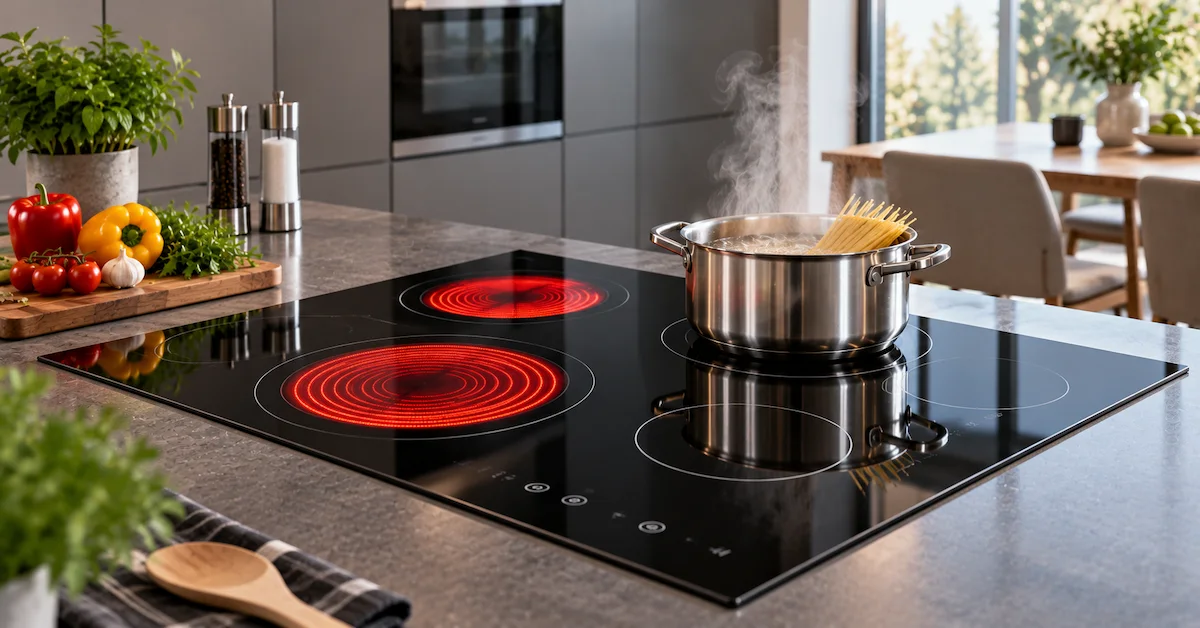
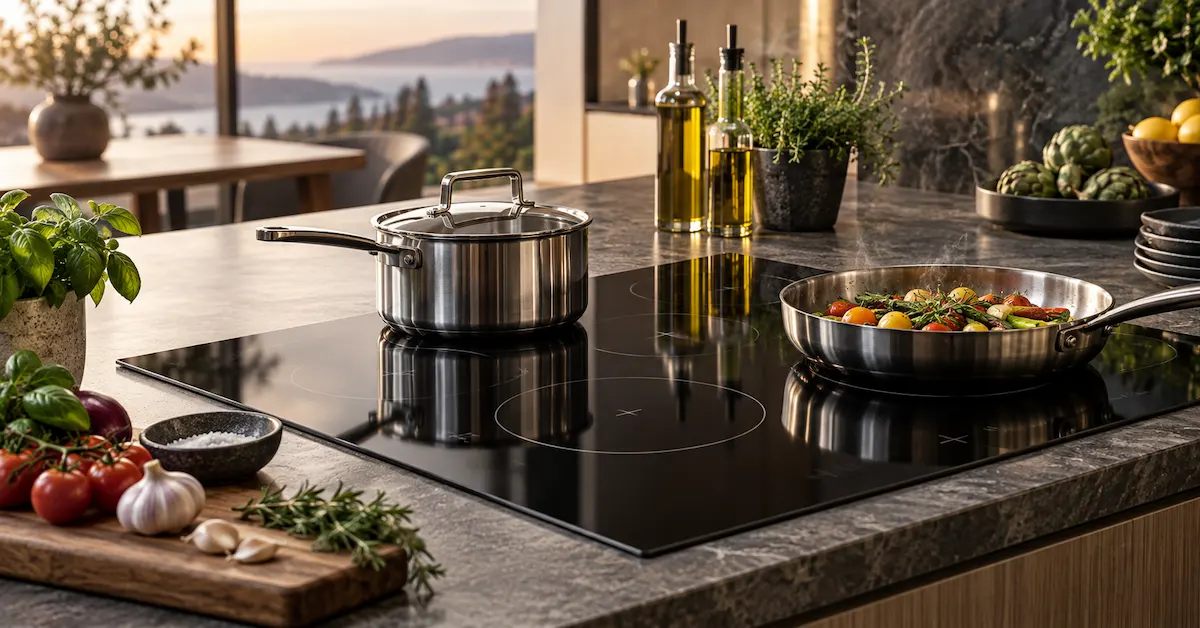
The same general appearance can conceal different heating arrangements. An induction cooking system uses a changing magnetic field to induce heating in suitable cookware, while a radiant electric cooktop places an electrically heated element beneath the glass-ceramic surface. These are different systems, even when both have a smooth black cooking surface. For an induction project, provide the coil layout, panel-to-coil arrangement, support structure, electronics, and intended cookware-validation requirements. For a radiant project, provide heater positions, heating-zone dimensions, mounting details, and temperature-control arrangements. WEBO’s induction coil category and ceramic heater category offer relevant component starting points, but the actual combination still needs review. Do not approve a panel for both applications simply because its external dimensions match two appliance drawings.
Build the Panel Specification Around Its Interfaces
Give the cooktop ceramic glass manufacturer one coordinated specification package covering the panel and the parts it meets. Include the mechanical drawing, artwork, mounting arrangement, and heating or control layout, using consistent reference points and revisions. A panel drawing should not leave the supplier to guess which edge faces the user, where a display sits, or how the component will be supported. The following table is a specification template, not a WEBO model datasheet; numerical values and acceptance limits must come from the approved project requirements and confirmed manufacturing capability. Mark unresolved items clearly so they become review questions rather than hidden assumptions.
| Specification Item | What the Buyer Should Define | Evidence for Approval |
|---|---|---|
| Material identity | Material designation, source, and substitution procedure | Documentation linked to the proposed panel |
| Overall dimensions | Length, width, thickness, outline, and tolerances | Controlled drawing and dimensional report |
| Flatness | Measurement condition, reference surface, and acceptance limit | Agreed inspection method |
| Edges and corners | Edge profile, corner geometry, and acceptable condition | Drawing details and inspected sample |
| Mounting arrangement | Support areas, clearances, retention method, and gasket or bonding requirements | Assembly drawing and installation evaluation |
| Openings | Hole or cutout dimensions, positions, and reference points | Manufacturability review and measurement results |
| Heating layout | Zone positions, heating components, and relevant interfaces | Coordinated appliance layout |
| Graphics and controls | Artwork revision, symbol positions, display windows, and touch-control layout | Appearance and functional review |
| Operating conditions | Intended duty, installation environment, cleaning, and required evaluations | Project-specific validation plan |
| Production identification | Part number, revision, batch reference, and packaging | Approved production records and labels |
Material Grade and Thickness Are Separate Decisions
WEBO’s material information identifies low thermal expansion as a relevant glass-ceramic characteristic. However, a general description of glass-ceramic does not establish the performance limits of every grade, thickness, decoration, or finished panel. Request the material designation and its supporting technical information, then evaluate the proposed thickness within the appliance design. Avoid treating “thicker” as a complete quality specification. The thickness must fit the mounting arrangement and the intended relationships with heaters, displays, and controls. Ask the cooktop ceramic glass manufacturer to identify the base-material source and explain which processing operations it performs. Where an alternative material or thickness is proposed, require a documented comparison and engineering review rather than accepting an unexplained statement that it is equivalent.
Check the Frame, Supports, and Edge Clearance Together
Review the panel in its intended mounting arrangement before releasing the design. Define the support locations, gasket requirements, retention method, and clearances on the assembly drawing. During fit checks, record whether the panel seats correctly without being forced into position, whether its supports contact the intended areas, and whether the installed position matches the approved design. Keep panel flatness and mounting-surface condition as separate inspection items; otherwise, an assembly problem may be assigned to the wrong component. Ask the supplier and appliance team to agree which interface dimensions need tighter control and which can remain within broader limits. Avoid tightening every tolerance by default when only a few dimensions determine the fit.
Illustrative Clearance Calculation
Suppose a proposed locating recess is 590.8 ±0.4 mm wide and the panel is 590.0 ±0.3 mm wide. At nominal dimensions, the total clearance is 0.8 mm. At the smallest recess and largest panel, it becomes 590.4 − 590.3 = 0.1 mm, or 0.05 mm per side only if the panel is perfectly centered. This simplified example does not establish an acceptable clearance; it shows why nominal dimensions alone are insufficient. The engineering review must also consider positioning, the actual retention arrangement, and relevant operating conditions. These figures are hypothetical, not WEBO tolerances or recommended installation values.
Printed Controls Must Work in the Finished Assembly
Approve graphics with the hardware they describe. Burner markings should be checked against the heating-zone layout, while display windows and control symbols should be reviewed against the selected electronics and the installed panel position. Ask the cooktop ceramic glass manufacturer to use agreed drawing references for print placement rather than locating each feature independently. Evaluate display visibility with the intended display, operating settings, and viewing conditions. For touch controls, agree on the functional checks with the appliance electronics team and perform them on the representative assembly. A visually correct symbol does not prove that the underlying interface performs as required. Keep cosmetic approval separate from functional approval, and record the relevant artwork, panel, and electronics revisions in the sample report.
Compare Panel Configurations Before Requesting Customization
Compare available configurations against the work your project actually requires. An existing panel may be suitable when its material, geometry, and interfaces already match the design; a custom panel should address an identified requirement rather than merely create a different part number. The table below compares application configurations, not verified WEBO model numbers or performance ratings. Request current drawings and specifications for the actual products being considered before making a final selection.
| Configuration | Best-Fit Project Direction | Main Selection Priority | What Requires Confirmation |
|---|---|---|---|
| Compact single-zone panel | A defined tabletop or compact cooktop design | Installation space, support, and heating-zone position | Available geometry and operation in the intended assembly |
| Multi-zone built-in panel | An appliance with several cooking zones | Zone layout, mounting structure, and control placement | Complete-appliance fit and operating configurations |
| Display-focused custom panel | A design with specific graphics or display areas | Artwork accuracy, window placement, and interface visibility | Decoration feasibility and assembled functional evaluation |
| Shared panel for related models | A product family seeking common components | Common geometry versus model-specific requirements | Suitability for every intended variant |
| Service replacement panel | An identified existing appliance | Exact specification and revision compatibility | Authorized replacement requirements, not visual similarity |
Evaluate the Loose Panel and Installed Panel Separately
Use two linked inspection records: one for the delivered panel and one for its performance in the appliance. The loose-panel record can cover material identification, dimensions, edge condition, surface appearance, and printing. The installed record should address fit, support contact, alignment, controls, and the agreed operating checks. This separation makes problems easier to investigate. If a panel passes dimensional inspection but does not fit the assembly, compare the panel and mating-part measurements before changing the glass specification. If controls behave differently after installation, document the complete configuration rather than assuming the printed panel is responsible. WEBO’s existing cooktop-panel purchasing guide also separates identity, fit, and function in sample approval.
Make Thermal and Cleaning Evaluations Reproducible
A useful test record explains what was tested and under which conditions. Ask the cooktop ceramic glass manufacturer and appliance engineering team to agree on the relevant heating configuration, mounting arrangement, operating sequence, measurement locations, duration, and acceptance criteria. Keep a continuous-exposure evaluation distinct from a temperature-change evaluation; do not use one unexplained temperature number to represent both. For cleaning-related assessment, identify the proposed cleaner, method, repetitions, and criteria for reviewing the surface and printed decoration. These are suggested items for a project-specific verification plan, not a claim that WEBO performs every test or that one procedure covers every market. Use suitable engineering or laboratory review to establish the final methods and limits, then retain the results against the tested configuration.
Connect Manufacturing Quality to an Approved Revision
Turn the approved sample into a repeatable production reference. Release the material specification, panel drawing, artwork, workmanship limits, inspection method, and packaging requirements together. Agree on how the supplier will identify the production revision and review changes to material, processing, decoration, or packaging. Request inspection evidence for the first production lot rather than assuming that a development sample represents every later shipment. For company-level background, review WEBO’s About Us information, then request documents relevant to the proposed component. Where a certificate or test report is required, check its holder, scope, model or material identification, and test conditions. The approval question is whether the document supports this panel configuration—not whether the supplier can display a familiar certification logo.
Define OEM or ODM Responsibilities Before Development Starts
An existing drawing and a new appliance concept require different supplier contributions. For a drawing-based OEM order, ask the cooktop ceramic glass manufacturer to confirm the manufacturing and inspection requirements against the released design. Where dimensions, material, graphics, or interfaces remain unresolved, request a defined development scope rather than an unrestricted promise of customization. Identify who proposes the design, who approves it, and who validates the complete appliance. Address ownership and confidentiality of drawings and artwork before sharing sensitive information. Separate appearance samples, functional samples, and production-representative parts in the quotation. A clear division of responsibilities prevents an unresolved appliance-design question from being mistaken for a confirmed panel-manufacturing requirement.
Compare Price, Capacity, and Lead Time Against the Same Scope
Send every shortlisted cooktop ceramic glass manufacturer the same specification and ask for exclusions to be stated explicitly. Compare material, processing, decoration, sample charges, inspection documentation, packaging, and delivery responsibilities—not just the unit price. For example, an offer including defined print inspection and protective packing is not directly equivalent to one leaving both unspecified. Request a schedule that separates technical review, sampling, customer validation, revisions, production, and dispatch. Ask which approvals start each stage and confirm capacity for the selected configuration and order quantity. WEBO-specific minimum quantities, available panel specifications, sample charges, and delivery dates require project confirmation. For repeat orders, agree on revision identification and packaging consistency so replenishment remains tied to the same approved component.
Give WEBO the Panel Drawing and the Assembly Context
WEBO’s published range includes ceramic glass, induction coils, heating elements, and other appliance components, making its product portfolio a useful starting point for a coordinated component inquiry. To evaluate WEBO for your cooktop panel project, send the application, panel drawing, mounting details, heating layout, control or display arrangement, artwork, target market, and expected quantities. Include any known fit, heating, or interface problem that the new panel must resolve. Ask the response to distinguish confirmed options, proposed alternatives, and information still needed from your team. This gives purchasing and engineering a common basis for reviewing the quotation instead of treating a panel photograph as a complete project brief.
Frequently Asked Questions
1. What should I send a cooktop ceramic glass manufacturer first?
Send the application, panel drawing, material requirements, mounting arrangement, artwork, and expected quantities. Include the heating and control layout where available. Identify unresolved requirements clearly so the supplier can review them instead of quoting against assumptions.
2. Can the same panel be used for induction and radiant cooktops?
Do not approve interchangeability from appearance or dimensions alone. Review the material, heating arrangement, mounting, controls, and verification requirements for both appliances. Approval should identify the actual configurations covered rather than describe the panel as universally compatible.
3. Is a thicker cooktop panel always the better choice?
Thickness alone is not a sufficient selection criterion. Ask the responsible engineers to review the proposed thickness with the material, supports, interfaces, and validation requirements. Record the approved thickness and permitted variation on the controlled drawing.
4. Why does the mounting drawing matter when the panel dimensions are correct?
The panel dimensions describe only one part of the fit. The mating structure, support positions, locating features, and permitted variations also need review. Compare the complete interface rather than approving the panel against an isolated length-and-width measurement.
5. Can I approve printed graphics from a digital rendering?
Use the rendering for design discussion, then define the physical sample checks needed before release. Confirm orientation, placement, appearance, and relevant display or control functions in the intended assembly. Record what the approval covers.
6. Which tests should be completed before bulk production?
Build the plan from the application requirements. It may include material and dimensional checks, workmanship review, installation assessment, and agreed thermal, mechanical, cleaning, or control evaluations. Specify methods, conditions, responsibilities, and acceptance criteria before testing.
7. Can WEBO provide a custom panel shape and artwork?
Submit the drawing and artwork for feasibility confirmation. Request the available material and processing options, development charges, sample requirements, and approval sequence. Treat the requested customization as proposed until it appears in the agreed technical and commercial scope.
8. What are the minimum order quantity and lead time?
Request these for the exact panel drawing, material, artwork, packaging, and quantity. Separate development timing from production lead time, and confirm the approved inputs that start the schedule. Avoid assuming one figure applies to every configuration.
9. What should trigger another sample or validation review?
Agree on change triggers during project approval. Proposed changes to material, geometry, decoration, mounting interfaces, or relevant production processes should be reviewed for their effect on the approved requirements. Record whether additional inspection, sampling, or testing is needed.
10. How can I request a WEBO quotation?
Submit your drawings, application details, quantities, target market, and timing through the WEBO contact page. Include the mounting and control information needed to assess the panel as part of the appliance, and request confirmation of scope before authorizing samples.
Conclusion
Choosing a cooktop ceramic glass manufacturer means approving a component within its working assembly, not simply selecting a glossy panel with the right outline. Connect the material, mounting tolerances, heating layout, printed controls, and verification plan before production begins. Then carry the approved requirements into inspection, packaging, and repeat orders. For a focused project review, send WEBO your cooktop panel requirements with both the panel drawing and its assembly context, so available options, development work, and supply terms can be evaluated against the same design.