


What Is a Gas Stove Pan Support OEM Manufacturer?
A gas stove pan support OEM manufacturer specializes in producing customized burner supports according to a customer's design requirements, product specifications, or appliance development needs.
Unlike standard suppliers that only provide existing models, OEM manufacturers support the complete process from concept to mass production.
Typical OEM services include:
- Product design review
- Drawing evaluation
- Sample development
- Mold development
- Material selection
- Production optimization
- Quality inspection
- Bulk manufacturing
For gas stove brands and kitchen appliance companies, OEM cooperation allows them to develop unique products while relying on an experienced manufacturing partner.
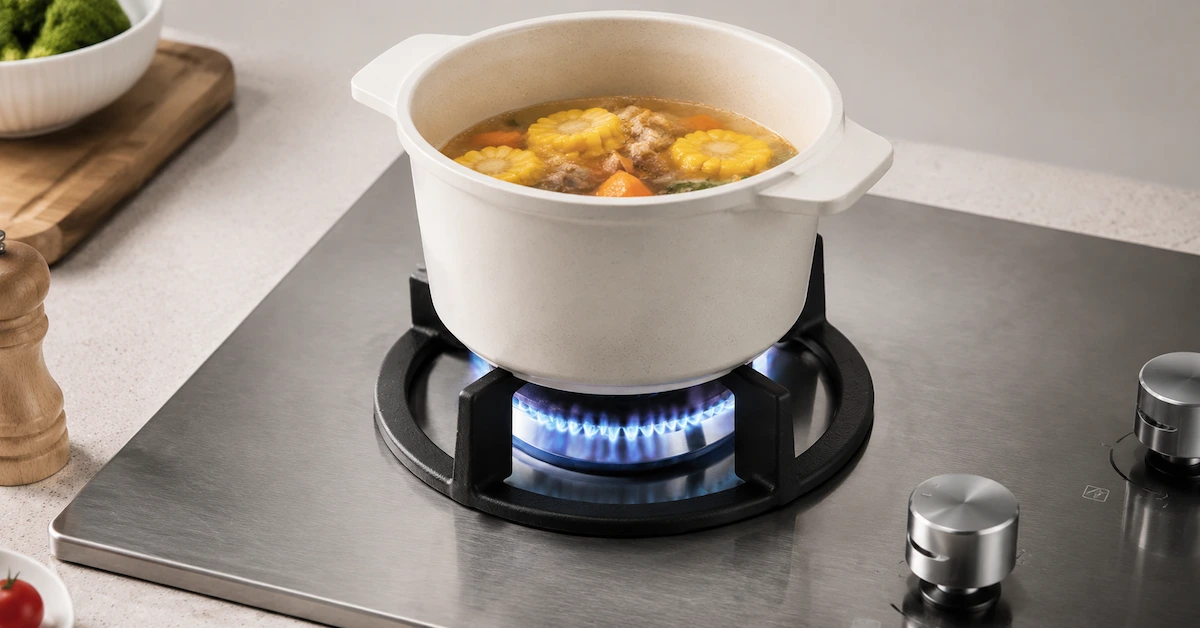
A gas stove pan support, also called a burner grate or stove trivet, plays an important role in:
- Supporting cookware
- Maintaining cooking stability
- Improving user experience
- Matching stove appearance
Because different stove models have different burner structures and designs, OEM customization is often required.
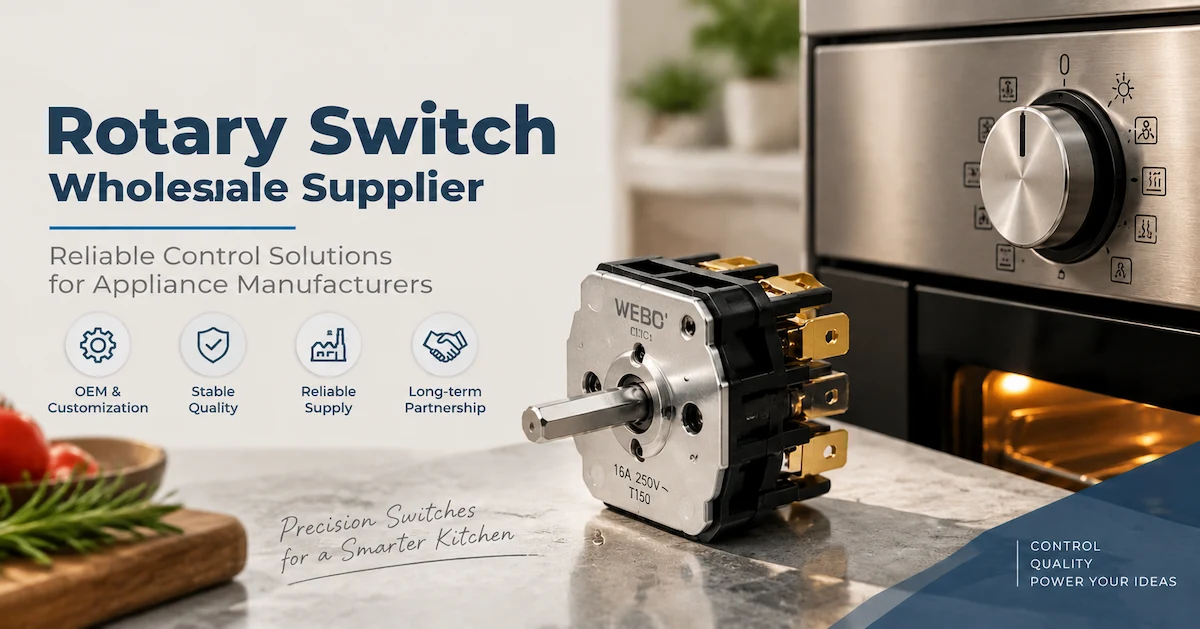
WEBO provides kitchen appliance components including Cast Iron Pan Support, together with other appliance parts such as Hot Plate, Ceramic Heater, Tube Heating Element, Rotary Switch, and Energy Regulator.
(WEBO Products)
OEM Manufacturer vs Standard Supplier: What Is the Difference?
When developing a new gas stove model, buyers need to understand the difference between purchasing a standard product and working with an OEM manufacturer.
| Comparison | Standard Supplier | OEM Manufacturer |
|---|---|---|
| Product source | Existing models | Customer-specific production |
| Design support | Limited | Available |
| Mold development | Usually unavailable | Supported |
| Sample development | Limited | Full process |
| Custom dimensions | Limited | Flexible |
| Private label | Sometimes | Common |
| Long-term product control | Lower | Higher |
For appliance brands, OEM manufacturing provides better control over:
- Product differentiation
- Design ownership
- Production consistency
- Market positioning
Who Needs a Gas Stove Pan Support OEM Manufacturer?
OEM manufacturing is mainly used by companies developing or selling gas cooking products.
Gas Stove Brands
Gas stove brands often require OEM suppliers for:
- New product launches
- Product upgrades
- Market-specific designs
Their requirements may include:
- Unique appearance
- Exact dimensions
- Stable quality
- Long-term production
Kitchen Appliance Manufacturers
Many appliance manufacturers outsource component production to specialized OEM factories.
Benefits include:
- Reduced internal manufacturing investment
- Faster product development
- Professional production support
Private Label Brands
Private-label companies need customized components to create differentiated products.
OEM support may include:
- Custom structure
- Product appearance
- Packaging requirements
- Brand cooperation
Commercial Kitchen Equipment Companies
Commercial equipment manufacturers often require stronger pan supports because their products experience:
- Higher usage frequency
- Heavier cookware
- Longer operating cycles
OEM suppliers can develop stronger structures based on application requirements.
Why Choose OEM Gas Stove Pan Support Manufacturing?
Working with an OEM manufacturer provides several advantages.
Product Customization
OEM allows buyers to create pan supports that match their own stove designs.
Customization may include:
- Shape
- Size
- Burner position
- Support structure
- Surface treatment
This helps brands create products that are different from competitors.
Better Product Compatibility
A custom pan support can be designed specifically for:
- Burner layout
- Stove surface
- Cooking requirements
This reduces problems caused by using generic components.
Stable Production Quality
An experienced OEM manufacturer controls:
- Raw materials
- Production processes
- Dimensions
- Inspection standards
This improves consistency across repeated orders.
Long-Term Supply Partnership
OEM cooperation is usually based on long-term business relationships.
Advantages include:
- Stable supply
- Faster communication
- Easier product updates
- Better production planning
Gas Stove Pan Support OEM Customization Options
A professional OEM manufacturer should support different customization requirements.
Shape Customization
Different stove designs require different structures.
Common options include:
- Single burner support
- Double burner support
- Multi-burner grate
- Custom-shaped pan support
OEM buyers can provide:
- Product drawings
- Existing samples
- Reference images
The manufacturer then evaluates production feasibility.
Dimension Customization
Dimensions are critical for stove compatibility.
Customization may include:
- Overall size
- Height
- Burner opening
- Support points
- Installation position
Accurate dimensions ensure:
- Stable cookware placement
- Correct burner alignment
- Better user experience
Surface Treatment Customization
Surface treatment affects:
- Appearance
- Durability
- Cleaning performance
Options depend on customer requirements.
For appliance brands, consistent surface quality is important because the component directly affects the final product appearance.
Packaging Customization
OEM manufacturers may support:
- Individual packaging
- Brand labels
- Export cartons
- Customer-specific requirements
This is especially important for overseas appliance brands and distributors.
Material Selection for OEM Pan Supports
Most gas stove pan supports use cast iron because it performs well in high-temperature environments.
Why Cast Iron Is Commonly Used
High Temperature Resistance
Gas burners create continuous heat exposure.
Cast iron provides:
- Good thermal stability
- Long-term durability
- Reliable performance
Strong Load-Bearing Ability
Pan supports must hold:
- Pots
- Pans
- Heavy cookware
Cast iron provides strong structural support.
Casting Flexibility
Cast iron allows manufacturers to create:
- Complex shapes
- Customized structures
- Different burner layouts
This makes it suitable for OEM product development.
Gas Stove Pan Support OEM Manufacturing Process
A reliable OEM manufacturer should follow a structured development process.
Step 1: Requirement Analysis
The customer provides:
- Stove model
- Product drawing
- Existing sample
- Dimensions
- Quantity requirements
The manufacturer evaluates:
- Product feasibility
- Material requirements
- Production method
Step 2: Engineering Review
Engineers analyze:
- Product structure
- Casting difficulty
- Mold requirements
- Manufacturing process
This stage helps identify potential production problems early.
Step 3: Mold Development
For new designs, mold development is required.
The OEM manufacturer considers:
- Product accuracy
- Casting efficiency
- Production stability
- Cost control
Step 4: Prototype Production
Samples are produced for customer evaluation.
Customers should verify:
- Installation compatibility
- Product appearance
- Structural strength
- Stove matching
Step 5: Mass Production
After sample approval, the manufacturer manages:
- Production scheduling
- Quality control
- Packaging
- Delivery
Quality Control for OEM Gas Stove Pan Support Production
For appliance brands, OEM production requires more than producing a customized design. The manufacturer must ensure that every production batch maintains the same specifications as the approved sample.
A professional gas stove pan support OEM manufacturer should establish quality control throughout the manufacturing process.
Raw Material Inspection
The quality of cast iron directly affects:
- Product strength
- Heat resistance
- Service life
- Structural stability
Before production, manufacturers should check:
- Material consistency
- Casting suitability
- Raw material condition
Stable materials help reduce:
- Cracks
- Casting defects
- Performance differences between batches
Mold and Casting Inspection
For OEM projects, mold accuracy directly affects product consistency.
Quality checks include:
- Mold condition
- Product structure
- Casting accuracy
- Surface condition
Manufacturers should control:
- Casting process parameters
- Cooling process
- Product release quality
This helps ensure that customized designs can be reproduced consistently during mass production.
Dimensional Inspection
OEM customers usually require strict dimensional control because pan supports must fit specific gas stove models.
Important inspection points include:
- Overall dimensions
- Burner opening position
- Support height
- Contact points
- Installation structure
Dimensional consistency helps prevent:
- Assembly problems
- Unstable cookware placement
- Customer complaints
Surface Quality Inspection
The appearance of the pan support affects the final gas stove product quality.
Inspection items may include:
- Surface smoothness
- Coating condition
- Visual defects
- Rust protection
For appliance brands, consistent appearance across thousands of units is important for maintaining product reputation.
Strength and Heat Resistance Evaluation
Gas stove pan supports experience:
- High temperatures
- Repeated heating cycles
- Heavy cookware loads
Depending on customer requirements, manufacturers may evaluate:
- Structural strength
- Heat resistance
- Product stability
OEM Supplier Selection Checklist
Choosing the right OEM partner is important for long-term product development.
| Evaluation Area | Buyer Questions |
|---|---|
| OEM experience | Has the factory developed customized pan supports before? |
| Engineering capability | Can engineers review drawings and samples? |
| Mold capability | Can the factory develop new molds? |
| Production capacity | Can it support bulk orders? |
| Quality system | Are inspection procedures established? |
| Communication | Can technical requirements be clearly understood? |
| Export ability | Can it support international shipments? |
How to Evaluate a Gas Stove Pan Support OEM Manufacturer?
1. Check Previous OEM Experience
Experienced OEM manufacturers usually understand:
- Product development
- Customer specifications
- Sample approval
- Mass production requirements
Ask suppliers:
- What customized projects have they completed?
- What industries do they serve?
- Can they provide product examples?
2. Review Engineering Capability
A capable OEM manufacturer should support:
- Drawing analysis
- Structure optimization
- Manufacturing suggestions
- Prototype improvement
Engineering involvement helps avoid production issues.
3. Confirm Production Capability
Evaluate:
- Manufacturing equipment
- Production processes
- Quality inspection
- Production planning
A factory should be able to support both:
- Initial development
- Long-term repeat orders
4. Verify Quality Management
Ask about:
- Material inspection
- Process control
- Final inspection
- Defect handling
A strong QC system improves product reliability.
5. Consider Long-Term Cooperation Ability
A suitable OEM partner should support:
- Product updates
- New models
- Increasing order volume
- Continuous improvement
Cost Factors for OEM Gas Stove Pan Supports
OEM pricing depends on multiple factors.
| Cost Factor | Influence |
|---|---|
| Product design | Complex structures require more development |
| Mold development | New designs may require tooling |
| Material | Cast iron quality and weight affect cost |
| Product size | Larger components require more material |
| Surface treatment | Different finishes affect pricing |
| Quantity | Higher volume improves production efficiency |
| Packaging | Customized packaging adds requirements |
When comparing OEM quotations, buyers should evaluate the complete solution rather than only the unit price.
Why OEM Is Better Than Buying Standard Pan Supports?
For brands developing their own gas stove products, OEM manufacturing provides several advantages.
Product Differentiation
Custom pan supports allow brands to create:
- Unique stove designs
- Better product appearance
- Market-specific solutions
Better Compatibility
OEM components can be designed specifically for:
- Burner layout
- Stove structure
- Product requirements
Better Supply Control
Direct cooperation with an OEM manufacturer improves:
- Production communication
- Specification control
- Quality management
Reduced Development Risk
Experienced OEM manufacturers can help identify:
- Manufacturing limitations
- Structural issues
- Production improvements
before mass production begins.
Why Choose WEBO as a Gas Stove Pan Support OEM Manufacturer?
GUANGDONG WEBO TECHNOLOGY was established in 1998 in Yangjiang, Guangdong.
According to WEBO's company information, the company operates approximately 50,000㎡ of manufacturing space, has more than 500 employees, and provides kitchen appliance components for global customers.
(WEBO About Us)
WEBO's appliance component portfolio includes:
- Cast Iron Pan Support
- Tube Heating Element
- Hot Plate
- Ceramic Heater
- Induction Coil
- Ceramic Glass
- Rotary Switch
- Energy Regulator
For OEM gas stove pan support projects, buyers can review:
Cast Iron Pan Support
https://www.weboproducts.com/product/cast-iron-pan-support
WEBO supports customers with:
- Product evaluation
- Custom design requirements
- Sample development
- OEM production
- Bulk supply
Buyers can provide:
- Drawings
- Existing samples
- Product specifications
- Quantity requirements
through the WEBO contact page.
FAQ
1. What is a gas stove pan support OEM manufacturer?
A gas stove pan support OEM manufacturer produces customized burner supports according to customer drawings, samples, specifications, or product requirements.
2. What customization options are available for OEM pan supports?
Customization may include:
- Shape
- Size
- Burner layout
- Surface treatment
- Packaging
3. Why should gas stove brands choose OEM manufacturing?
OEM manufacturing allows brands to create unique products, improve compatibility, control quality, and build long-term supply relationships.
4. What information should I provide for an OEM pan support project?
Buyers should provide:
- Product drawing
- Existing sample
- Gas stove model
- Dimensions
- Quantity
- Surface requirements
5. Can OEM manufacturers develop new molds?
Yes. For new designs, OEM manufacturers can support mold development and prototype production.
6. What material is commonly used for gas stove pan supports?
Cast iron is commonly used because it provides heat resistance, strength, and durability.
7. How does an OEM factory control production quality?
Quality control may include:
- Material inspection
- Casting inspection
- Dimension checking
- Surface inspection
- Final product verification
8. How long does OEM development usually take?
Development time depends on:
- Product complexity
- Mold requirements
- Sample revisions
- Customer approval process
9. Can OEM manufacturers support large-volume production?
Yes. Experienced OEM factories can support both prototype development and long-term bulk production.
10. How can I start an OEM gas stove pan support project with WEBO?
Buyers can review the Cast Iron Pan Support product and contact WEBO with drawings, samples, and project requirements.
Conclusion
Choosing the right gas stove pan support OEM manufacturer allows appliance brands to develop customized components while maintaining production quality and supply stability.
A reliable OEM partner should provide:
- Engineering support
- Mold development capability
- Stable manufacturing
- Quality control
- Bulk production ability
For gas stove manufacturers, kitchen appliance brands, and private-label companies, OEM cooperation provides greater control over product design and market differentiation.
WEBO provides Cast Iron Pan Support and related kitchen appliance components with OEM customization and global supply capabilities. Buyers developing new gas stove products can review WEBO's product range and contact the team for OEM gas stove component solutions for technical discussion and quotation.