


Quick Answer: To find a reliable cast iron grate grids supplier, start with the intended gas-stove application and an approved technical specification. Verify the supplier's product experience, material records, manufacturing responsibilities, sample inspection, quality system, batch traceability, and commercial terms. Then qualify production-intent samples and the first shipment before committing to repeat orders. Reliability should be demonstrated through documented evidence, not unsupported promises.
Finding a suitable cast iron grate supplier can be challenging for gas appliance manufacturers and international parts importers.
Many suppliers advertise casting experience, competitive prices, and OEM capabilities. However, these claims do not necessarily explain whether the delivered component will fit the intended stove or remain consistent across multiple production batches.
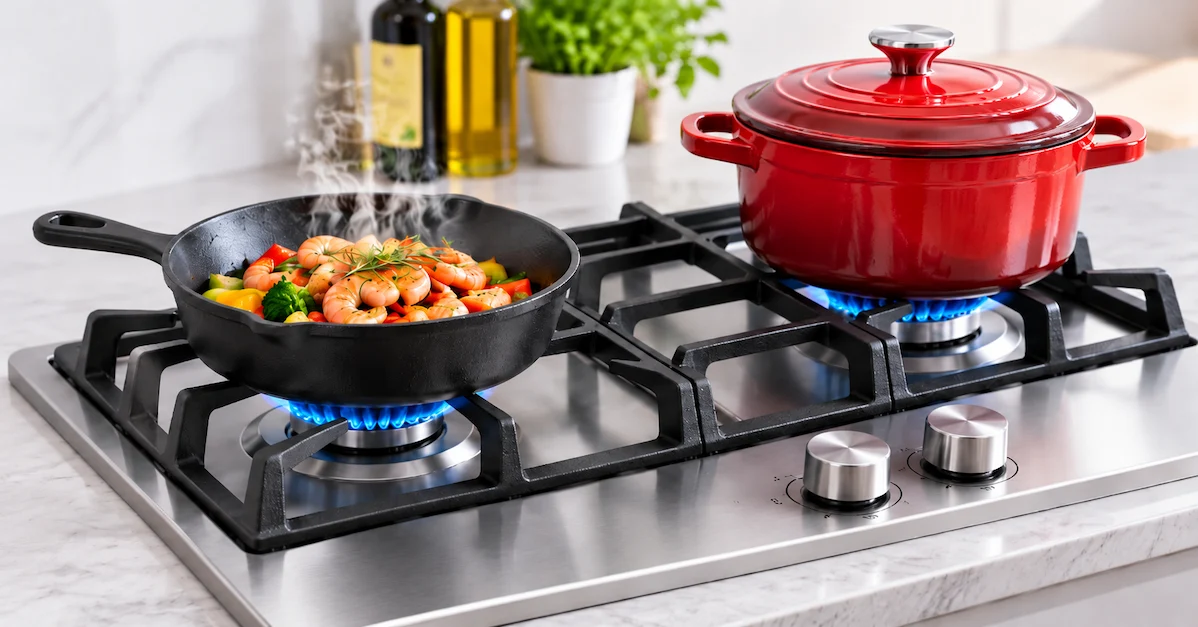
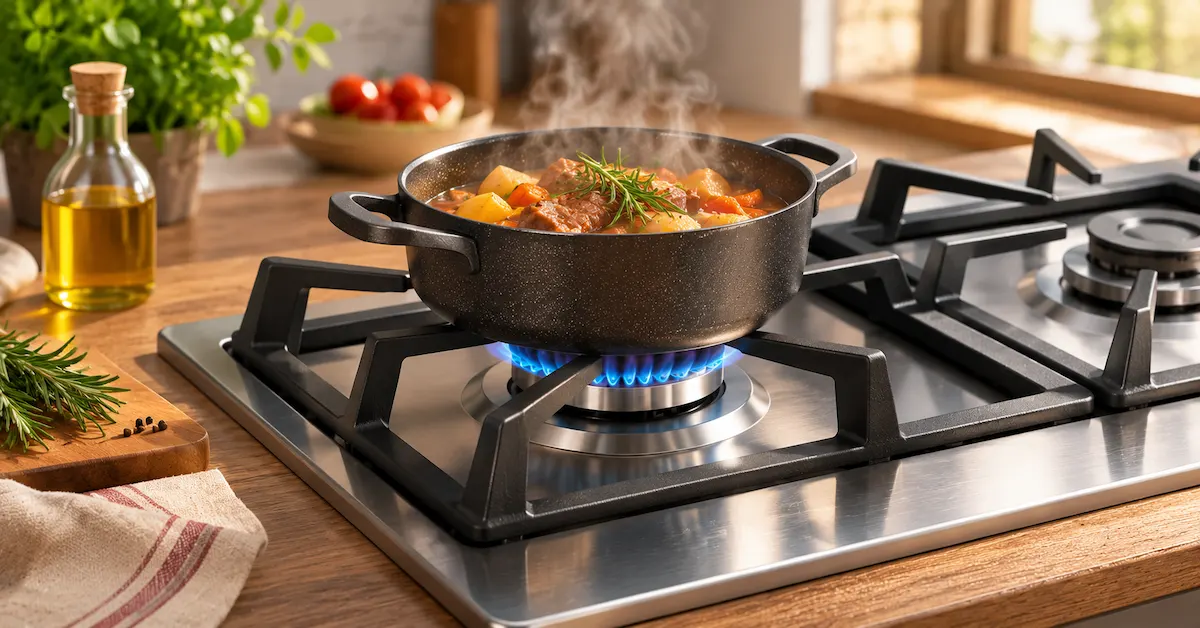
A cast iron stove grate is a functional support component positioned above a gas burner. Its geometry influences cookware stability, installation fit, burner clearance, and the appearance of the finished appliance.
An incorrect locating foot, inconsistent support height, or unsuitable surface finish can create problems even when the component appears acceptable in a product photograph.
For OEM buyers, the main concern is whether an approved design can be produced repeatedly. For distributors, accurate product identification, packaging, and dependable replenishment are also essential.
When searching for a cast iron grate grids supplier, buyers should therefore examine technical evidence alongside commercial terms.
WEBO, officially GUANGDONG WEBO TECHNOLOGY CO., LTD, is a China-based manufacturer of electric heating elements and cooking appliance components established in 1998.
Its published product portfolio includes Cast Iron Pan Support, with Single Burner, Double Burner, and Cast Iron Grate Grids listed as product groupings.
This article provides a practical supplier-screening and first-order approval framework for international B2B buyers.
Explore the WEBO Cast Iron Pan Support Product Range.
Key Takeaways
-
Identify the correct product: Gas stove grates are different from electric hot plates and barbecue cooking grids.
-
Verify technical requirements: Dimensions, material, finish, and cookware support must match the intended application.
-
Demand objective evidence: Drawings, inspection records, approved samples, and change-control arrangements are more useful than marketing claims.
-
Validate production consistency: A successful prototype does not guarantee that the first bulk order will match.
-
Compare total sourcing risk: Price, tooling, packaging, inspection, freight, and quality claims all influence purchasing decisions.
-
Approve suppliers progressively: Move from technical screening to sample approval, first-lot evaluation, and repeat-order monitoring.
1. What Makes a Cast Iron Grate Supplier Reliable?
A reliable supplier delivers components that conform to an agreed specification, communicates changes, maintains suitable quality controls, and fulfills its contractual responsibilities.
These requirements apply whether the supplier operates its own casting facilities or coordinates approved subcontractors.
Reliability Is More Than Manufacturing Experience
A supplier may have extensive industry experience but still lack the documentation needed for a particular OEM program.
Likewise, a smaller supplier may be appropriate for a limited purchasing project if it provides the required evidence and can meet the buyer's technical and commercial requirements.
The right cast iron grate grids supplier should be evaluated against the needs of the actual project.
| Buyer requirement | Evidence of reliability |
|---|---|
| Correct product | Approved drawing and product identification |
| Material consistency | Defined material specification and relevant records |
| Installation fit | Dimensions and sample verification |
| Cookware stability | Application-specific testing |
| Surface quality | Approved finish sample and inspection criteria |
| Repeat production | Controlled drawing revision and production records |
| Quality management | Suitable procedures and verified documentation |
| Delivery | Agreed capacity, schedule, and shipping conditions |
| After-sales support | Defined nonconformity and claims procedures |
The best supplier is not necessarily the one offering the longest list of capabilities. It is the one that can provide evidence for the capabilities your project actually requires.
2. How Do You Identify the Correct Cast Iron Grate Grids?
Before contacting suppliers, buyers should clarify exactly which component they need.
The terms cast iron grate, burner grate, grate grid, and pan support may be used differently across product catalogs.
Product Identification Comparison
| Component | Main application | Critical purchasing consideration |
|---|---|---|
| Single-burner cast iron pan support | Individual gas burners | Locating features and cookware support |
| Double-burner cast iron grate | Two-burner gas cooking arrangements | Burner spacing and installation geometry |
| Continuous cast iron grate grid | Multi-burner gas cooktop arrangements | Overall dimensions, support height, and seating |
| Barbecue cast iron cooking grid | Direct food-contact cooking surface | Different material, surface, and cleaning requirements |
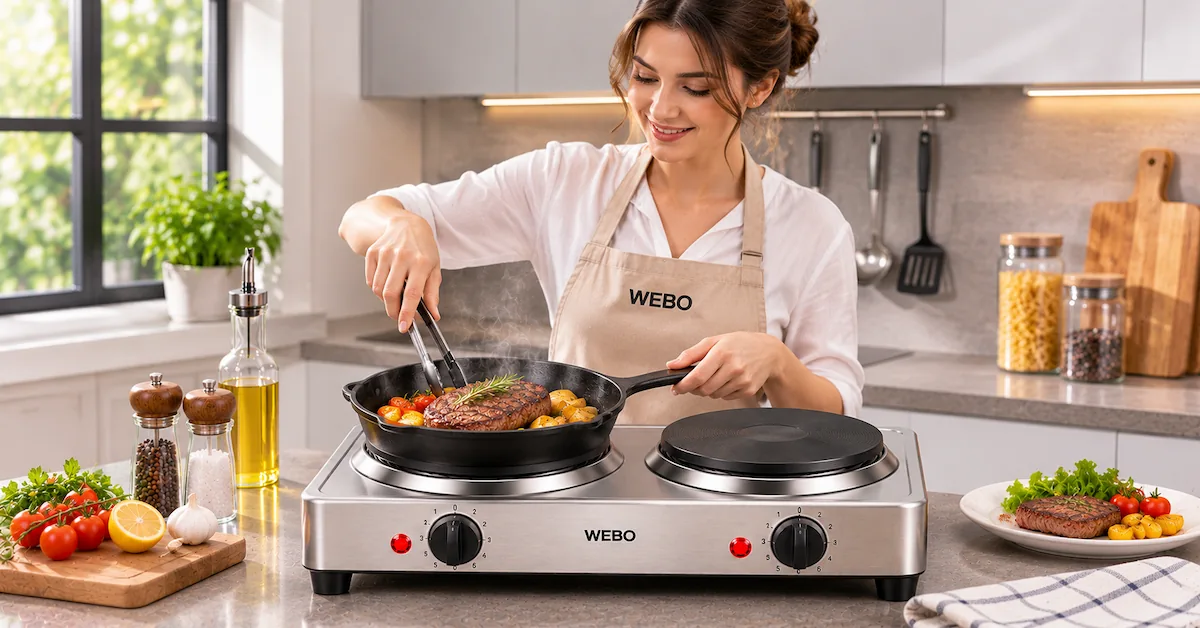
| Solid electric hot plate | Electric resistance cooking appliance | Electrical and thermal specifications |
This guide focuses on cast iron stove grates and pan supports for gas cooking equipment.
A barbecue grid should not automatically be treated as interchangeable with a gas cooktop pan support.
Choose the Supplier According to Your Business
Gas stove OEMs need precise engineering compatibility and controlled product revisions.
Replacement-parts importers need reliable model identification and documented fit information.
Wholesale distributors may place greater emphasis on multiple SKUs, carton labeling, repeat-order consistency, and claims handling.
These differences should influence supplier screening.
3. Eight Evidence Checks Before Choosing a Supplier
A trustworthy cast iron grate grids supplier should be able to support its claims with documentation appropriate to the purchasing project.
The following checks help buyers distinguish promising candidates from suppliers that have not yet demonstrated the required capabilities.
Supplier Verification Matrix
| Check | What to verify | Evidence to request |
|---|---|---|
| 1. Business identity | Who is the contractual supplier? | Company details and contact information |
| 2. Product experience | Does the supplier offer relevant grates? | Product references and drawings |
| 3. Manufacturing responsibility | Who controls casting and finishing? | Process responsibility map |
| 4. Material verification | Is the specified material identifiable? | Material specification and records |
| 5. Sample capability | Can the product be evaluated? | Representative samples and inspection results |
| 6. Quality control | Are critical characteristics monitored? | Inspection plan and quality records |
| 7. Production consistency | Can approved specifications be reproduced? | First-lot and traceability arrangements |
| 8. Commercial accountability | Who handles delays, defects, and changes? | Written quotation and quality agreement |
Check 1: Verify the Supplier's Business Identity
Confirm the company name, business address, contact details, and contractual entity.
Where necessary, request suitable business registration or supplier onboarding information.
The objective is to identify which organization will receive payment, issue invoices, and accept contractual responsibility.
Check 2: Examine Relevant Product Experience
Ask whether the supplier has products suitable for your gas-hob configuration.
A catalog containing cast iron components is a starting point, but it does not demonstrate compatibility with your appliance.
Request current product drawings or representative references.
Check 3: Clarify Manufacturing Responsibilities
Find out whether casting, machining, finishing, and inspection are performed internally or by approved subcontractors.
Outsourcing is not automatically a problem.
The critical question is whether the supplier controls the required specifications and takes responsibility for the delivered components.
Check 4: Verify Material Specifications
"Cast iron" alone is not a complete engineering specification.
Buyers should confirm the required material, relevant acceptance criteria, and how incoming castings are identified.
Check 5: Request Representative Samples
Samples should reflect the proposed construction, materials, and surface finish.
Ask whether they were produced using the intended manufacturing route.
Hand-finished prototypes may require additional production validation.
Check 6: Examine Quality-Control Arrangements
Request inspection criteria for relevant dimensions, seating surfaces, casting defects, and appearance.
Also clarify how nonconforming parts are identified and controlled.
Check 7: Evaluate Production Consistency
Ask how the supplier connects approved drawings and samples to future production orders.
Relevant controls may include revision identification, material records, inspection results, and batch numbers.
Check 8: Establish Commercial Accountability
Clarify payment conditions, delivery terms, inspection arrangements, and the process for resolving quality claims.
A reliable relationship requires more than a successful first quotation.
4. How Can Buyers Verify Cast Iron Material Quality?
Material verification is especially important when the buyer specifies a particular iron grade or casting performance requirement.
For applicable gray iron castings, ASTM A48/A48M-22(2026), Standard Specification for Gray Iron Castings, provides requirements addressing material classification and casting-related characteristics.
The standard can support material discussions when gray iron is the selected construction and the specification is appropriate for the component.
It does not mean that every cast iron stove grate must comply with ASTM A48/A48M.
Material Verification Checklist
| Requirement | Supplier question |
|---|---|
| Material type | What cast iron specification is proposed? |
| Material grade | Is a defined grade required? |
| Incoming inspection | How are material requirements verified? |
| Casting defects | Which defects are unacceptable? |
| Subcontractor control | Who supplies the castings? |
| Traceability | Can material records be linked to production lots? |
For buyers, these questions help establish whether a product can be supplied consistently.
WEBO's public CIPS listings do not provide sufficient information to assign verified material grades to individual models.
Those specifications should be requested directly.
5. Which Dimensions and Performance Characteristics Should Be Checked?
A grate may look attractive but still be unsuitable for the intended stove.
The first sample evaluation should focus on functional compatibility.
Technical Inspection Matrix
| Characteristic | Why it matters | Recommended verification |
|---|---|---|
| Overall length and width | Cooktop installation | Drawing-based measurement |
| Overall height | Cookware position | Dimensional inspection |
| Locating feet | Seating and alignment | Fit check |
| Burner opening | Burner clearance | Assembly evaluation |
| Support-arm geometry | Cookware positioning | Representative cookware tests |
| Flatness and rocking | Stability | Defined seating inspection |
| Surface condition | Appearance and handling | Approved visual standard |
| Finish | Intended service conditions | Relevant finish evaluation |
| Identification | Correct product version | Part number and revision check |
Test on the Intended Appliance
A reliable cast iron grate grids supplier should provide a component that can be evaluated against the approved gas-hob design.
The OEM should check cookware stability, burner clearance, neighboring-component interference, and relevant thermal operating conditions.
These assessments should use the intended appliance or a representative validated fixture.
Finished gas-appliance safety and compliance remain the responsibility of the finished-product manufacturer and relevant parties under applicable market requirements.
6. Which WEBO Cast Iron Grate Models Can Buyers Evaluate?
WEBO publishes several Cast Iron Pan Support references suitable for preliminary product discussions.
WEBO Product Reference Comparison
| Product reference | Published product type | Main evaluation priority |
|---|---|---|
| CIPS1-02 | Single-burner pan support | Single-burner fit and support geometry |
| CIPS2-12 | Two-burner pan support | Burner spacing and mounting geometry |
| CIPS2-34 | Two-burner pan support | Layout, finish, and installation compatibility |
These products are verified references from WEBO's published catalog.
Their current detailed dimensions, material specifications, load ratings, available finishes, stock, MOQ, and production lead times require confirmation.
The references should not be presented as universally compatible replacement parts.
How to Select a Starting Model
A single-burner grate may be suitable for an individual burner arrangement.
A two-burner grate may be relevant to an appliance requiring a shared support structure.
However, the final selection depends on dimensions, support geometry, material, and the intended appliance.
Buyers should request current technical drawings before approving a specific part number.
7. How Do You Move From Sample Approval to a Reliable First Order?
One of the most important steps in supplier qualification is confirming that the purchased batch matches the approved sample.
This requires a documented transition from development to production.
Four-Stage Supplier Approval Process
| Stage | Main objective | Buyer decision |
|---|---|---|
| Technical screening | Confirm specifications and feasibility | Shortlist |
| Sample approval | Validate fit, construction, and finish | Approve or revise sample |
| First production-lot evaluation | Check production consistency | Accept or reject the relevant lot |
| Repeat-order monitoring | Evaluate ongoing performance | Maintain or reassess supplier |
Stage 1: Technical Screening
Send one controlled specification to each candidate supplier.
Use identical drawings, material requirements, quality criteria, and order assumptions when comparing quotations.
Stage 2: Sample Approval
Inspect the sample against the drawing and perform application-specific tests.
Record the approved sample identifier and drawing revision.
Stage 3: First Production Lot
The first lot should demonstrate whether the supplier can reproduce the approved configuration using the intended production process.
Agree on inspection criteria and evidence before shipment.
Stage 4: Repeat Orders
Review delivery performance, product nonconformities, corrective actions, and approved engineering changes.
A supplier's reliability is established over time, not by a single successful sample.
8. How Should First-Lot Inspection and AQL Sampling Be Used?
A responsible cast iron grate grids supplier should understand the distinction between manufacturing process control and finished-lot inspection.
For applicable attribute-based sampling, ISO 2859-1:2026 defines acceptance sampling schemes indexed by acceptance quality limit (AQL) for lot-by-lot inspection.
Buyers and suppliers can use such schemes when they agree on the lot definition, inspection level, defect categories, and acceptance rules.
Example Inspection Planning
| Inspection category | Example item | Recommended approach |
|---|---|---|
| Visual | Surface damage or casting appearance | Agreed appearance criteria |
| Dimensional | Critical mounting dimensions | Drawing-based measurements |
| Identification | Model, revision, and lot | Defined verification |
| Packaging | Carton condition and quantity | Receiving inspection |
| Functional | Seating and cookware stability | Approved application-specific test |
| Safety-relevant | Characteristics affecting finished-appliance safety | Risk-based controls and applicable testing |
AQL sampling does not guarantee defect-free products.
Safety-critical characteristics may require additional measures beyond routine sampling.
Review the Quality Management System
ISO 9001:2026, Quality Management Systems — Requirements, provides an international framework for establishing and maintaining a quality management system.
When assessing a supplier, verify the current certificate and scope where certification is claimed, together with relevant process records.
A management-system certificate does not automatically establish the conformity of an individual grate model.
9. How Can Buyers Detect Unreliable Suppliers Before Payment?
Certain responses deserve further investigation before a purchase order is approved.
Common Warning Signs
| Warning sign | Potential risk | Recommended action |
|---|---|---|
| No current technical drawing | Wrong product configuration | Request documented dimensions |
| Material described only as "premium iron" | Unclear material requirements | Define a verifiable specification |
| Unclear manufacturing responsibility | Difficult quality investigation | Request process ownership details |
| Repeated refusal to provide relevant inspection criteria | Limited quality visibility | Clarify evidence requirements |
| Price offered without a specification | Noncomparable quotations | Issue a controlled RFQ |
| No documented sample approval | Production-version confusion | Establish an approval record |
| Unclear claims responsibility | Disputes after shipment | Agree on contractual procedures |
These indicators are reasons to request clarification, not automatic proof that a supplier is unreliable.
The strongest selection decisions combine technical evidence, commercial terms, and communication performance.
10. How Should Buyers Compare Price, MOQ, and Delivery Risk?
When comparing cast iron grate grids supplier quotations, buyers should normalize the technical and commercial requirements.
A low price cannot be assessed fairly when two suppliers propose different materials, finishes, inspection requirements, packaging, or delivery terms.
Quotation Comparison Checklist
| Cost or supply factor | What to confirm |
|---|---|
| Unit price | Exact approved specification |
| Tooling | Whether new tooling is required |
| MOQ | Minimum quantity per model |
| Sample charges | Included or separately quoted |
| Surface finish | Included specification and cost |
| Inspection | Included tests and documentation |
| Packaging | Protection, carton quantities, labeling |
| Delivery | Production lead time and agreed terms |
| Claims | Replacement, credit, or investigation process |
| Repeat orders | Price validity and change notification |
Compare Total Procurement Cost
A useful estimate considers purchasing price, relevant transportation costs, inspection, rejected components, and expected handling costs.
The cheapest component does not always produce the lowest total sourcing cost.
However, a higher quotation is not evidence of better quality either.
Require comparable specifications and supporting information before making the decision.
11. How Can Buyers Monitor Supplier Reliability After the First Shipment?
A successful first order should be the beginning of supplier performance monitoring.
The supplier and buyer should establish which indicators matter for their business.
Example Ongoing Supplier Scorecard
| Performance indicator | Measurement approach |
|---|---|
| On-time delivery | Shipments meeting agreed dates |
| Lot acceptance | Lots passing agreed inspection |
| Product nonconformities | Verified issues by order or lot |
| Corrective-action effectiveness | Evidence that identified causes were addressed |
| Documentation accuracy | Correct drawing revision and product identification |
| Change communication | Required notifications received before implementation |
| Claims resolution | Performance against agreed procedures |
These indicators can help identify declining performance before a recurring problem becomes a larger operational issue.
A supplier with a well-documented corrective-action process may be easier to manage than one that makes broad quality promises without providing evidence.
12. Why Consider WEBO for Cast Iron Grate Sourcing?
WEBO is a China-based supplier of heating elements and cooking appliance components, established in 1998.
Its website lists Cast Iron Pan Support among the company's product categories.
The available product range includes single-burner and double-burner grate references, alongside the broader Cast Iron Grate Grids grouping.
For gas stove OEMs and component distributors, these listings provide starting points for product identification and technical inquiries.
WEBO also publishes information about OEM and ODM-related business activities.
However, buyers should confirm whether the required design, material, tooling, production, testing, and packaging arrangements are available for their specific project.
The company website references ISO 9001 and ISO 14001 management standards and various international certification systems.
Any applicable certificate should be verified against the relevant organization, scope, product, and destination requirements.
Learn more through WEBO's Company Introduction.
What Should You Ask WEBO to Confirm?
For an actual sourcing inquiry, request the current product drawings, material information, available finishes, inspection arrangements, sample options, order quantities, lead-time proposal, and relevant commercial terms.
These project-level details matter more than general company statistics.
13. What Should Be Included in Your Cast Iron Grate RFQ?
A detailed request for quotation helps the supplier evaluate the project and reduces avoidable communication delays.
OEM and Wholesale RFQ Template
| RFQ field | Information to provide |
|---|---|
| Appliance type | Gas stove, built-in hob, or other application |
| Product category | Single-burner, double-burner, or grate grid |
| Reference model | WEBO model or buyer reference |
| Drawing | Dimensions and tolerances |
| Material | Required cast iron specification |
| Surface finish | Color, texture, and acceptance criteria |
| Installation | Locating feet and burner arrangement |
| Functional requirements | Cookware range and stability criteria |
| Validation | Required sample and testing arrangements |
| Quantity | Sample, first order, and annual forecast |
| Packaging | Protective materials and labeling |
| Destination market | Country and relevant requirements |
| Commercial terms | Quotation basis, MOQ, tooling, delivery |
Request a Cast Iron Grate Supplier Evaluation
Looking for a reliable cast iron grate grids supplier for gas stove manufacturing, component importing, or replacement-parts distribution?
Start by sharing your appliance type, drawings or existing samples, required material, grate configuration, and expected purchasing quantity.
WEBO can be contacted to discuss the available product references and determine what technical and commercial information can be supplied for the project.
Explore WEBO Cast Iron Pan Support Products
Contact WEBO for a Product Evaluation and Quotation
14. Frequently Asked Questions
1. How do I find a reliable cast iron grate grids supplier?
Start by identifying suppliers with relevant gas-stove component products. Request technical drawings, material information, samples, inspection criteria, manufacturing-responsibility details, and commercial terms. Approve the supplier progressively through sample and first-lot verification.
2. What is the difference between cast iron grate grids and pan supports?
The terms can overlap in cooking-appliance catalogs. A pan support typically supports cookware over a gas burner, while grate grids may describe larger or continuous support arrangements. Verify the actual product geometry before ordering.
3. Should I choose a factory or a trading supplier?
Either may be suitable if responsibilities are clear. Evaluate technical access, manufacturing controls, documentation, delivery capability, and contractual accountability rather than relying only on the business model.
4. Which specifications are essential for gas stove grates?
Important details include overall dimensions, burner openings, support height, locating feet, material, surface finish, and the approved application requirements.
5. Is ASTM A48 mandatory for every cast iron stove grate?
No. ASTM A48/A48M addresses certain gray iron castings. It should be used only when appropriate to the specified material and agreed purchasing requirements.
6. How should I test a grate sample?
Check the sample against the approved drawing and evaluate seating, cookware stability, burner clearance, finish, and other relevant characteristics on the intended appliance.
7. How can I confirm first-batch quality?
Agree on the approved sample, drawing revision, production-lot definition, inspection criteria, and acceptance plan before shipment. Review relevant evidence from the actual production lot.
8. Does ISO 9001 certification guarantee product quality?
No. ISO 9001 concerns quality management systems. The specific product must still be evaluated against its technical and contractual requirements.
9. Can WEBO supply cast iron grate products for OEM projects?
WEBO publishes Cast Iron Pan Support products and describes OEM-related business activities. The availability of specific customization, samples, tooling, and order quantities must be confirmed directly.
10. How can I request a cast iron grate quotation from WEBO?
Provide your appliance application, drawings or reference samples, material requirements, expected order quantity, packaging requirements, and target market through the WEBO Contact Page.
Conclusion
Finding a reliable cast iron grate grids supplier requires a structured process that connects technical compatibility with measurable production and delivery performance.
For OEM gas stove manufacturers, the priority is obtaining components that fit the approved appliance and can be manufactured consistently.
For importers and distributors, product identification, documentation, packaging, and repeat-order reliability are equally important.
Rather than approving a supplier based on catalog images or quotations alone, buyers should verify business identity, product experience, manufacturing responsibilities, material requirements, inspection arrangements, and commercial accountability.
The strongest purchasing process moves through technical screening, sample approval, first-lot evaluation, and ongoing supplier monitoring.
Relevant ASTM and ISO standards can support material and quality discussions, but they do not replace product-specific evidence.
WEBO, established in 1998, publishes cast iron pan supports and related cooking appliance components for international customers.
Its CIPS1-02, CIPS2-12, and CIPS2-34 references provide starting points for evaluating gas-stove grate configurations.
The specific dimensions, materials, finishes, inspection arrangements, current availability, and commercial terms must be confirmed before purchasing.
Ready to evaluate a cast iron grate supplier for your next appliance or distribution project?
Review the WEBO Cast Iron Pan Support range and contact WEBO with your drawings, quality requirements, application details, and purchasing forecast to begin a project-specific sourcing discussion.