



Choosing the Right Radiant Heater for Kitchen and Appliance Projects

A radiant heater is a broad term in manufacturing and product sourcing, and that is exactly why buyers need to slow down before they commit. In one line, it can mean an electric heating element in a home appliance, a compact indoor radiant heater for supplemental warmth, or a fast heating heater design built around direct thermal transfer. For engineers, sourcing managers, and product teams, the real question is not whether radiant heat works — it does — but which construction, control strategy, and safety package fit the application without creating avoidable cost or compliance issues.
That matters because radiant heating behaves differently from convective systems. It delivers heat directly to the target surface or space, which can be efficient and responsive, but it also demands careful attention to enclosure materials, thermal shielding, mounting geometry, and user touch points. If those details are handled poorly, the result is uneven performance, hot spots, or an appliance that looks good on paper and underdelivers in the field.
What buyers usually mean by radiant heat
In commercial discussions, the phrase often gets used loosely. An electric radiant heater may refer to a resistance-based system that converts electricity into infrared or surface heat. An indoor radiant heater may be designed for localized occupant comfort, while a ceramic heater uses ceramic components to manage and distribute thermal output. A portable radiant heater adds another layer of design complexity because enclosure stability, tip-over behavior, and handle temperature become part of the product brief.
For buyers, the first step is to define the use case in physical terms:
Is the heat meant for people, food, a process surface, or a small enclosed room?
Does the product need fast warm-up, sustained output, or precise cycling?
Will it sit in a fixed installation, or must it be moved frequently?
Those questions sound basic, but they determine element selection, housing materials, and control logic.
Why surface contact and thermal mass matter
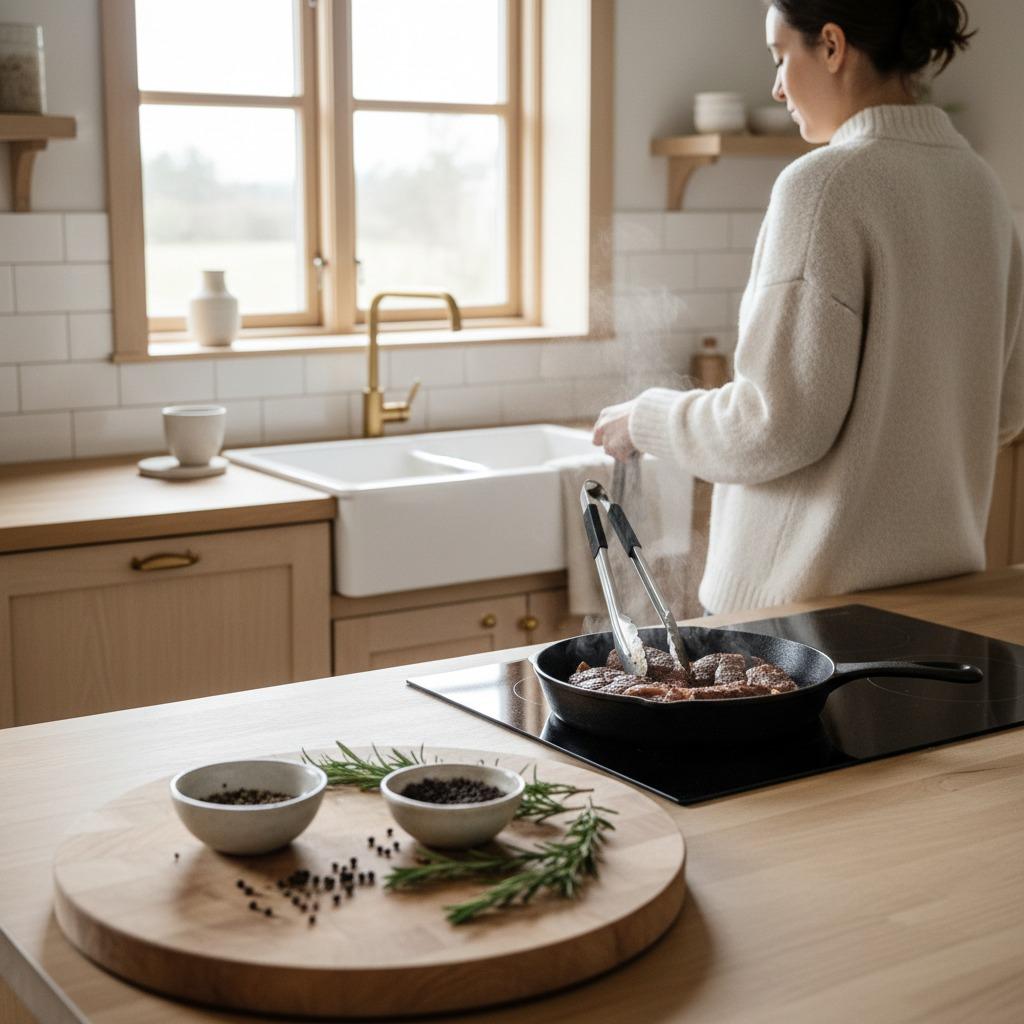
Radiant systems are often compared to conduction-heavy products in cookware and appliance design because both depend on how heat moves across solid surfaces. The skillet shown in the supplied product information is a useful reminder of that principle. It appears to be a cast-iron or heavy-gauge steel pan with a thick body, two short side handles, and a dark heat-resistant finish. The exact material cannot be confirmed from the image, but the construction suggests a design that stores heat well and tolerates direct contact with a flat cooktop.
That kind of mass is valuable when you want stable temperature and searing performance. The same logic applies in heating appliance design: more mass can smooth temperature swings, while thinner structures may respond faster but also lose heat quickly. There is no universal winner. Buyers should match the thermal behavior to the job instead of assuming “faster” is always better.
Key selection criteria for a heating appliance
A practical sourcing review usually comes down to four areas.
First, heat delivery. You need to know whether the output is uniform enough for the target area and whether the system recovers quickly after cycling.
Second, materials. Ceramic heater designs, metal-clad assemblies, and other heating element constructions each bring different tradeoffs in durability, responsiveness, and cost.
Third, enclosure and touch safety. Any indoor radiant heater or portable radiant heater should be judged not only on output, but on how it handles user contact, cable routing, and nearby surfaces.
Fourth, compliance documentation. This is where vendor discipline matters. GUANGDONG WEBO TECHNOLOGY Co., LTD reports over 500 employees, annual turnover of about $40 million, and management systems aligned with ISO 9001 and ISO 14001. The company also states product certifications including VDE, TUV, UL, CE, and ROHS. For B2B buyers, that does not replace product-specific verification, but it does suggest a supplier accustomed to structured quality and export documentation.
Common mistakes in radiant heater sourcing
The most common mistake is treating all radiant products as interchangeable. They are not. A heating appliance for food service, for example, needs different thermal behavior and hygiene considerations than a room heater. Another frequent error is overlooking the difference between peak output and usable output. A fast heating heater that spikes quickly but cycles aggressively may create comfort complaints or poor process consistency.
Buyers also underestimate the importance of installation context. Reflective surfaces, enclosure depth, ventilation, and mounting height can all change the real-world result. In practice, a well-designed heater can look underpowered if the surrounding structure absorbs or deflects heat poorly.
Practical buyer advice
Ask suppliers for the testable facts, not just the brochure language. Request construction details, control method, element type, and the specific application window the product was designed for. If you are comparing a ceramic heater against another radiant design, ask how quickly it reaches usable temperature and how it behaves during repeated start-stop cycles. If the unit is intended as a portable radiant heater, inspect the handle design, mass distribution, and base stability before discussing price.
One small but important caution: do not assume a product suitable for one market will drop into another unchanged. Voltage, regulatory expectations, and safety labeling can alter the economics more than the raw hardware does.
FAQ
Is radiant heat always the most efficient option?
Not always. It is often efficient for direct, targeted heating, but the surrounding environment and duty cycle matter a great deal.
Are ceramic heater designs better than metal ones?
Not universally. Ceramic components can help with thermal management, but the right answer depends on output, size, and the final use case.
What should I verify before sampling?
Confirm the intended application, electrical ratings, safety documentation, and how the heater performs in the actual mounting or usage condition.
Next step for sourcing teams
If you are evaluating a radiant heater for a product line, start with the application brief and work backward from thermal behavior, enclosure constraints, and compliance needs. The best supplier discussions are specific. A vague request gets a vague sample.
For teams comparing heating appliance options or looking to align product design with a qualified manufacturing partner, it is worth asking for application guidance, documentation support, and a clear construction breakdown before moving to prototype.