


How to Choose a Rotary Switch Bulk Supplier for Large-Volume Orders
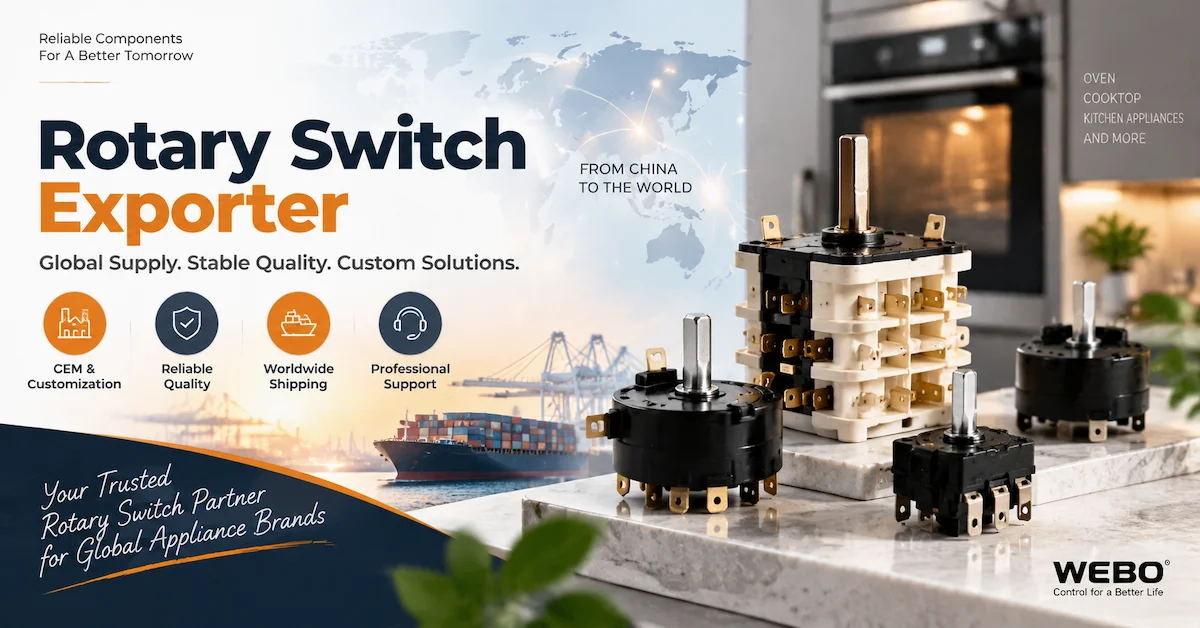
Selecting a rotary switch bulk supplier is a critical decision for appliance manufacturers, distributors, and purchasing teams that require stable component supply. When ordering rotary switches in large quantities, buyers are not only purchasing products but also building a supply relationship that affects production schedules, product quality, and future business growth.
A rotary switch may represent a small percentage of an appliance’s total cost, but it has a direct influence on user operation and product reliability. For manufacturers producing ovens, kitchen appliances, heating equipment, and electrical products, inconsistent switch performance can lead to assembly problems, customer complaints, and additional quality costs.
A reliable bulk supplier should provide:
- Stable production capability
- Consistent product specifications
- Clear quality standards
- OEM customization support
- Accurate delivery planning
- Long-term supply cooperation
Large-volume purchasing requires more than finding the lowest unit price. Professional buyers should evaluate whether the supplier can maintain the same quality level across thousands or even repeated production batches.
WEBO provides appliance control components for different application requirements. Buyers can review the rotary switch product category and evaluate suitable solutions according to their production needs.
What Is a Rotary Switch Bulk Supplier?
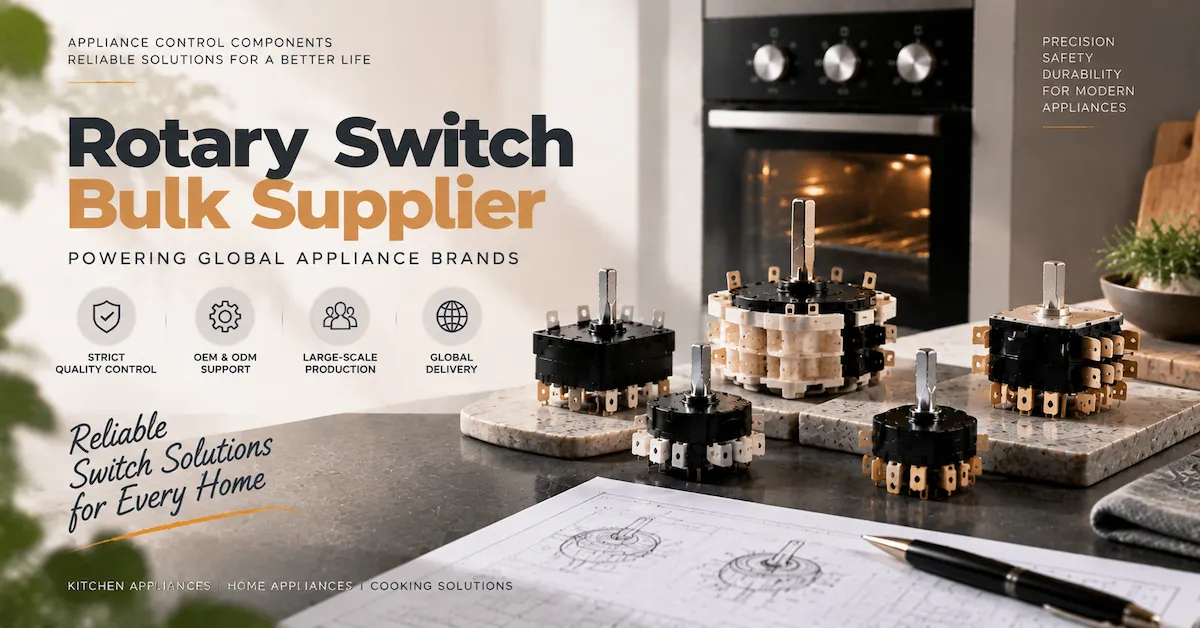
A rotary switch bulk supplier is a supplier capable of providing rotary switches in large quantities while maintaining product consistency, production control, and delivery reliability.
Unlike small-quantity purchasing, bulk procurement requires stronger supplier capability because buyers need predictable results over time.
A professional bulk supplier should support:
| Supplier Capability | Importance for Buyers |
|---|---|
| Large-Volume Production | Supports continuous manufacturing demand |
| Quality Consistency | Keeps every batch aligned with approved samples |
| Technical Support | Helps solve product selection issues |
| Customization Ability | Supports OEM product requirements |
| Supply Planning | Helps avoid production interruptions |
| Export Experience | Simplifies international purchasing |
For appliance manufacturers, the ideal supplier is not simply a company that can deliver a large quantity once. It should be a partner capable of supporting repeated orders with stable quality.
Why Appliance Brands Need Bulk Rotary Switch Suppliers
Appliance production usually requires continuous component availability. When a brand produces thousands of units, even a small component shortage can interrupt the entire assembly process.
Working with a professional rotary switch bulk supplier helps manufacturers manage:
Production Stability
Large-volume buyers need suppliers that can maintain:
- Product specifications
- Material consistency
- Assembly standards
- Delivery schedules
A supplier that performs well for one small order may not always have the capability to support long-term production demand.
Cost Management
Bulk purchasing can improve cost efficiency through:
- Production planning
- Optimized packaging
- Reduced repeated sourcing work
- Better supply forecasting
However, buyers should evaluate total purchasing value rather than only the initial unit price.
Supply Chain Reliability
A stable supplier relationship helps reduce:
- Emergency sourcing
- Production delays
- Quality disputes
- Unexpected specification changes
Applications That Require Bulk Rotary Switch Purchasing
Rotary switches are widely used in appliances and equipment requiring mechanical control functions.
Common applications include:
| Application | Bulk Purchasing Requirement |
|---|---|
| Ovens | Stable function selection components |
| Kitchen Appliances | Reliable user controls |
| Heating Equipment | Consistent operating adjustment |
| Electrical Equipment | Durable switching components |
Different applications may require different switch designs.
A professional supplier should understand the difference between:
- Residential appliance requirements
- Commercial equipment requirements
- Industrial control requirements
Rotary Switch for Appliances: Bulk Buying Considerations
A rotary switch for appliances must match both the electrical system and the mechanical design of the final product.
Before placing bulk orders, buyers should confirm:
Mechanical Specifications
Important factors include:
- Shaft dimensions
- Mounting structure
- Rotation angle
- Number of positions
- Panel compatibility
Mechanical compatibility ensures the switch can be integrated into the appliance correctly.
Electrical Specifications
Buyers should review:
- Voltage rating
- Current rating
- Contact structure
- Switching function
A product that looks suitable externally may still fail if the electrical specifications do not match.
User Operation Requirements
For consumer appliances, the rotary switch affects user experience.
Important considerations include:
- Rotation smoothness
- Position accuracy
- Operating feeling
- Long-term reliability
Rotary Switch for Oven Bulk Supply Requirements
The rotary switch for oven market requires stable performance because ovens are frequently operated by users.
Oven manufacturers should evaluate:
| Evaluation Item | Buyer Consideration |
|---|---|
| Function Selection | Required cooking modes |
| Electrical Compatibility | Matching oven control circuits |
| Mechanical Design | Integration with control panels |
| Operation Frequency | Supporting repeated use |
| Quality Stability | Maintaining performance over time |
For oven brands, selecting the right bulk supplier helps ensure every production batch uses consistent control components.
How a Rotary Switch Manufacturer Supports Bulk Orders
A reliable rotary switch manufacturer provides the foundation for successful bulk purchasing.
Manufacturing capability affects:
- Production capacity
- Quality consistency
- Delivery reliability
- Customization possibilities
Buyers should evaluate:
| Manufacturing Factor | Key Question |
|---|---|
| Production Process | Is manufacturing standardized? |
| Quality Inspection | Are products tested consistently? |
| Engineering Support | Can requirements be understood? |
| Production Planning | Can demand forecasts be supported? |
| Product Control | Are revisions managed properly? |
A strong manufacturer can help buyers move from initial sampling to stable mass production.
OEM Rotary Switch Supplier Selection for Bulk Projects
An OEM rotary switch supplier provides additional value for brands that need customized solutions.
OEM projects may involve:
- Product modifications
- Special structures
- Different terminals
- Custom specifications
- Brand requirements
Before selecting an OEM supplier, buyers should confirm:
| OEM Evaluation Area | Buyer Questions |
|---|---|
| Engineering Capability | Can the supplier support customization? |
| Sample Development | Can prototypes be provided? |
| Production Control | Can mass production match samples? |
| Communication | Can technical details be managed clearly? |
| Supply Stability | Can future orders be supported? |
For bulk OEM projects, supplier selection should focus on long-term cooperation rather than only the first quotation.
How to Evaluate a Rotary Switch Wholesale Supplier China for Bulk Purchasing
Many international buyers search for a rotary switch wholesale supplier China because China has a mature appliance component manufacturing system and supports different purchasing volumes.
However, bulk buyers should evaluate suppliers based on more than production location or price level. A reliable supplier should demonstrate the ability to manage technical requirements, quality standards, and long-term supply commitments.
Before cooperation, buyers should review:
| Evaluation Area | What Buyers Should Confirm |
|---|---|
| Product Capability | Does the supplier provide suitable rotary switch solutions? |
| Manufacturing Experience | Does the supplier understand appliance applications? |
| Quality Management | Are inspection procedures clearly defined? |
| Customization Support | Can product requirements be adjusted? |
| Communication Ability | Can technical information be exchanged efficiently? |
| Delivery Management | Can production schedules be maintained? |
A professional wholesale supplier should support the complete purchasing process:
- Requirement confirmation
- Product selection
- Sample approval
- Bulk quotation
- Production arrangement
- Quality inspection
- Export preparation
- Repeat-order management
This approach helps buyers avoid purchasing problems caused by unclear specifications or inconsistent product versions.
Bulk Rotary Switch Purchasing Process for OEM Buyers
A successful bulk purchase requires planning before placing the production order.
Step 1: Define Product Requirements
Before requesting quotations, buyers should prepare:
- Appliance application
- Switch function
- Electrical specifications
- Mechanical dimensions
- Required quantity
- Packaging requirements
Clear requirements allow suppliers to provide accurate proposals.
Step 2: Supplier Evaluation
During supplier comparison, buyers should review:
- Manufacturing capability
- Technical support
- Production experience
- Quality process
- Export capability
A supplier should be able to explain how the product will be manufactured and controlled.
Step 3: Sample Approval
Before bulk production, buyers should verify:
- Product appearance
- Dimensions
- Installation compatibility
- Switching operation
- Electrical performance
The approved sample should become the reference standard for future orders.
Step 4: Bulk Production
After approval, production should follow:
- Confirmed specifications
- Approved drawings
- Inspection requirements
- Packaging standards
This ensures large-volume orders remain consistent.
MOQ and Inventory Planning for Rotary Switch Bulk Orders
Minimum order quantity is an important consideration when purchasing rotary switches in bulk.
A professional rotary switch bulk supplier should clearly explain:
- Minimum production quantity
- Sample quantity
- Production batch size
- Packaging quantity
- Repeat-order requirements
Buyers should balance purchasing quantity with actual demand.
| Purchasing Situation | Recommended Consideration |
|---|---|
| New Product Launch | Start with approved samples and controlled initial quantity |
| Stable Production | Plan recurring orders based on consumption rate |
| Multiple Appliance Models | Manage different switch versions separately |
| Distributor Inventory | Consider packaging and storage requirements |
Buying too little may create production interruptions, while buying too much may increase inventory pressure.
Custom Rotary Switch Development for Bulk Manufacturing
A custom rotary switch project requires closer cooperation between the buyer and supplier.
Customization may include:
- Shaft changes
- Terminal adjustments
- Switching function changes
- Mounting modifications
- Appearance requirements
- Packaging customization
A reliable OEM supplier should evaluate whether the requested changes affect:
- Manufacturing process
- Product performance
- Inspection requirements
- Production cost
- Delivery schedule
Before mass production, buyers should confirm:
| Custom Project Item | Confirmation Required |
|---|---|
| Technical Drawing | Final approved version |
| Product Specification | Electrical and mechanical requirements |
| Sample | Approved reference sample |
| Inspection Standard | Quality acceptance criteria |
| Packaging | Final shipment method |
A controlled custom development process reduces risks during bulk manufacturing.
Quality Control System for Rotary Switch Bulk Orders
Quality consistency is one of the most important factors when selecting a supplier for large-volume purchasing.
A professional rotary switch manufacturer should establish quality control throughout production.
Incoming Material Control
Review:
- Raw material quality
- Component consistency
- Supplier records
Production Process Control
Monitor:
- Assembly process
- Component installation
- Mechanical accuracy
- Product consistency
Functional Testing
Evaluate:
- Rotation operation
- Switching accuracy
- Electrical connection
- Product reliability
Final Shipment Inspection
Confirm:
- Correct product model
- Required quantity
- Packaging condition
- Shipment information
WEBO provides company information and certification details through its certification information page. Buyers can review available information and confirm project-specific requirements.
Packaging Requirements for Bulk Rotary Switch Shipments
For international buyers, packaging is an important part of product quality management.
Rotary switches should be protected against:
- Impact damage
- Moisture exposure
- Product mixing
- Identification errors
A suitable packaging plan should include:
| Packaging Item | Purpose |
|---|---|
| Individual Protection | Prevent component damage |
| Inner Packaging | Improve handling efficiency |
| Product Labels | Support warehouse management |
| Carton Protection | Support transportation safety |
| Quantity Identification | Simplify receiving inspection |
For distributors and importers, packaging should also support future warehouse operations.
Export and Delivery Management for Bulk Orders
A professional rotary switch bulk supplier should understand international delivery requirements.
Export management includes:
- Order confirmation
- Production scheduling
- Quality inspection
- Packaging preparation
- Shipment coordination
Buyers should confirm:
- Delivery timeline
- Shipping method
- Product identification
- Required documents
- Receiving requirements
Clear communication helps prevent delays during international purchasing.
How an Electric Rotary Switch Supplier Supports Large-Volume Buyers
An electric rotary switch supplier should understand the electrical requirements behind the product.
For bulk purchasing, buyers should confirm:
Electrical Performance
Including:
- Voltage rating
- Current rating
- Contact structure
- Switching function
Mechanical Performance
Including:
- Rotation stability
- Installation compatibility
- Shaft design
- Operating consistency
Application Performance
Including:
- Appliance type
- Working environment
- Expected usage frequency
The supplier should recommend solutions based on the complete application rather than supplying generic products.
Comparing Rotary Selector Switch Manufacturers for Bulk Supply
A rotary selector switch manufacturer should provide stable solutions for applications requiring multiple control positions.
When comparing manufacturers, buyers should evaluate:
| Factor | Buyer Consideration |
|---|---|
| Product Design | Does it match the required functions? |
| Manufacturing Process | Can quality remain stable? |
| Testing Capability | Are products properly verified? |
| Customization | Can special requirements be supported? |
| Supply Stability | Can future demand be handled? |
The right supplier should support both current orders and future product development.
How to Build a Long-Term Relationship With a Rotary Switch Bulk Supplier
For appliance manufacturers and distributors, selecting a rotary switch bulk supplier is not only about completing one purchase order. The real value comes from establishing a stable supply relationship that supports product launches, repeat production, and future market expansion.
Long-term cooperation depends on several factors:
| Cooperation Factor | Why It Matters |
|---|---|
| Product Consistency | Ensures every production batch matches approved requirements |
| Technical Communication | Reduces misunderstandings during development |
| Forecast Planning | Helps suppliers prepare production capacity |
| Quality Feedback | Improves future product stability |
| Change Management | Prevents uncontrolled product variations |
A strong supplier relationship allows buyers to reduce sourcing risks and improve production efficiency.
Manage Product Revisions During Long-Term Purchasing
For bulk buyers, product revision control is essential.
Rotary switches may change because of:
- Appliance redesign
- Electrical requirement updates
- Packaging adjustments
- Manufacturing improvements
- Material changes
Every change should be documented clearly.
A professional supplier management process should include:
| Change Management Item | Buyer Action |
|---|---|
| Product Drawing | Confirm latest revision |
| Sample Reference | Maintain approved sample |
| Specification | Update technical requirements |
| Production Date | Define when change starts |
| Inventory | Identify old and new versions |
Without revision control, companies may receive different versions of the same rotary switch during long-term purchasing.
Evaluate Rotary Switch Bulk Supplier Cost Beyond Unit Price
When purchasing in bulk, price is important, but it should not be the only factor.
A complete cost evaluation should include:
| Cost Factor | Consideration |
|---|---|
| Unit Price | Basic product purchasing cost |
| Sample Cost | Development and approval expenses |
| Packaging Cost | Protection and handling requirements |
| Inspection Cost | Quality verification expenses |
| Logistics Cost | International transportation |
| Quality Risk Cost | Potential losses caused by defects |
A supplier with a slightly higher unit price may provide better overall value if it reduces quality problems, delays, and repeated sourcing work.
Common Mistakes When Purchasing Rotary Switches in Bulk
Many sourcing problems happen because buyers focus only on immediate purchasing needs.
Mistake 1: Choosing Only Based on Price
A low quotation may not include:
- Better quality control
- Technical support
- Stable production
- Long-term cooperation
Price should always be evaluated together with product reliability.
Mistake 2: Providing Incomplete Specifications
Without clear requirements, suppliers may quote different solutions.
Buyers should provide:
- Application
- Electrical requirements
- Dimensions
- Function requirements
- Quantity
Mistake 3: Skipping Sample Approval
Bulk production without sample confirmation increases risks.
Samples help verify:
- Product fit
- Function
- Appearance
- Performance
Mistake 4: Ignoring Future Supply Requirements
A supplier should not only support the first order.
Buyers should consider:
- Repeat orders
- Product availability
- Production consistency
- Future customization
Global Sourcing Strategy for Rotary Switch Buyers
International buyers should develop a structured sourcing strategy.
A practical process includes:
Step 1: Define the Application
Identify:
- Appliance type
- Operating requirements
- Technical specifications
Step 2: Research Suppliers
Evaluate:
- Manufacturing capability
- Product experience
- Quality systems
- Export ability
Step 3: Confirm Samples
Review:
- Product dimensions
- Installation
- Function
- Quality
Step 4: Establish Supply Standards
Document:
- Approved products
- Quality requirements
- Packaging
- Delivery expectations
Step 5: Develop Long-Term Cooperation
Maintain:
- Communication
- Forecast planning
- Quality feedback
- Continuous improvement
This approach helps buyers move from simple purchasing to strategic supplier management.
How WEBO Supports Rotary Switch Bulk Supply Projects
For buyers looking for a reliable rotary switch bulk supplier, WEBO provides appliance control components designed for different application requirements.
Buyers can review the WEBO rotary switch product category to understand available solutions.
For bulk purchasing, OEM cooperation, and project evaluation, buyers can submit requirements through the WEBO contact page.
Providing detailed information helps evaluate:
- Product suitability
- Customization requirements
- Production planning
- Supply cooperation
Frequently Asked Questions
1. What is a rotary switch bulk supplier?
A rotary switch bulk supplier provides rotary switch products in large quantities while supporting production consistency, quality control, packaging, and delivery requirements.
For OEM buyers, the supplier should also support technical communication and long-term supply planning.
2. How do I choose a reliable rotary switch bulk supplier?
Evaluate:
- Manufacturing capability
- Product quality
- Customization ability
- Inspection process
- Export experience
- Supply stability
The supplier should match both current purchasing needs and future production requirements.
3. Can a rotary switch bulk supplier support OEM projects?
Yes. OEM projects may include product adjustments, custom structures, special specifications, and packaging requirements.
Buyers should confirm supplier engineering capability before starting customization.
4. What applications use rotary switches?
Rotary switches are commonly used in:
- Ovens
- Kitchen appliances
- Heating equipment
- Electrical control systems
The correct product depends on the appliance design and operating requirements.
5. What information should I provide for a bulk quotation?
Provide:
- Application details
- Product specifications
- Quantity requirements
- Drawings
- Delivery expectations
- Customization needs
Complete information helps suppliers provide accurate quotations.
6. How can I verify rotary switch quality before bulk production?
Use:
- Sample approval
- Specification confirmation
- Functional testing
- Inspection requirements
- Production verification
A controlled approval process reduces production risks.
7. What is the difference between a rotary switch manufacturer and supplier?
A manufacturer focuses on production capability, while a supplier may provide sourcing and distribution support.
Many professional suppliers combine manufacturing and export services.
8. Can rotary switches be customized for different appliances?
Yes. A custom rotary switch can be developed according to:
- Installation requirements
- Electrical specifications
- Switching functions
- Product design
9. Why should buyers consider a rotary switch wholesale supplier China?
China suppliers often provide:
- Manufacturing experience
- Flexible production
- OEM support
- Export capability
However, buyers should evaluate supplier capability rather than location alone.
10. How can I contact WEBO for rotary switch bulk orders?
Buyers can review the WEBO rotary switch products and submit project details through the WEBO contact page.
Conclusion
Choosing a rotary switch bulk supplier requires evaluating more than bulk pricing. Appliance manufacturers and distributors should consider product compatibility, manufacturing capability, OEM support, quality control, export experience, and long-term supply stability.
A reliable supplier should help buyers maintain consistent product quality from initial samples to repeated production orders. Through clear specifications, controlled manufacturing, quality management, and effective communication, companies can build a stronger supply chain for appliance control components.
For your bulk rotary switch purchasing project, review the WEBO rotary switch products and submit your requirements through the WEBO contact page to discuss specifications, customization options, production planning, and long-term supply solutions.